Coalescent Simulations and Field Experiments Support Natural Selection as the Driving Force Maintaining Color Differences Between Adjacent Populations of Ceroglossus chilensis (Coleoptera: Carabidae)
Benjamín Arenas-Gutierrez, Antonio Rivera-Hutinel, Carlos P. Muñoz-Ramírez

TL;DR
This study shows that natural selection, particularly from predators, drives color differences in adjacent populations of a ground beetle species.
Contribution
The study provides direct evidence that selection, not genetic drift, maintains color divergence in Ceroglossus beetles.
Findings
Color fixation in beetles deviates from expectations under genetic drift, indicating selection.
Beetles that do not mimic local color patterns face higher predation rates.
Predators are the main selective force maintaining color differences in the species.
Abstract
Observable characteristics of organisms can evolve by different mechanisms such as genetic drift and selection. In this study, we aimed to assess which of these forces are responsible for the differences in color between various adjacent populations of a ground beetle species, Ceroglossus chilensis, using genetics and field experiments. Our approach supported selection as the main force driving color differences and showed that predators are the main selective force. This study contributes to the understanding of the processes driving diversity in Ceroglossus chilensis and provides insights regarding which processes may be involved in the pattern of mimicry observed within the genus. Determining the drivers of phenotypic evolution and their role on shaping regional phenotypic diversity is a fundamental aspect of mimicry research. Beetles of the genus Ceroglossus are well known for…
Genes, proteins, chemicals, diseases, species, mutations and cell lines named across the full text — each resolved to its canonical identifier and authoritative record.
Click any figure to enlarge with its caption.
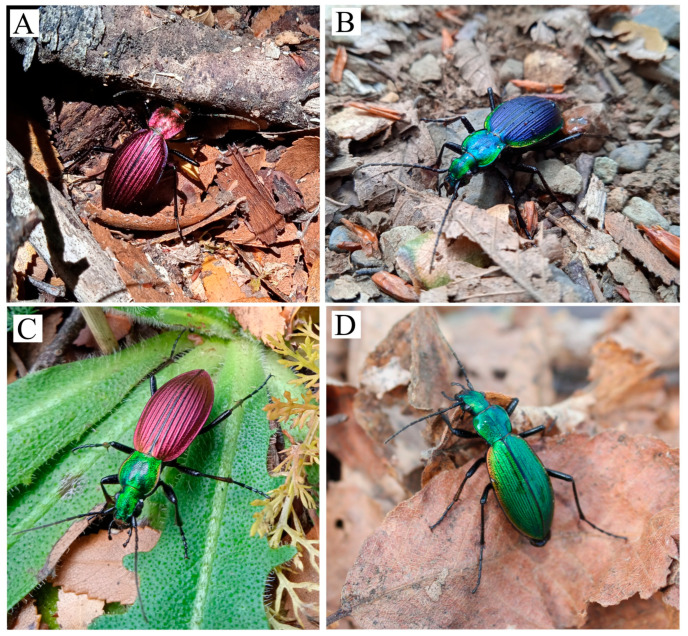 Figure 1
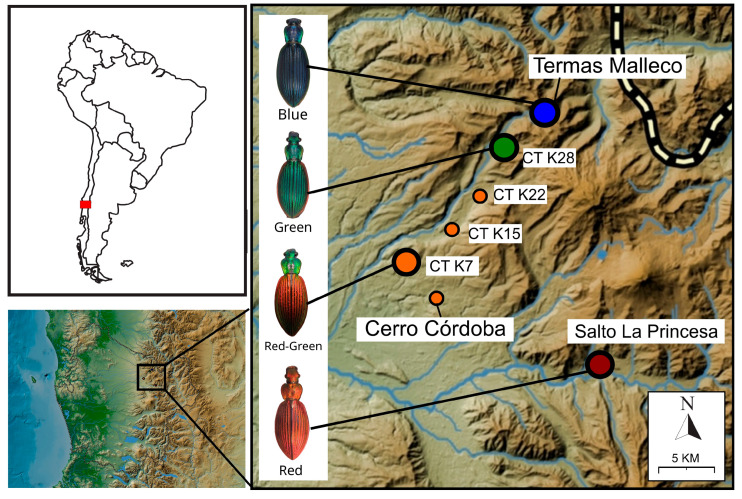 Figure 2
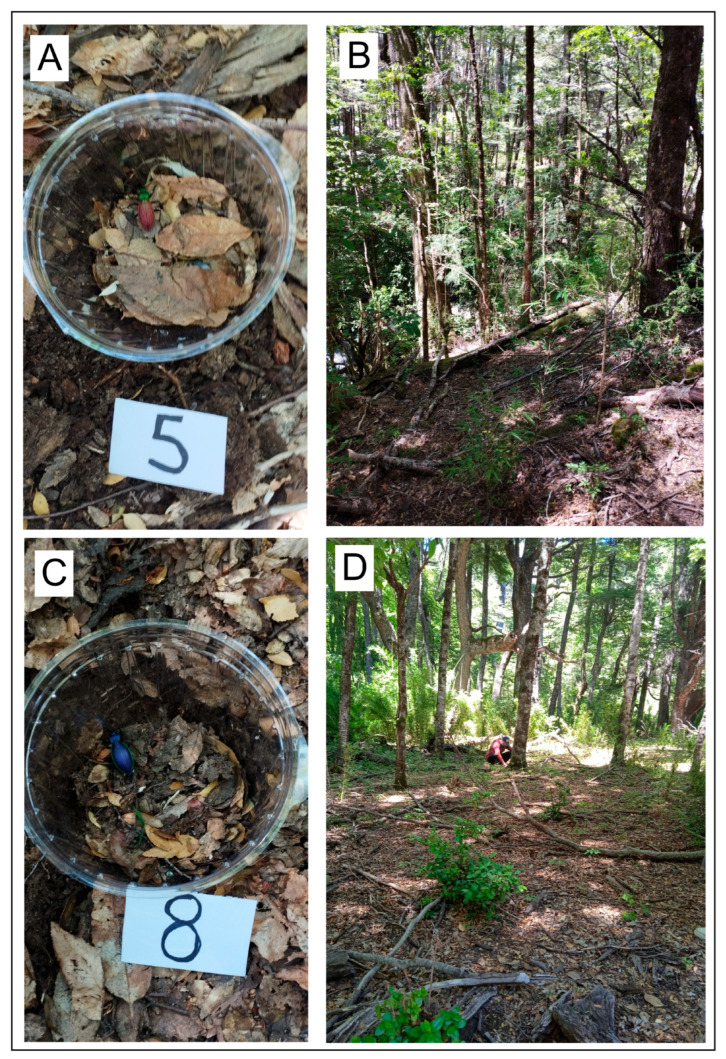 Figure 3
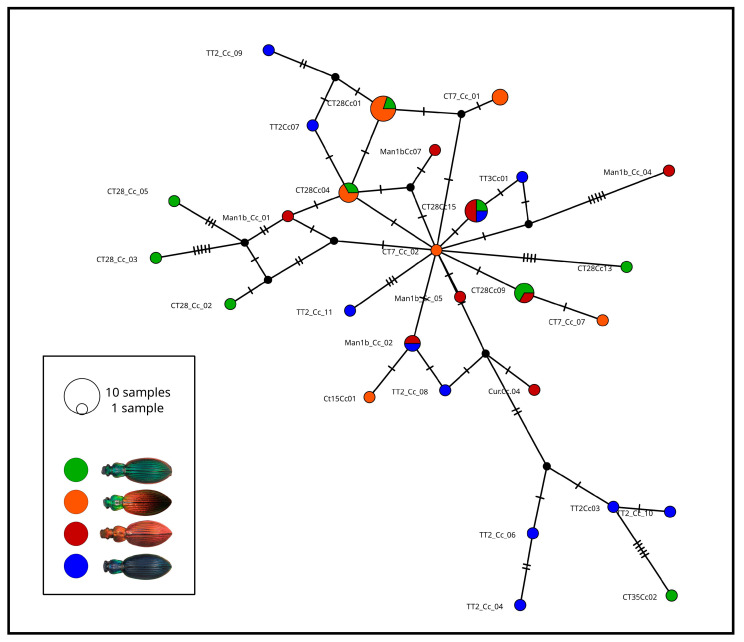 Figure 4
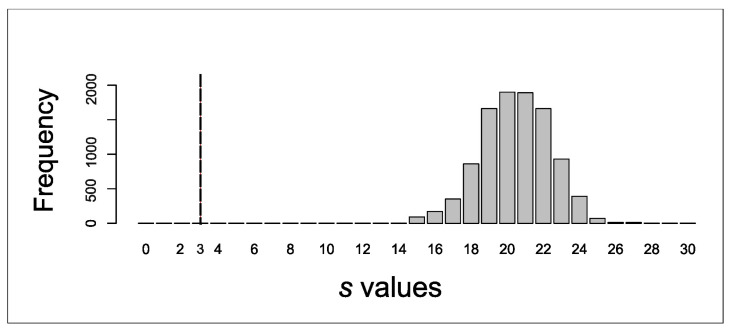 Figure 5
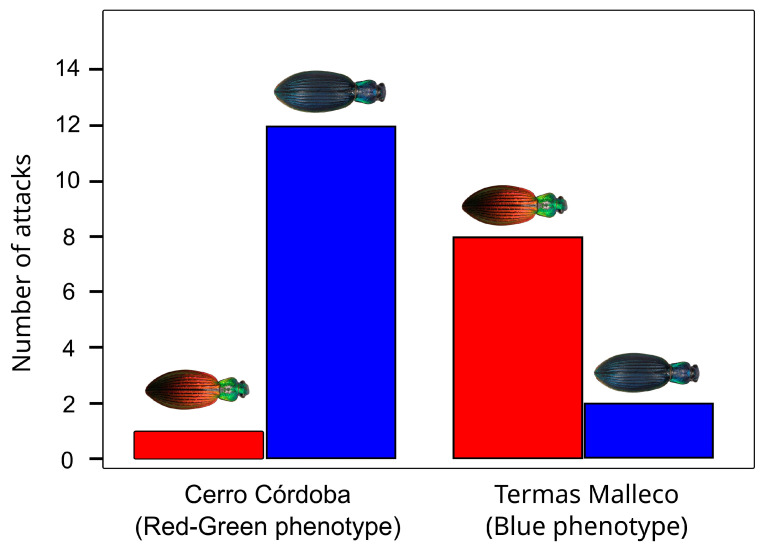 Figure 6
Peer Reviews
No public reviews on file for this paper yet. If you reviewed it on a platform where reviews are public (OpenReview, ICLR, NeurIPS, ICML), you can paste yours below so the community can read it here.
Videos
No videos yet. Explain this paper in a talk, walkthrough, or lecture? Add one.
Taxonomy
TopicsAnimal Behavior and Reproduction · Developmental Biology and Gene Regulation · Coleoptera Taxonomy and Distribution