Uncovering Major Structural and Functional Features of Methyl-Coenzyme M Reductase (MCR) from Methanobrevibacter ruminantium in Complex with Two Substrates
Han-Ha Chai, Woncheoul Park, Dajeong Lim

TL;DR
This study reveals the structure and function of a key enzyme in methane production by a rumen archaeon, offering insights for developing methane inhibitors.
Contribution
The study provides a high-resolution molecular model of M. ruminantium Mcr in complex with substrates, identifying key residues and ligand-binding features.
Findings
Two distinct Mcr states were characterized with specific substrate binding and key residues identified.
Structure-based pharmacophore models defined essential ligand-binding features for inhibitor design.
The findings offer a molecular framework for developing broad-spectrum methane mitigation strategies.
Abstract
Structural insights into methyl-coenzyme M reductase from Methanobrevibacter ruminantium (M. ruminantium) has implications for methane mitigation strategies. Methanogenesis in ruminants is a major contributor to global greenhouse gas emissions, primarily driven by the rumen archaeon M. ruminantium. Central to this process is methyl-coenzyme M reductase (Mcr), an enzyme that catalyzes the final step of methane production. Despite its significance as a chemogenetic target for methane mitigation, the high-resolution structure of M. ruminantium Mcr has remained elusive. Here, we employed homology modeling and CDOCKER simulations within the CHARMM force field to elucidate the structural and functional features of the M. ruminantium Mcr/ligand complexes. We characterized two distinct states: the reduced Mcroxi-silent state bound to HS-CoM and CoB-SH, and the oxidized Mcrsilent state bound to…
Genes, proteins, chemicals, diseases, species, mutations and cell lines named across the full text — each resolved to its canonical identifier and authoritative record.
Click any figure to enlarge with its caption.
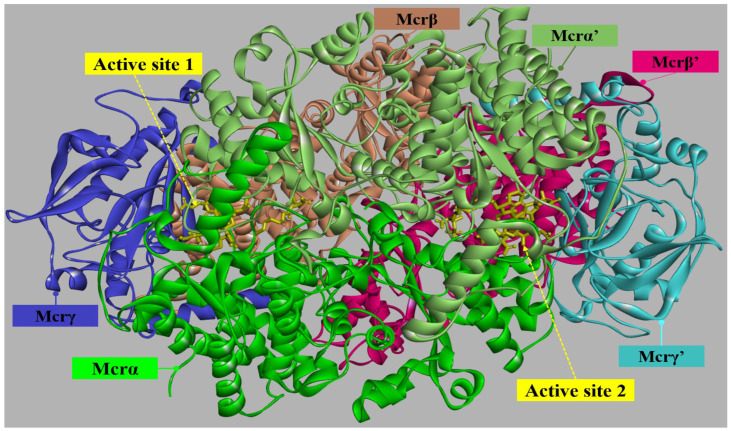 Figure 1
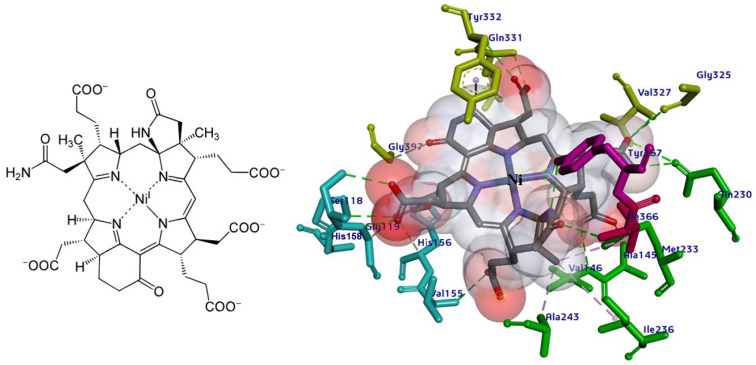 Figure 2
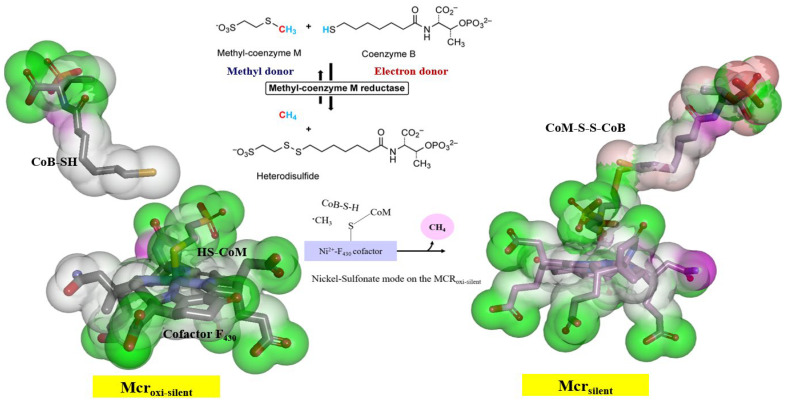 Figure 3
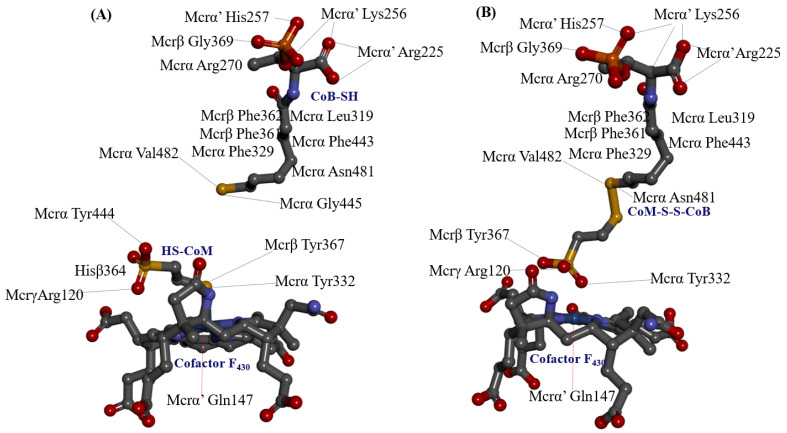 Figure 4
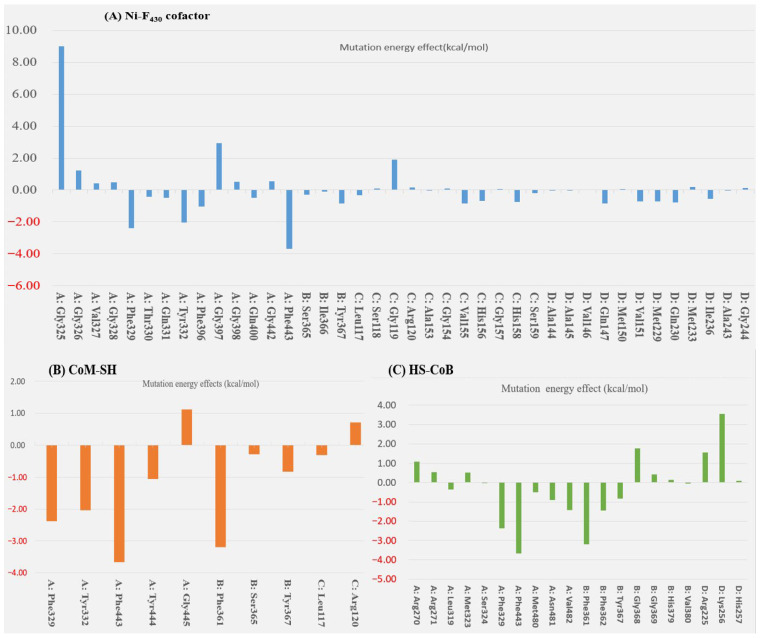 Figure 5
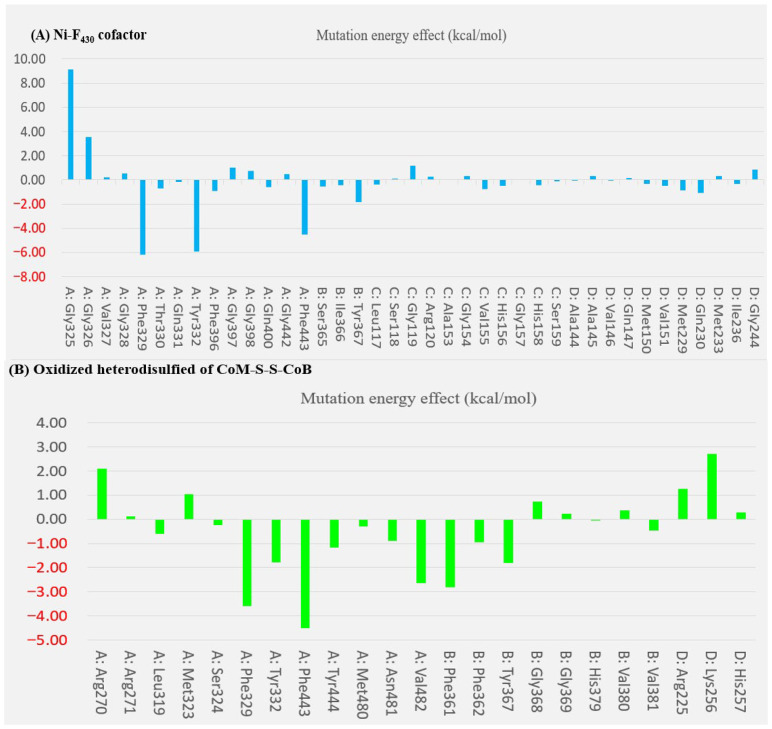 Figure 6
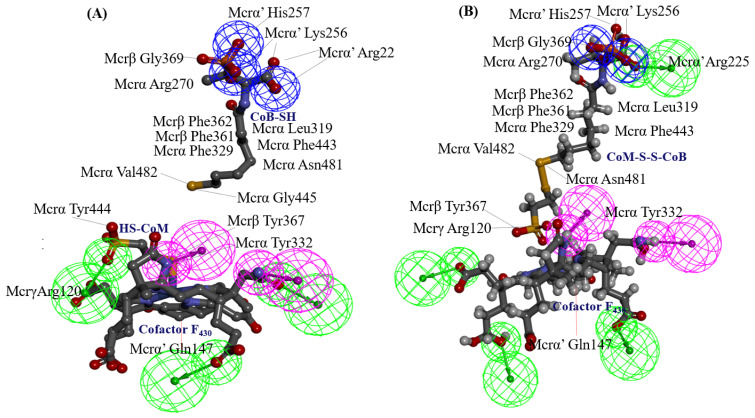 Figure 7
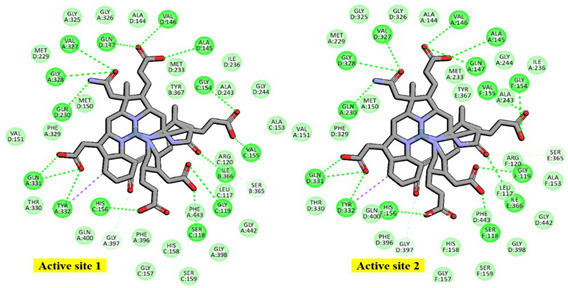 Figure 8
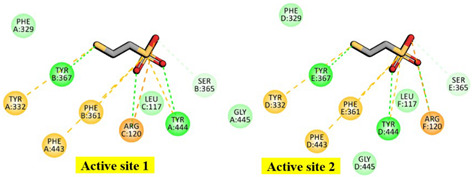 Figure 9
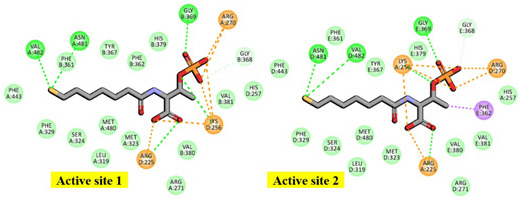 Figure 10
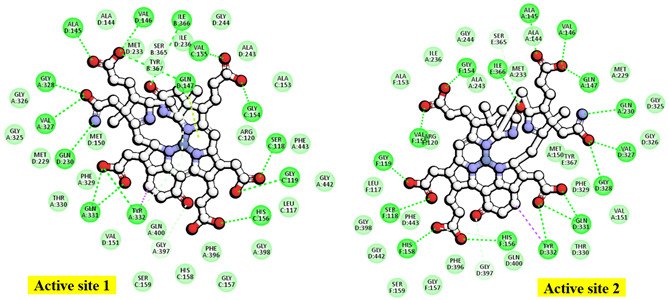 Figure 11
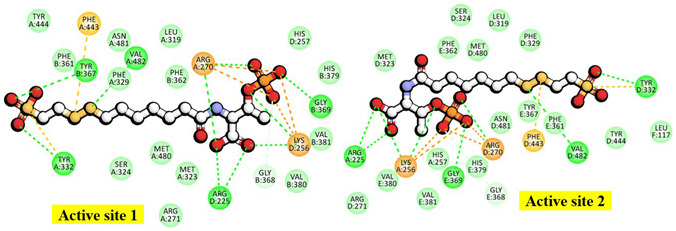 Figure 12
Peer Reviews
No public reviews on file for this paper yet. If you reviewed it on a platform where reviews are public (OpenReview, ICLR, NeurIPS, ICML), you can paste yours below so the community can read it here.
Videos
No videos yet. Explain this paper in a talk, walkthrough, or lecture? Add one.
Taxonomy
TopicsMicrobial metabolism and enzyme function · Anaerobic Digestion and Biogas Production · Metalloenzymes and iron-sulfur proteins