Risk-Stratified Predictive Analysis of Docking Site Outcomes in Lower Extremity Bone Transport: Identifying High-Risk and Low-Risk Zones for Large Segmental Defect Management
Gökmen Aktas, Jorge Mayor, Jan Clausen, Ricardo Ramon, Tilman Graulich, Schayan Tabrizi, Maximilian Koblenzer, Hür Özbek, Emmanouil Liodakis, Phillipp Mommsen, Stephan Sehmisch, Tarek Omar Pacha

TL;DR
This study identifies factors that predict the need for a docking site procedure during bone transport in lower extremities, helping improve treatment planning.
Contribution
The study introduces transport duration and speed as strong predictive factors for the need of a docking site procedure in bone transport.
Findings
Transport speed and duration were strong predictors of the need for a docking site procedure.
A transport duration exceeding 290.5 days significantly increased the likelihood of requiring a docking site procedure.
Age and vascular injury were also significant predictors of docking site necessity.
Abstract
Background: Reconstruction of limbs with extensive bone loss often requires complex surgical procedures, which can be technically demanding, time-consuming, and physically and psychologically burdensome for patients. Historically, the lack of alternatives for large bone defects often led to primary amputation. Modern musculoskeletal practice allows for reconstruction using autologous or allogeneic bone grafts, or through more complex procedures such as the Masquelet technique or distraction osteogenesis. However, these methods share a common challenge: the need for a docking site procedure in cases of insufficient bony fusion of the transport segment. The aim of this study was to identify predictive factors for the need for a docking site procedure. Methods: A retrospective analysis was conducted on 93 patients treated for lower extremity bone defects between January 2013 and June 2023.…
Genes, proteins, chemicals, diseases, species, mutations and cell lines named across the full text — each resolved to its canonical identifier and authoritative record.
Click any figure to enlarge with its caption.
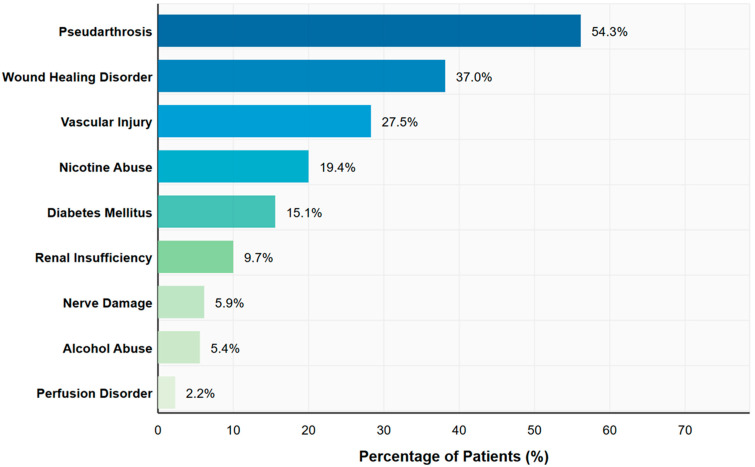 Figure 1
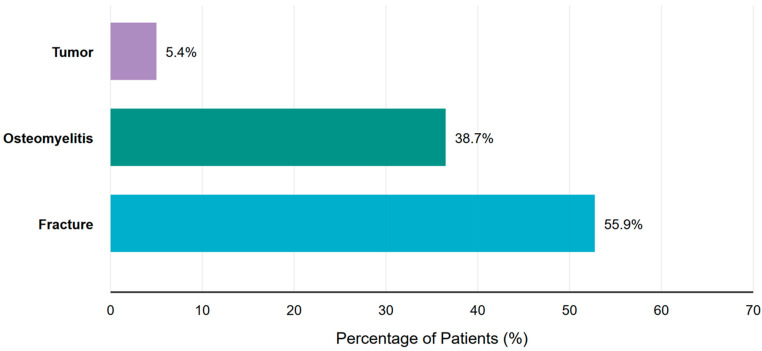 Figure 2
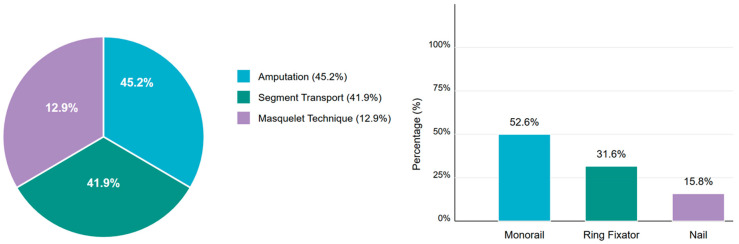 Figure 3
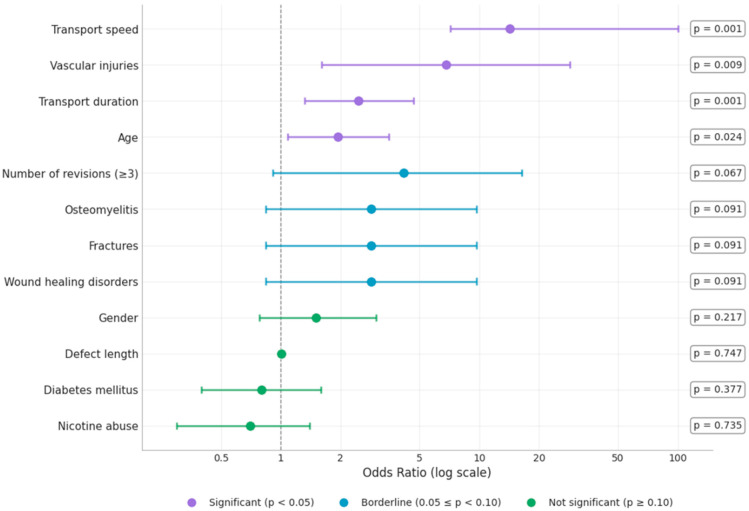 Figure 4
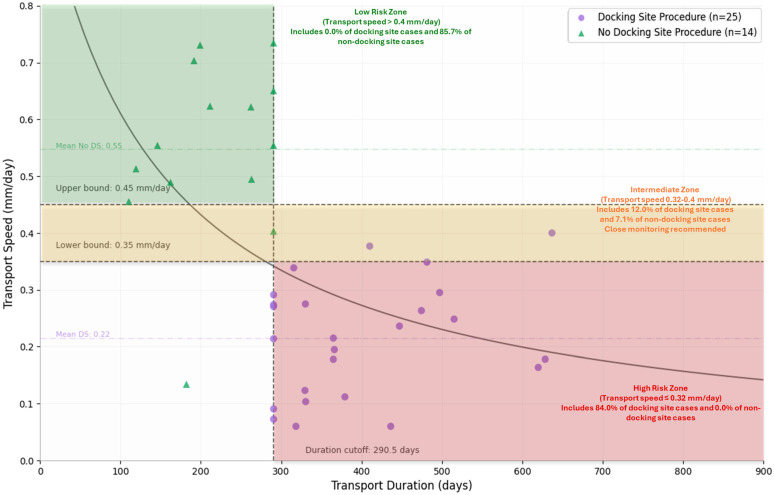 Figure 5
Peer Reviews
No public reviews on file for this paper yet. If you reviewed it on a platform where reviews are public (OpenReview, ICLR, NeurIPS, ICML), you can paste yours below so the community can read it here.
Videos
No videos yet. Explain this paper in a talk, walkthrough, or lecture? Add one.
Taxonomy
TopicsBone fractures and treatments · Reconstructive Surgery and Microvascular Techniques · Prosthetics and Rehabilitation Robotics