Seasonal Dynamics and Nest Characterization of Vespa orientalis (Hymenoptera: Vespidae) in Apiaries: Insights from Bait Trap Capture Efficiency
Sabreen G. El-Gohary, Abd El-Aziz M. A. Mohsen, Mohammed A. I. Youssif, Lamya Ahmed Alkeridis, Laila A. Al-Shuraym, Samy Sayed, Mustafa Shukry, Sherin M. M. Y. Helaly

TL;DR
This study tracked the seasonal population of oriental hornets in Egyptian apiaries and found that grape juice is the most effective bait for capturing them.
Contribution
The study provides new insights into the seasonal dynamics and nest composition of Vespa orientalis and identifies effective bait types for trapping.
Findings
Hornet populations peaked in October and declined in December with seasonal and location-based variations.
Grape juice was the most effective bait, capturing significantly more hornets than other tested attractants.
Nest composition varied between seasons, with differences in the number of cells, eggs, larvae, and pupae.
Abstract
This study examined the population changes of the oriental hornet (Vespa orientalis) in bee yards during two successive seasons (2023–2024) in three locations in Egypt. The number of hornets was highest in October and lowest in December, with noticeable differences between years and locations. We also studied the contents of hornet nests, including eggs, larvae, and pupae, which varied between the two seasons. Among the different food baits tested, grape juice attracted the most hornets, followed by black honey, while the capturing trap caught very few. These results help us to understand the seasonal behavior of V. orientalis and can assist in developing safer and more effective ways to capture it around apiaries. This study investigated the population dynamics of Vespa orientalis L. (Hymenoptera: Vespidae) across two consecutive seasons (2023–2024) in selected apiaries, with a focus…
Genes, proteins, chemicals, diseases, species, mutations and cell lines named across the full text — each resolved to its canonical identifier and authoritative record.
Click any figure to enlarge with its caption.
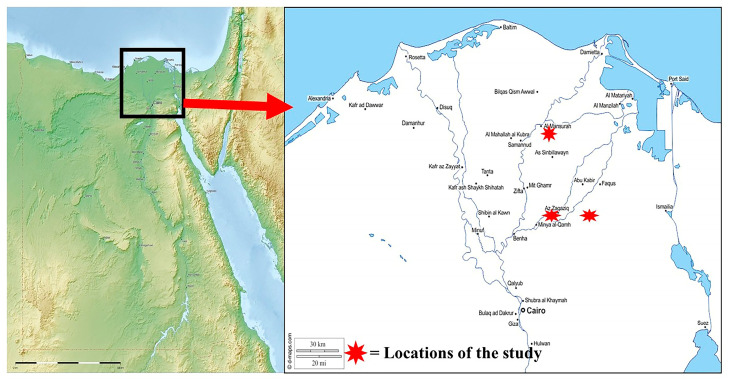 Figure 1
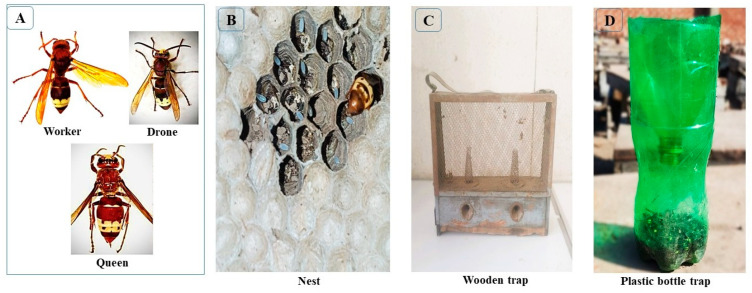 Figure 2
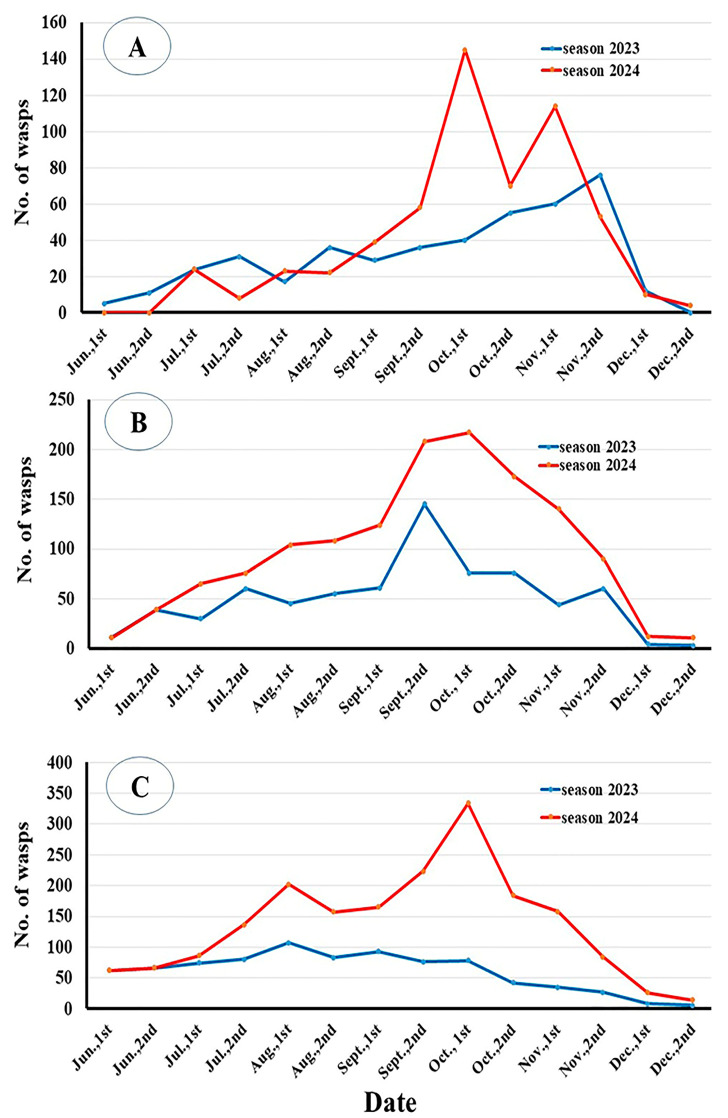 Figure 3
Peer Reviews
No public reviews on file for this paper yet. If you reviewed it on a platform where reviews are public (OpenReview, ICLR, NeurIPS, ICML), you can paste yours below so the community can read it here.
Videos
No videos yet. Explain this paper in a talk, walkthrough, or lecture? Add one.
Taxonomy
TopicsInsect and Arachnid Ecology and Behavior · Plant and animal studies · Insect and Pesticide Research