Are the Results of Late Heart Re-Transplantation Influenced by the Time Interval from Primary Transplantation?
Andrea Lechiancole, Gregorio Gliozzi, Stefano Copetti, Chiara Nalli, Concetta Di Nora, Giovanni Benedetti, Sandro Sponga, Uberto Bortolotti, Ugolino Livi, Igor Vendramin

TL;DR
Late heart re-transplantation can be effective for patients with graft failure, even after more than 20 years, though it requires careful management due to long-term immunosuppression effects.
Contribution
The study investigates outcomes of late heart re-transplantation and evaluates the impact of prolonged immunosuppression exposure.
Findings
Late heart re-transplantation showed 1, 5, and 10-year survival rates of 80%, 68%, and 60%, with no significant difference between groups re-transplanted within or after 20 years.
Patients re-transplanted after 20 years had a higher incidence of malignancies compared to those re-transplanted earlier.
Re-transplantation was associated with higher rates of infections, rejections, and malignancies compared to primary heart transplantation, though not statistically significant.
Abstract
Background: Heart re-transplantation represents an effective option in selected patients with graft failure. Although the results of heart re-transplantation have improved in recent years, little is known about the outcomes in patients requiring late (>1 year) re-transplantation or about the effects of prolonged exposure to immunosuppression on multiorgan function. Methods: Among all the heart re-transplantations performed, from November 1988 to April 2025, a total of 30 patients underwent late re-transplantation. Since literature data on late re-HTx are generally limited to those performed within 20 years, patients were divided according to the interval from primary to re-transplantation: <20 (Group A) or ≥20 years (Group B). Results: Group A included 17 patients re-transplanted after a median time of 15 years, and Group B 13 patients after a median time of 23 years. Group B patients…
Genes, proteins, chemicals, diseases, species, mutations and cell lines named across the full text — each resolved to its canonical identifier and authoritative record.
Click any figure to enlarge with its caption.
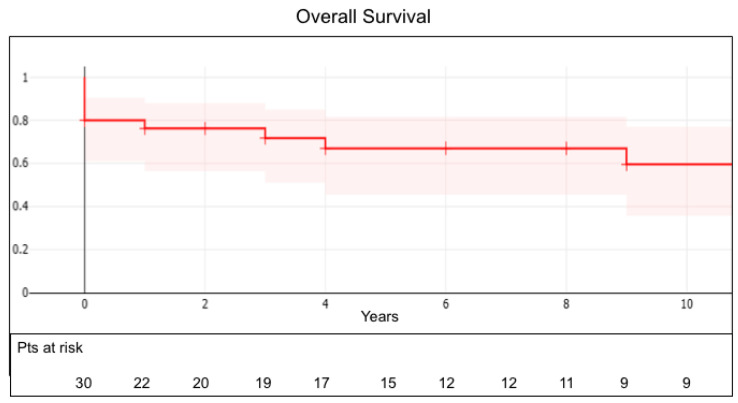 Figure 1
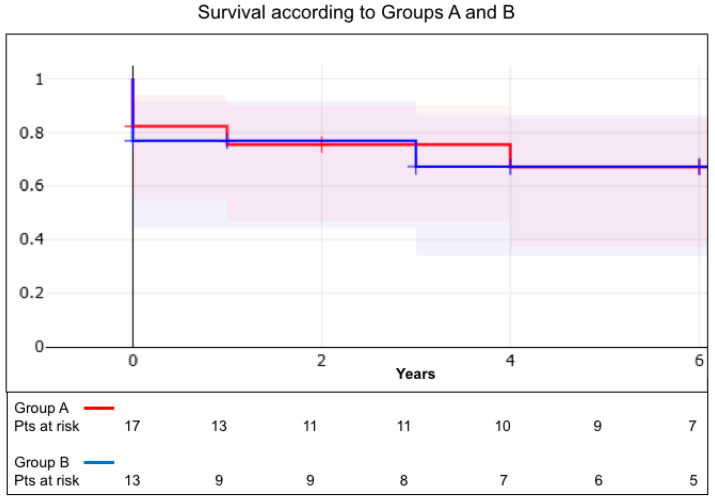 Figure 2
Peer Reviews
No public reviews on file for this paper yet. If you reviewed it on a platform where reviews are public (OpenReview, ICLR, NeurIPS, ICML), you can paste yours below so the community can read it here.
Videos
No videos yet. Explain this paper in a talk, walkthrough, or lecture? Add one.
Taxonomy
TopicsTransplantation: Methods and Outcomes · Renal Transplantation Outcomes and Treatments · Organ and Tissue Transplantation Research