Influence of Uterine Balloon Tamponade Prevalence on Uterine Artery Embolization in the Management of Postpartum Hemorrhage
Hitomi Imafuku, Kenji Tanimura, Sonoko Suda, Naohisa Masuko, Akiko Uchida, Masashi Deguchi, Koji Sasaki, Masato Yamaguchi, Yoshito Terai

TL;DR
This study found that using uterine balloon tamponade reduced the need for uterine artery embolization in treating postpartum hemorrhage, without affecting success rates.
Contribution
The study provides evidence on how the adoption of uterine balloon tamponade impacts the use of uterine artery embolization in postpartum hemorrhage management.
Findings
UAE use rate was significantly higher before UBT introduction (70.7% vs. 26.4%).
UAE success rates were similar between the pre-UBT and UBT periods.
Procedural time for UAE was longer in the UBT period but not significantly.
Abstract
Objectives: The aim of our retrospective cohort study was to assess the influence of uterine balloon tamponade (UBT) prevalence on uterine artery embolization (UAE) in management of postpartum hemorrhage (PPH). Methods: This retrospective cohort study analyzed, as the final cohort, women with PPH who were transferred from other hospitals or clinics and underwent UAE at our university hospital. Initial UAE success was defined as achieving hemostasis with the first UAE procedure. The use rates of UAE, UAE success rates, and UAE procedural times were compared between the pre-UBT period (January 2009–December 2014) and the UBT period (January 2015–December 2023). Results: In the pre-UBT period, 29 of 41 women with PPH underwent UAE. In the UBT period, 21 of 121 women received UAE following UBT, whereas 11 underwent UAE without prior UBT. The use rate of UAE was significantly higher in the…
Genes, proteins, chemicals, diseases, species, mutations and cell lines named across the full text — each resolved to its canonical identifier and authoritative record.
Click any figure to enlarge with its caption.
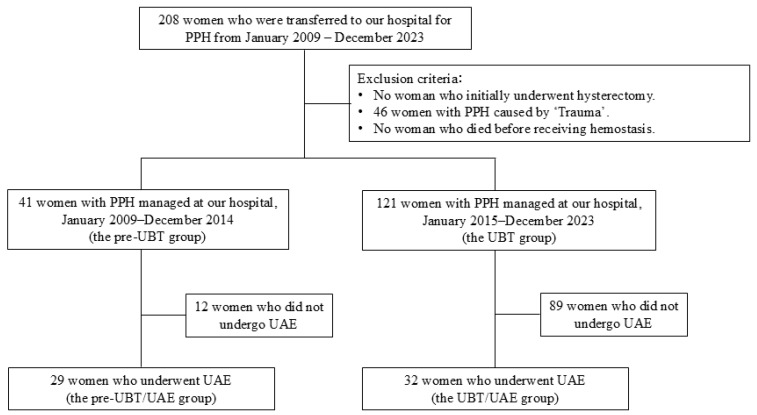 Figure 1
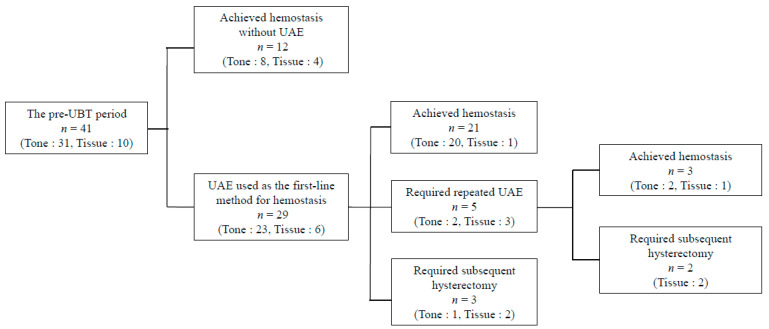 Figure 2
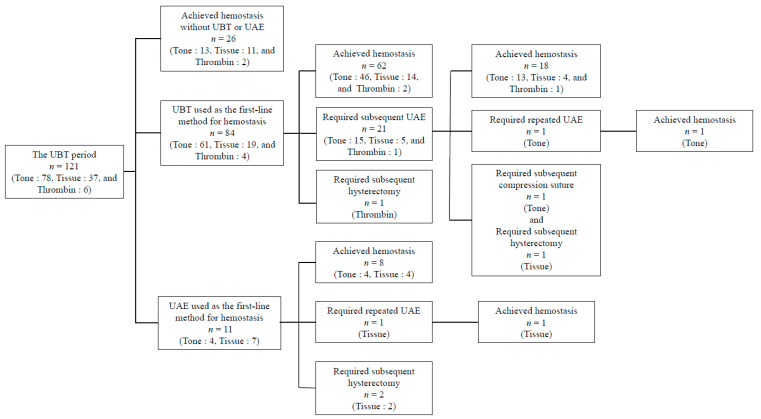 Figure 3
Peer Reviews
No public reviews on file for this paper yet. If you reviewed it on a platform where reviews are public (OpenReview, ICLR, NeurIPS, ICML), you can paste yours below so the community can read it here.
Videos
No videos yet. Explain this paper in a talk, walkthrough, or lecture? Add one.
Taxonomy
TopicsMaternal and fetal healthcare · Uterine Myomas and Treatments · Gestational Trophoblastic Disease Studies