Mid-Term Results of the Multicenter CAMPARI Registry Using the E-Liac Iliac Branch Device for Aorto-Iliac Aneurysms
Francesca Noce, Giulio Accarino, Domenico Angiletta, Luca del Guercio, Sergio Zacà, Mafalda Massara, Pietro Volpe, Antonio Peluso, Loris Flora, Raffaele Serra, Umberto Marcello Bracale

TL;DR
This study shows that the E-Liac device is effective for treating aorto-iliac aneurysms, with low complication rates and good mid-term outcomes.
Contribution
The study provides multicenter mid-term results for the E-Liac device, which is a newer modular iliac branch device.
Findings
Technical success was achieved in 96% of E-Liac implantations.
Low rates of branch instability (5.4%) and endoleak (9.5%) were observed over 18 months of follow-up.
No 30-day mortality or aneurysm-related deaths were reported.
Abstract
Background: Intentional occlusion of the internal iliac artery (IIA) during endovascular repair of aorto-iliac aneurysms may predispose patients to pelvic ischemic complications such as gluteal claudication, erectile dysfunction, and bowel ischemia. Iliac branch devices (IBDs) have been developed to preserve hypogastric perfusion. E-Liac (Artivion/Jotec) is one of the latest modular IBDs yet reports on mid-term performance are limited to small single-center cohorts with short follow-up. The CAMpania PugliA bRanch IliaC (CAMPARI) study is a multicenter investigation of E-Liac outcomes. Methods: A retrospective observational cohort study was conducted across five Italian vascular centers. All consecutive patients undergoing E-Liac implantation for aorto-iliac or isolated iliac aneurysms between January 2015 and December 2024 were identified from prospectively maintained registries.…
Genes, proteins, chemicals, diseases, species, mutations and cell lines named across the full text — each resolved to its canonical identifier and authoritative record.
Click any figure to enlarge with its caption.
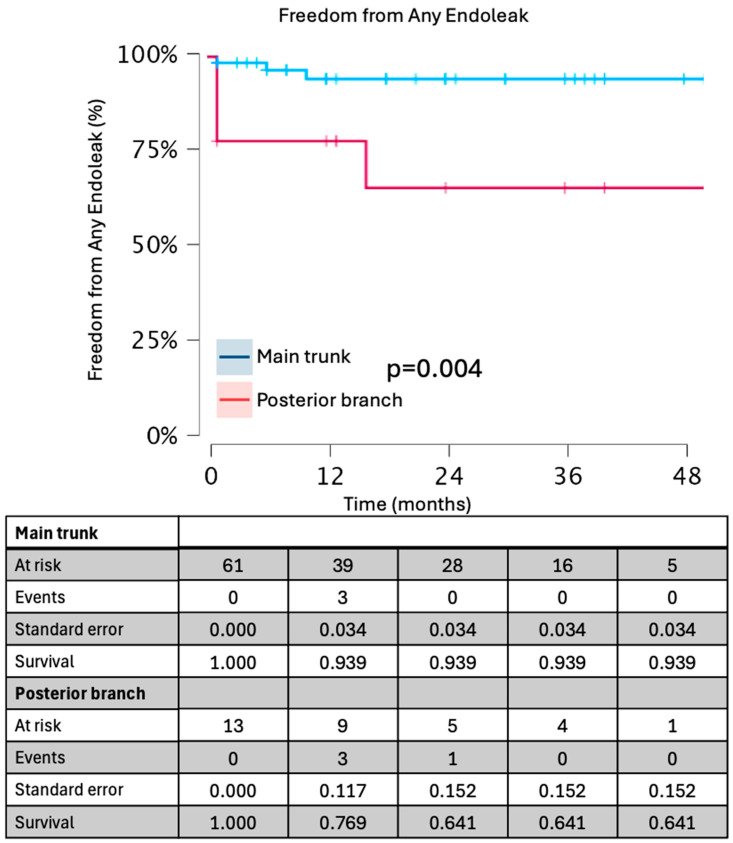 Figure 1
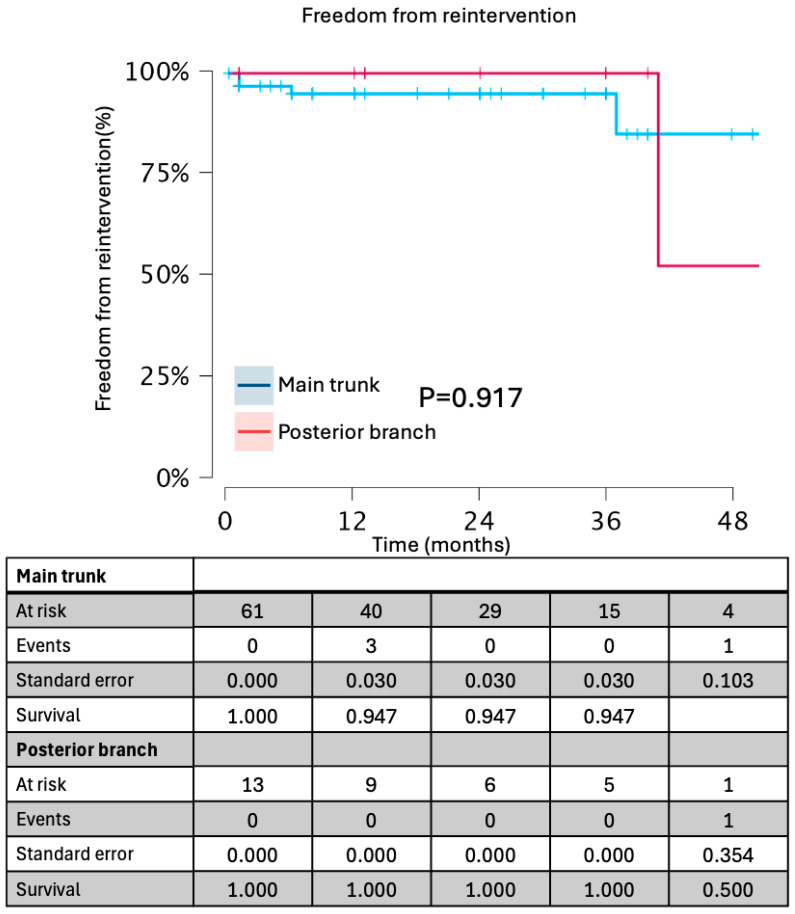 Figure 2
Peer Reviews
No public reviews on file for this paper yet. If you reviewed it on a platform where reviews are public (OpenReview, ICLR, NeurIPS, ICML), you can paste yours below so the community can read it here.
Videos
No videos yet. Explain this paper in a talk, walkthrough, or lecture? Add one.
Taxonomy
TopicsAortic aneurysm repair treatments · Peripheral Artery Disease Management · Infectious Aortic and Vascular Conditions