Functional Analysis of the Scarlet Gene in the Cricket Gryllus bimaculatus
Li-Fen Zeng, Yun Bai, Long Chen, Xin-Kun Yang, Jin-Li Xu, Zhu-Qing He, Kai Li

TL;DR
The study shows that the scarlet gene in crickets is responsible for eye pigmentation but does not affect eye structure or fertility.
Contribution
The functional role of the scarlet gene in eye pigmentation of Gryllus bimaculatus is experimentally confirmed using CRISPR/Cas9.
Findings
A yellow-eyed mutant line was created using CRISPR/Cas9, showing pigmentation defects from embryonic stages.
The compound eye structure and reproductive capacity remained unaffected in the mutant line.
Expression levels of white and brown genes were reduced in the mutant, suggesting a regulatory role.
Abstract
Eye-color genes are widely used to study insect development and genetics. In this work, we focused on the scarlet gene in the cricket Gryllus bimaculatus. By applying CRISPR/Cas9 gene editing, we produced a stable yellow-eyed mutant line, in which the pigmentation defect was visible from the embryonic stage to adulthood. Despite the altered eye color, the microscopic structure of the compound eyes and the reproductive capacity of the Gbst−/− knockout strain were unaffected. These results show that this gene plays a specific role in eye pigmentation but not in eye development or fertility. Therefore, this gene can be considered a useful visible marker for genetic manipulation in crickets. The scarlet gene encodes an ATP-binding cassette transporter involved in eye pigmentation across various insect species. In this study, we functionally characterized the scarlet homolog (Gbst) in the…
Genes, proteins, chemicals, diseases, species, mutations and cell lines named across the full text — each resolved to its canonical identifier and authoritative record.
Click any figure to enlarge with its caption.
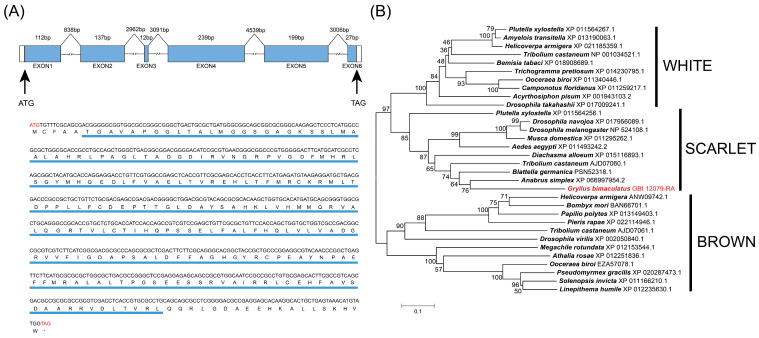 Figure 1
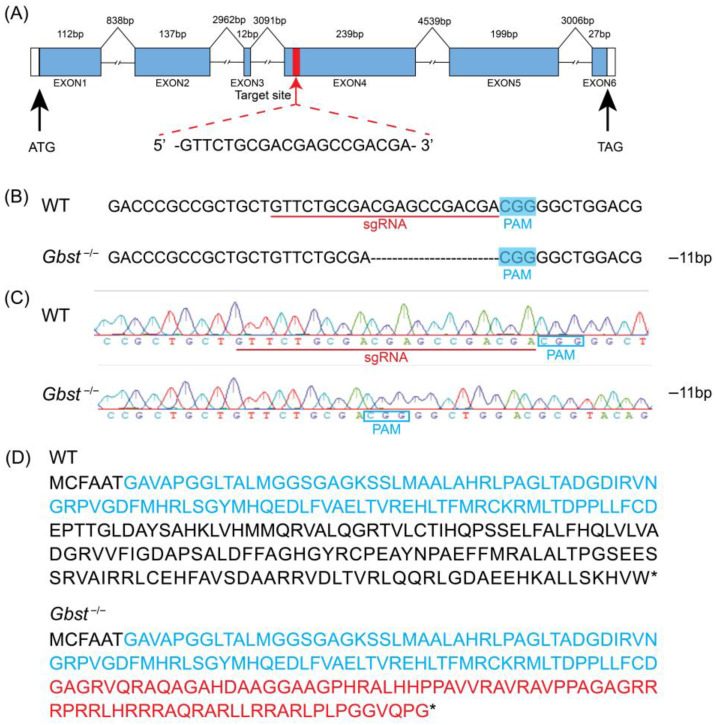 Figure 2
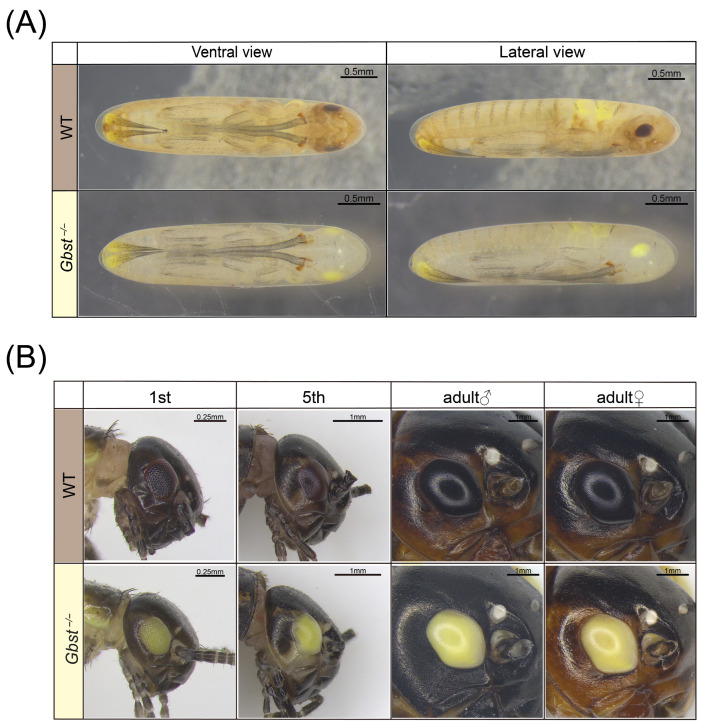 Figure 3
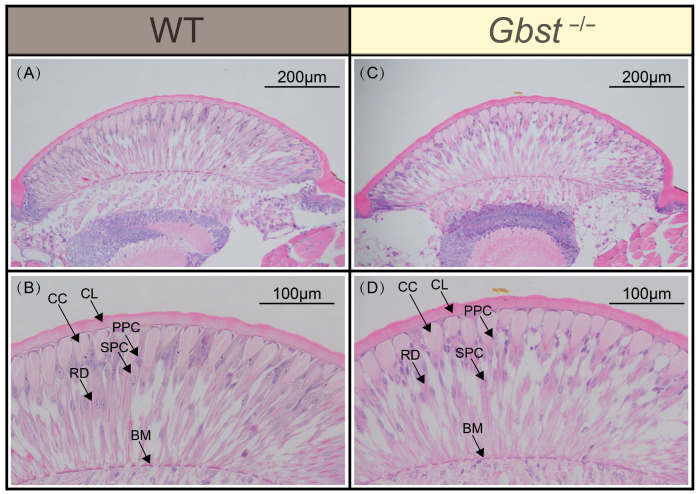 Figure 4
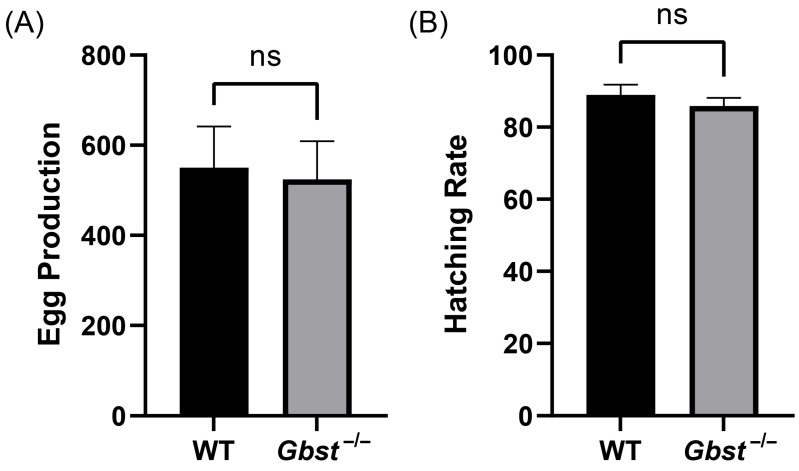 Figure 5
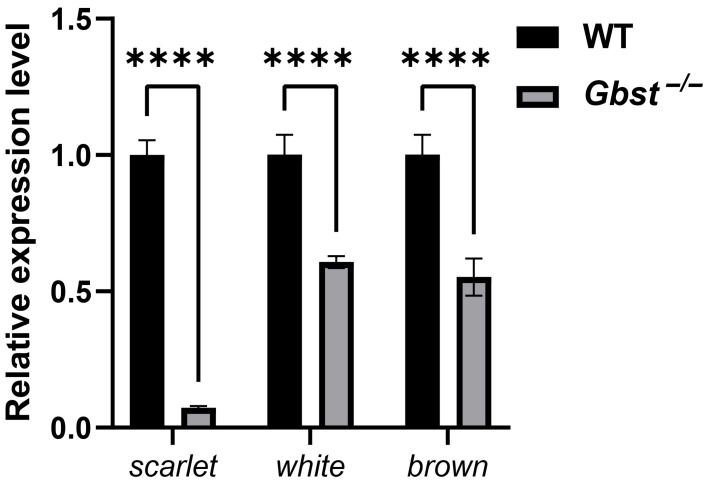 Figure 6
Peer Reviews
No public reviews on file for this paper yet. If you reviewed it on a platform where reviews are public (OpenReview, ICLR, NeurIPS, ICML), you can paste yours below so the community can read it here.
Videos
No videos yet. Explain this paper in a talk, walkthrough, or lecture? Add one.
Taxonomy
TopicsNeurobiology and Insect Physiology Research · Animal Behavior and Reproduction · Developmental Biology and Gene Regulation