Deciphering Morphological Variability: Addressing Taxonomic Ambiguities in Contemporary Species Delimitation (Hymenoptera, Figitidae)
Mar Ferrer-Suay, George E. Heimpel, Ehsan Rakhshani, Jesús Selfa

TL;DR
This paper uses a combination of physical traits and DNA data to better define species boundaries in tiny wasps called Charipinae, improving their classification.
Contribution
The study introduces an integrative taxonomic framework combining morphology and molecular data to resolve species delimitation in Charipinae wasps.
Findings
Morphological and molecular data largely agree, confirming traditional species in Charipinae.
DNA evidence refined species boundaries and revealed potential hidden diversity.
Morphology remains reliable, but combining it with molecular data improves accuracy and stability in classification.
Abstract
Charipinae (Hymenoptera, Figitidae) are a small group of important aphid hyperparasitoids known for their tiny size and minimal visible variation, making them challenging to identify. Traditional morphological characters sometimes vary within species, making species delimitation unstable. We used an integrative taxonomic approach that combines morphology and molecular data to clarify species limits in two genera, Alloxysta and Phaenoglyphis. By analyzing 53 morphological characters and three genetic markers (COI, ITS2, and 16S rRNA), we found that molecular and morphological data largely agree, confirming the traditionally recognized species in this group. Furthermore, DNA evidence also helped refine some species boundaries and revealed possible hidden diversity. Our results show that morphology remains a reliable foundation for Charipinae taxonomy, but combining it with molecular data…
Genes, proteins, chemicals, diseases, species, mutations and cell lines named across the full text — each resolved to its canonical identifier and authoritative record.
Click any figure to enlarge with its caption.
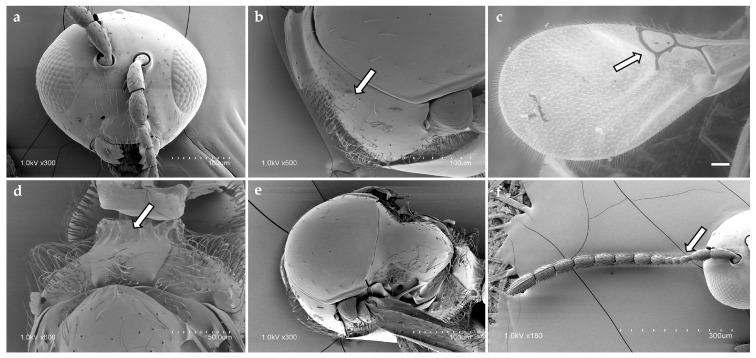 Figure 1
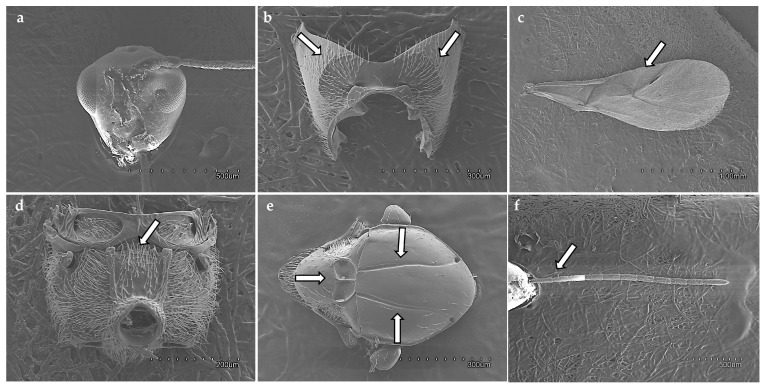 Figure 2
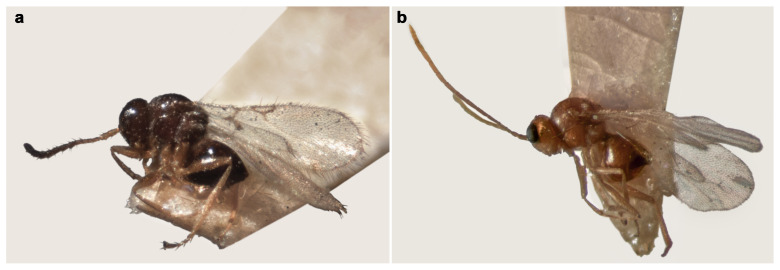 Figure 3
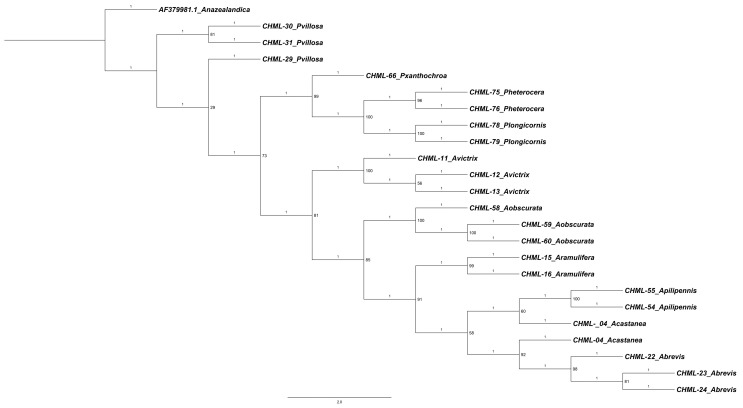 Figure 4
Peer Reviews
No public reviews on file for this paper yet. If you reviewed it on a platform where reviews are public (OpenReview, ICLR, NeurIPS, ICML), you can paste yours below so the community can read it here.
Videos
No videos yet. Explain this paper in a talk, walkthrough, or lecture? Add one.
Taxonomy
TopicsHymenoptera taxonomy and phylogeny · Fossil Insects in Amber · Insect-Plant Interactions and Control