Subclinical Atrial Fibrillation Prediction in Patients with CIED by a Novel Deep Learning Framework
Yongying Lan, Chengze Lin, Ning Zhang, Qing Cao, Qi Jin, Qingzhi Luo, Yue Wei, Yangyang Bao, Changjian Lin, Wenqi Pan, Kang Chen, Liqun Wu, Yun Xie

TL;DR
A new deep learning model called ResKAN-Attention improves prediction of subclinical atrial fibrillation in patients with heart devices, using routine clinical data.
Contribution
A novel deep learning framework combining Kolmogorov–Arnold Networks and cross-attention for predicting subclinical atrial fibrillation.
Findings
The ResKAN-Attention model achieved a mean AUC of 0.837 in cross-validation and 0.788 in external validation for predicting subclinical atrial fibrillation.
Key predictors identified include left atrial diameter, gender, lactate dehydrogenase, BMI, and hypertension.
A simplified risk score retained 99.1% of the complex model's performance with an AUC of 0.882.
Abstract
Background: Subclinical atrial fibrillation (SCAF), a key risk factor for cryptogenic stroke, is difficult to predict with current tools. This study aimed to develop a novel deep learning framework, ResKAN-Attention, using only routine clinical data to predict SCAF in patients with cardiac implantable electronic device (CIED). Methods: In this retrospective study, the ResKAN-Attention model was developed using 27 routine parameters from 124 CIED patients without prior AF. This framework features a dual-path architecture combining a Kolmogorov–Arnold Network (KAN) with a traditional multilayer perceptron, fused via a cross-attention mechanism. The model’s performance was evaluated against common baselines using five-fold cross-validation, while its decision-making process was assessed through interpretability analysis. A clinically applicable risk scoring system was subsequently derived…
Genes, proteins, chemicals, diseases, species, mutations and cell lines named across the full text — each resolved to its canonical identifier and authoritative record.
Click any figure to enlarge with its caption.
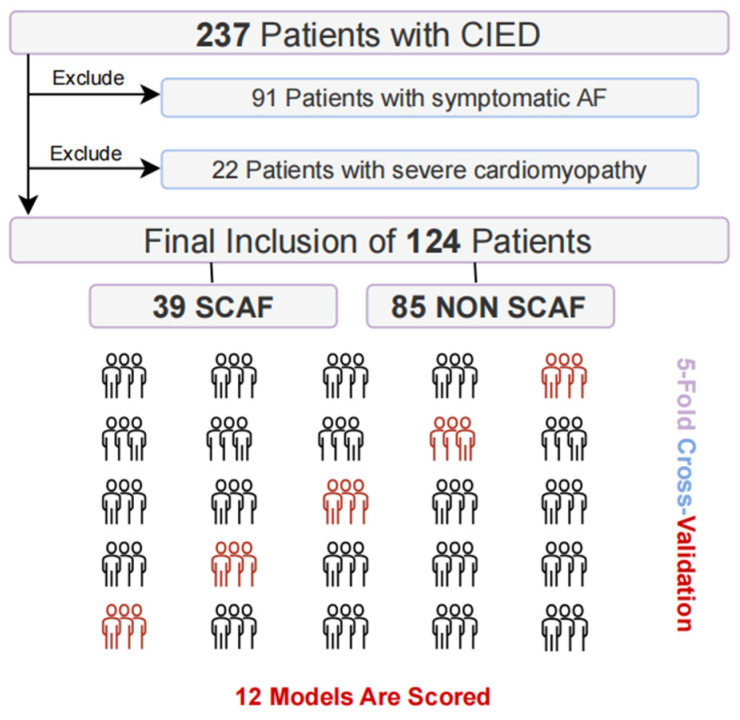 Figure 1
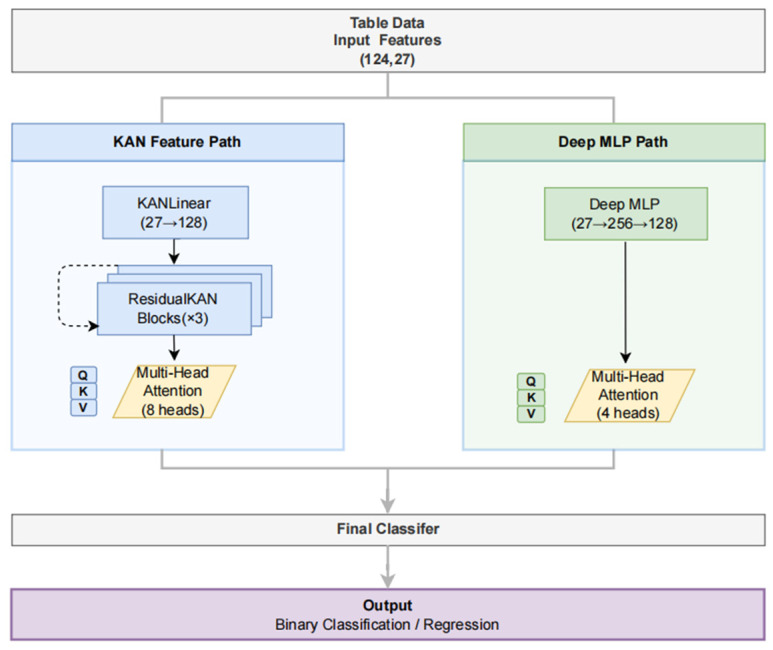 Figure 2
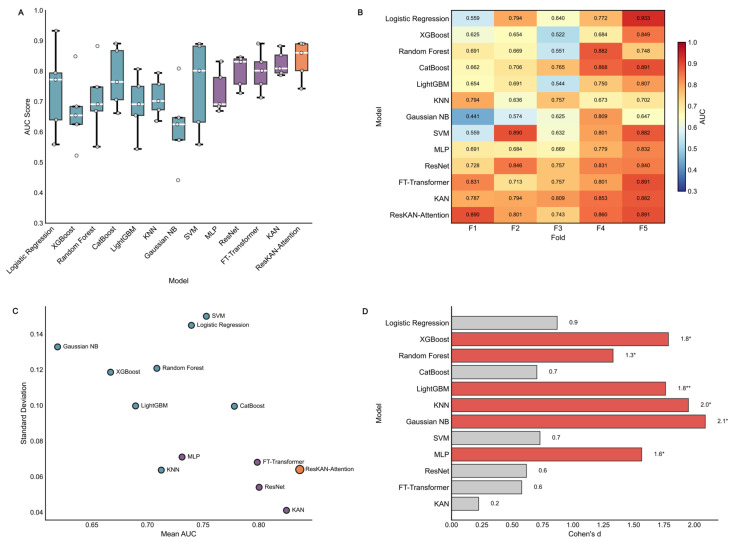 Figure 3
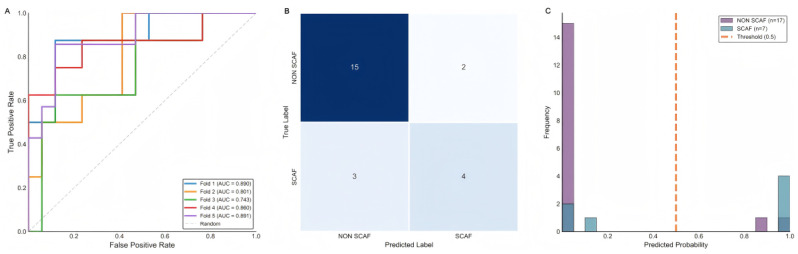 Figure 4
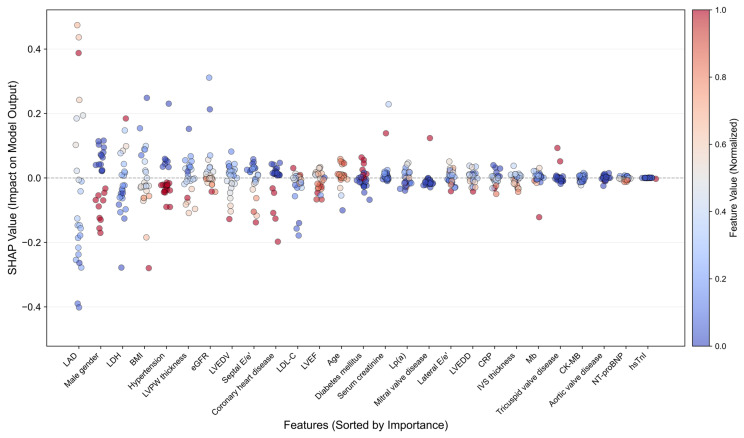 Figure 5
Peer Reviews
No public reviews on file for this paper yet. If you reviewed it on a platform where reviews are public (OpenReview, ICLR, NeurIPS, ICML), you can paste yours below so the community can read it here.
Videos
No videos yet. Explain this paper in a talk, walkthrough, or lecture? Add one.
Taxonomy
TopicsAtrial Fibrillation Management and Outcomes · Cardiac pacing and defibrillation studies · Cardiovascular Disease and Adiposity