Pathogenic Pathways and Therapeutic Strategies in Autosomal Dominant Polycystic Kidney Disease (ADPKD)
Kenley M. Preval, Abigail O. Smith, Gregory J. Pazour

TL;DR
This paper explores the biological pathways involved in ADPKD and outlines potential new treatments to stop kidney cyst growth and disease progression.
Contribution
The paper provides a comprehensive overview of pathogenic mechanisms and novel therapeutic strategies for ADPKD.
Findings
Loss of polycystin function disrupts calcium and cAMP signaling, leading to cyst formation.
Cyst growth involves Ca2+, cAMP, mTORC1, Src, and RTK pathways, along with chloride and water transporters.
New therapies targeting these pathways may halt ADPKD progression.
Abstract
Autosomal dominant polycystic kidney disease (ADPKD) is the most common inherited kidney disorder and a major cause of end-stage renal disease. The disorder is primarily caused by pathogenic variants in PKD1 or PKD2, which encode the ciliary proteins polycystin-1 and polycystin-2. Loss of polycystin function disrupts calcium and cAMP signaling within the primary cilium, altering epithelial proliferation and fluid secretion that drive cyst formation and progressive kidney enlargement. Atypical forms of ADPKD arise from variants in genes required for the production of polycystins or for ciliary assembly. Cyst growth depends on proliferative and secretory pathways involving Ca2+, cAMP, mTORC1, Src, and receptor tyrosine kinases, while chloride and water transport via CFTR, ANO1, and NKCC1 drive luminal expansion. The vasopressin V2 receptor antagonists tolvaptan remains the only approved…
Genes, proteins, chemicals, diseases, species, mutations and cell lines named across the full text — each resolved to its canonical identifier and authoritative record.
Click any figure to enlarge with its caption.
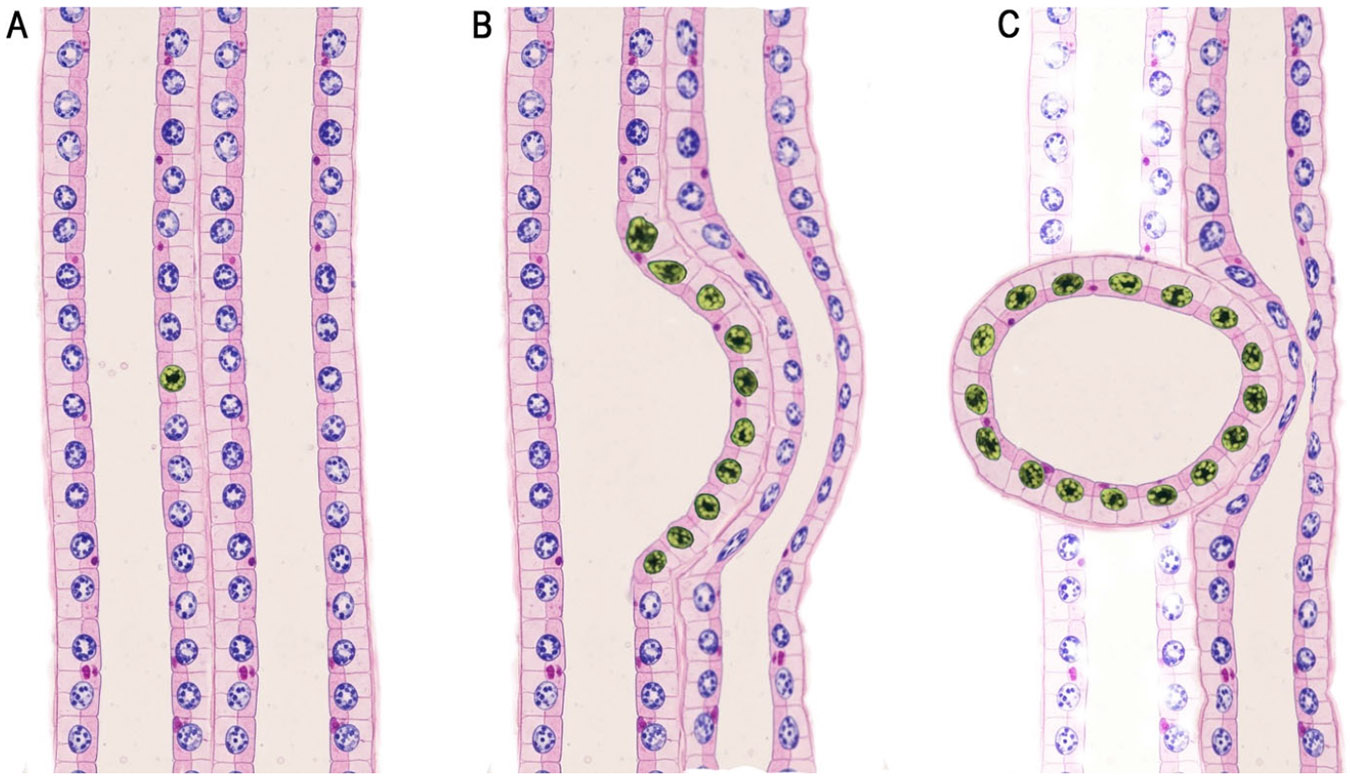 Figure 1
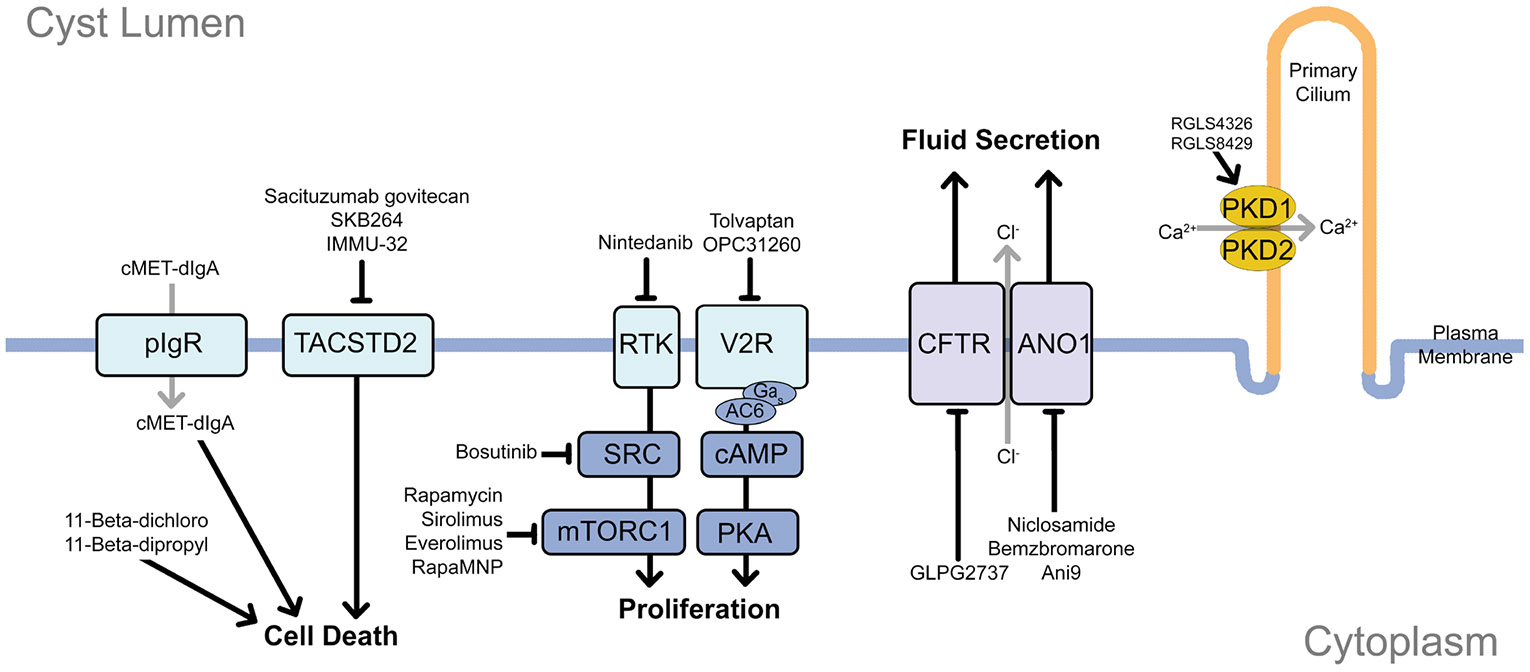 Figure 2
Peer Reviews
No public reviews on file for this paper yet. If you reviewed it on a platform where reviews are public (OpenReview, ICLR, NeurIPS, ICML), you can paste yours below so the community can read it here.
Videos
No videos yet. Explain this paper in a talk, walkthrough, or lecture? Add one.
Taxonomy
TopicsGenetic and Kidney Cyst Diseases · Renal and related cancers · Tuberous Sclerosis Complex Research