The Participation of Acetyl Phosphate, a Microbial and Host Metabolite, in the Regulation of the Calcium Balance in Mitochondria and Cells
Natalia V. Beloborodova, Alexey V. Berezhnov, Nadezhda I. Fedotcheva

TL;DR
This study shows that acetyl phosphate helps regulate calcium balance in mitochondria and cells, especially when phosphate levels are low.
Contribution
The study reveals a novel role of acetyl phosphate in modulating mitochondrial and cellular calcium signaling under phosphate-deficient conditions.
Findings
Acetyl phosphate increases mitochondrial resistance to calcium loading in a concentration-dependent manner.
Acetyl phosphate enhances calcium retention capacity and membrane potential in phosphate-free conditions.
Acetyl phosphate alters ATP-induced calcium responses more in neuroblastoma cells than in astrocytes.
Abstract
Acetyl phosphate (AcP) is a microbial metabolite acting as a link between cell metabolism and signaling, providing the survival of bacteria in the host. AcP was also identified as an intermediate of pyruvate oxidation in mammalian mitochondria and was found in the human blood in some severe pathologies. The possible contribution of circulating AcP to the maintenance of the physiological or pathological states of the body has not been studied. Since AcP can function as a donor of phosphate groups, we have examined in vitro the influence of AcP on calcium signaling in mitochondria and cells by measuring the membrane potential and the calcium retention capacity of mitochondria by selective electrodes and by assaying the cell calcium signaling by Fura-2AM fluorescent radiometry. AcP was shown to induce a concentration-dependent increase in the mitochondrial resistance to calcium ion loading…
Genes, proteins, chemicals, diseases, species, mutations and cell lines named across the full text — each resolved to its canonical identifier and authoritative record.
Click any figure to enlarge with its caption.
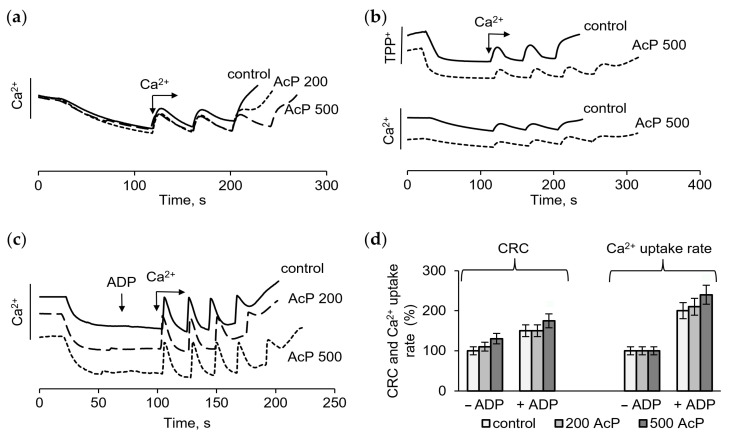 Figure 1
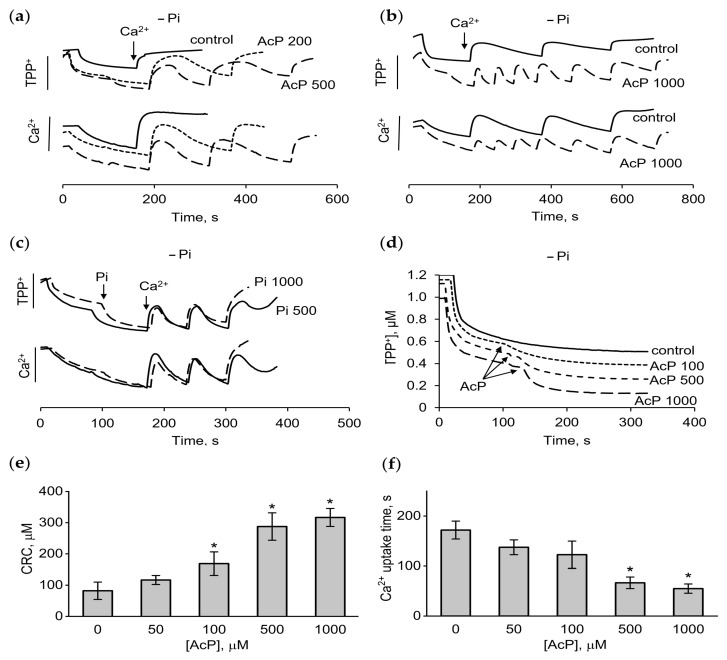 Figure 2
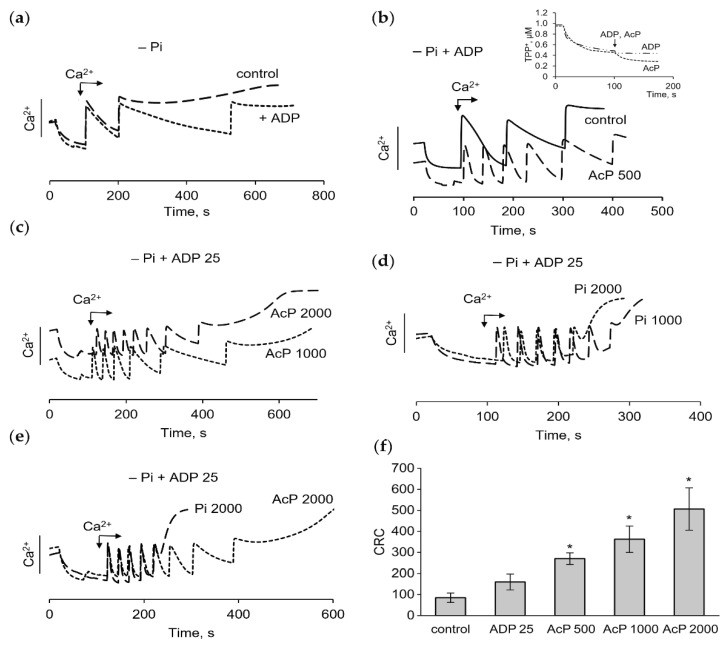 Figure 3
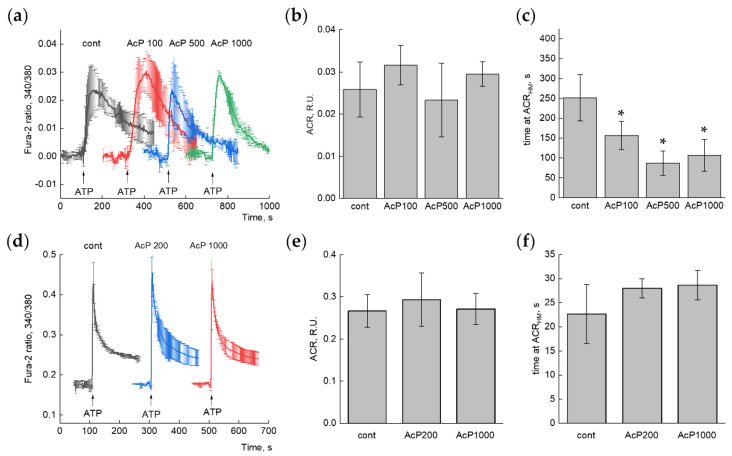 Figure 4
Peer Reviews
No public reviews on file for this paper yet. If you reviewed it on a platform where reviews are public (OpenReview, ICLR, NeurIPS, ICML), you can paste yours below so the community can read it here.
Videos
No videos yet. Explain this paper in a talk, walkthrough, or lecture? Add one.
Taxonomy
TopicsMetabolism and Genetic Disorders · Phytase and its Applications · Cancer, Hypoxia, and Metabolism