Prospective Study on the Evaluation of Echocardiographic Parameters as Predictors of a Positive Response to Cardiac Resynchronization Therapy in a Tertiary Care Hospital in Mexico
Juan Carlos Plata-Corona, Karla Sofia Chávez-Gómez, Enrique Torres-Rasgado, Heberto Aquino-Bruno, José Omar Arenas-Díaz, Elias Terrazas-Cervantes, Nilda Espinola-Zavaleta

TL;DR
This study identifies two echocardiographic parameters that predict whether patients will benefit from cardiac resynchronization therapy for heart failure.
Contribution
The study demonstrates that Global Longitudinal Strain and the Kapetanakis index are strong predictors of CRT response.
Findings
14 out of 33 patients (42%) responded positively to CRT based on a ≥15% reduction in left ventricular end-systolic volume.
Baseline Global Longitudinal Strain and Kapetanakis index showed significant differences between responders and non-responders.
A strong positive correlation (ρ = 0.663) was found between CRT response and improved quality of life.
Abstract
Background/Objectives: Heart failure is a major global health problem. Among the available treatment options, cardiac resynchronization therapy (CRT) has been shown to improve both quality of life (QoL) and mortality; however, not all patients respond adequately. Our study aimed to identify echocardiographic parameters that predict a positive response to CRT. Methods: A total of 33 patients (10 women and 23 men) were prospectively recruited, all met the standard criteria for CRT implantation. Biochemical, clinical, QoL, 6 min walk test, and echocardiographic evaluations were performed prior to CRT implantation and reassessed after 6 months. A ≥15% reduction in left ventricular end-systolic volume was taken as the defining parameter of positive response. Based on response level, patients were divided into two groups: responders and non-responders. Results: Comparing the overall…
Genes, proteins, chemicals, diseases, species, mutations and cell lines named across the full text — each resolved to its canonical identifier and authoritative record.
Click any figure to enlarge with its caption.
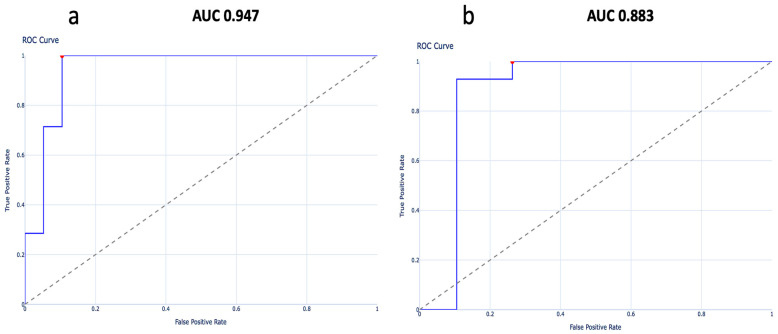 Figure 1
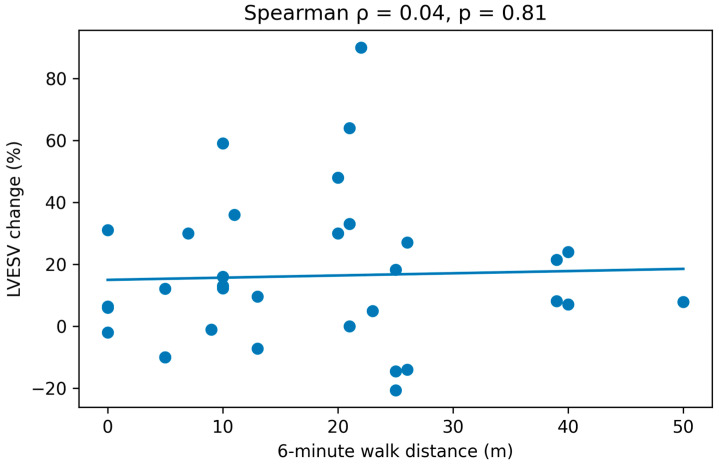 Figure 2
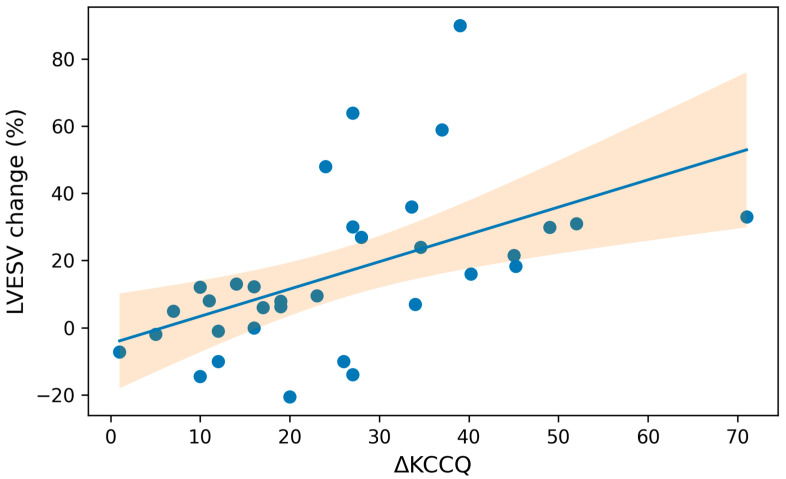 Figure 3
Peer Reviews
No public reviews on file for this paper yet. If you reviewed it on a platform where reviews are public (OpenReview, ICLR, NeurIPS, ICML), you can paste yours below so the community can read it here.
Videos
No videos yet. Explain this paper in a talk, walkthrough, or lecture? Add one.
Taxonomy
TopicsCardiac pacing and defibrillation studies · Heart Failure Treatment and Management · Cardiac Structural Anomalies and Repair