CT-Based Analysis of Rod Trace Length Changes During Posterior Spinal Correction in Adult Spinal Deformity
Takumi Takeuchi, Takafumi Iwasaki, Kaito Jinnai, Yosuke Kawano, Kazumasa Konishi, Masahito Takahashi, Hitoshi Kono, Naobumi Hosogane

TL;DR
This study examines how rod length changes during spinal surgery in adults with spinal deformity, finding that greater deformity correlates with more rod shortening, which could help avoid skin complications.
Contribution
The study quantitatively evaluates rod length changes in adult spinal deformity surgery and links them to spinal correction parameters.
Findings
Postoperative rod trace length (RTL) shortened by an average of 16–17 mm in all patients.
RTL shortening was significantly correlated with lumbar lordosis and Cobb angle correction.
Greater RTL shortening occurred on the convex side in patients with a preoperative Cobb angle ≥ 10°.
Abstract
Background: In adult spinal deformity (ASD) surgery, appropriate rod length determination is crucial, as excessive cranial rod length can lead to skin problems, especially in thin elderly patients if proximal junctional kyphosis (PJK) develops. In adolescent idiopathic scoliosis (AIS), correction is primarily performed in the coronal plane, and rod length changes are relatively predictable. Moreover, PJK is uncommon in AIS, making excess rod length rarely a clinical concern. In contrast, ASD correction involves more complex three-dimensional realignment, including restoration of lumbar lordosis (LL), which makes it challenging to predict postoperative changes in rod trace length (RTL). Furthermore, because PJK occurs more frequently in ASD surgery, appropriate rod length selection becomes clinically important. This study aimed to quantitatively evaluate changes in RTL before and after…
Genes, proteins, chemicals, diseases, species, mutations and cell lines named across the full text — each resolved to its canonical identifier and authoritative record.
Click any figure to enlarge with its caption.
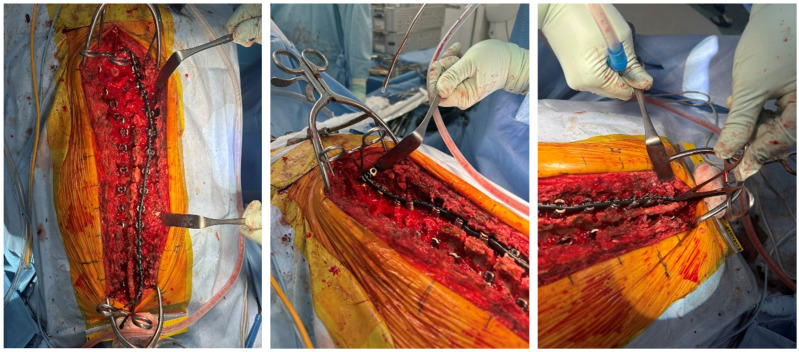 Figure 1
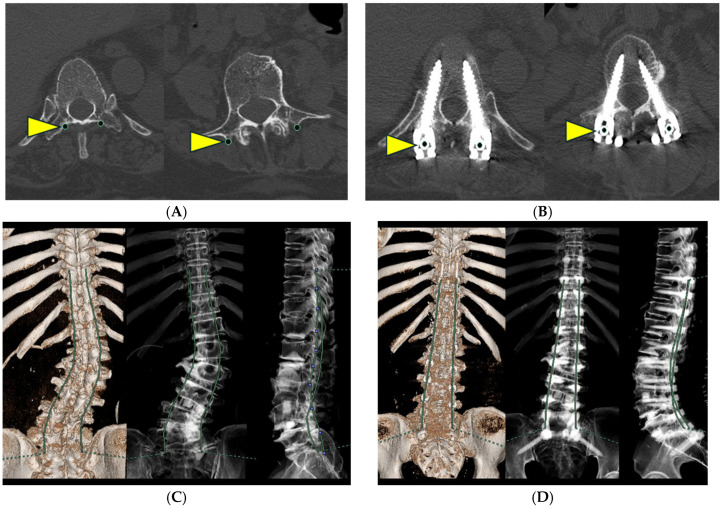 Figure 2
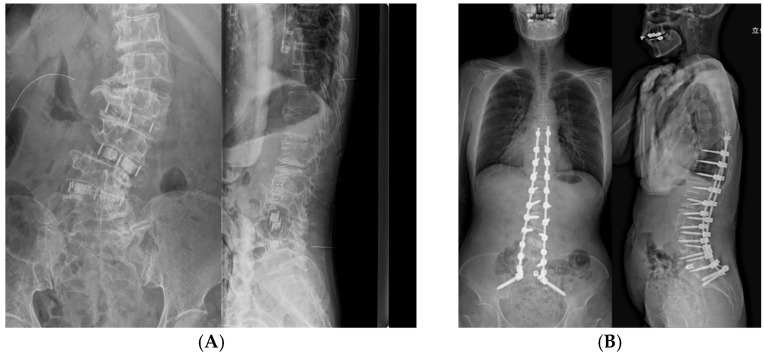 Figure 3
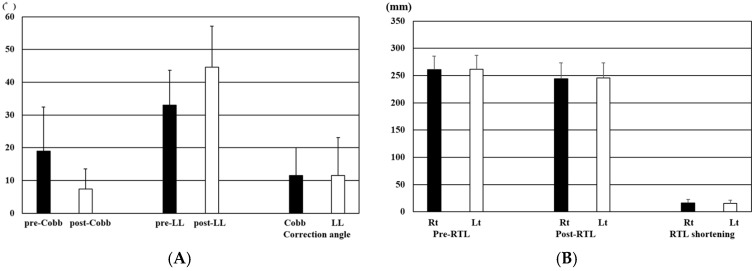 Figure 4
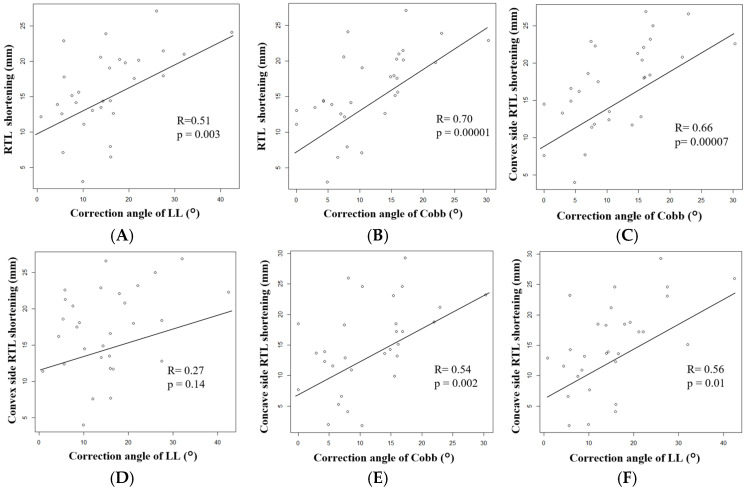 Figure 5
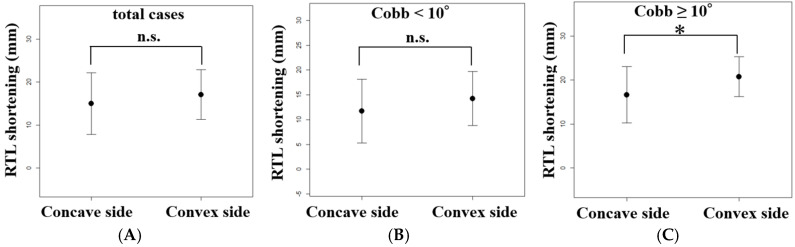 Figure 6
Peer Reviews
No public reviews on file for this paper yet. If you reviewed it on a platform where reviews are public (OpenReview, ICLR, NeurIPS, ICML), you can paste yours below so the community can read it here.
Videos
No videos yet. Explain this paper in a talk, walkthrough, or lecture? Add one.
Taxonomy
TopicsScoliosis diagnosis and treatment · Spine and Intervertebral Disc Pathology · Spinal Fractures and Fixation Techniques