Unmasking Early Cardiac Fibrosis in Sarcoidosis: The Role of Plasma Aldosterone and Cardiac MRI
Elias Giallafos, Evangelos Oikonomou, Niki Lama, Spiros Katsanos, Lykourgos Kolilekas, Evaggelos Markozanes, Varvara Pantoleon, Kostas Zisimos, Ourania Katsarou, Panagiotis Theofilis, Gesthimani Seitaridi, Ioannis Ilias, Grigoris Stratakos, Nikos Kelekis, Effrosyni D. Manali

TL;DR
This study finds that high plasma aldosterone levels are linked to early heart fibrosis in sarcoidosis patients, even before visible scarring or inflammation appears.
Contribution
The study identifies plasma aldosterone as a novel biomarker for early myocardial fibrosis in sarcoidosis, independent of active inflammation.
Findings
Plasma aldosterone levels were significantly higher in sarcoidosis patients with cardiac involvement compared to those without.
Aldosterone was independently associated with late gadolinium enhancement and higher extracellular volume values on cardiac MRI.
Aldosterone correlated with diffuse fibrosis even in the absence of visible scarring or inflammation.
Abstract
Background/Objectives: Cardiac sarcoidosis (CS) is a challenging diagnosis due to its subclinical progression and the limitations of existing screening tools. Cardiac magnetic resonance (CMR) and PET/CT imaging have improved diagnosis and detection. Aldosterone, a hormone with known profibrotic effects, may offer additional diagnostic value. We therefore aimed to determine whether plasma aldosterone level is associated with myocardial fibrosis, independent of active inflammation, in CS. Methods: This observational study included 541 patients with biopsy-proven sarcoidosis and preserved left ventricular ejection fraction (LVEF ≥ 50%). All underwent CMR with extracellular volume (ECV) mapping and 18F-FDG PET/CT to assess myocardial fibrosis and inflammation, respectively. Plasma aldosterone levels were also measured. Results: Plasma aldosterone levels were significantly higher in patients…
Genes, proteins, chemicals, diseases, species, mutations and cell lines named across the full text — each resolved to its canonical identifier and authoritative record.
Click any figure to enlarge with its caption.
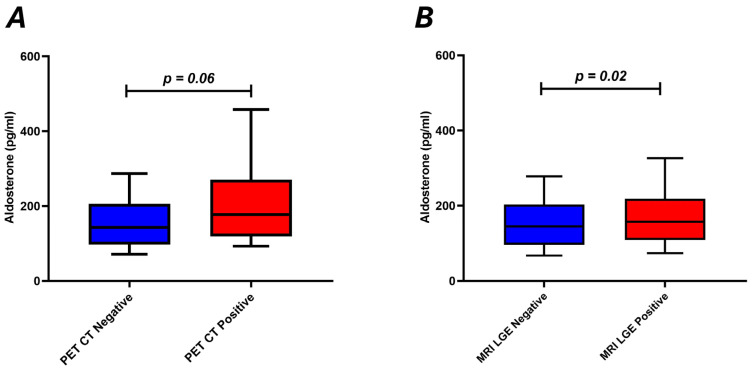 Figure 1
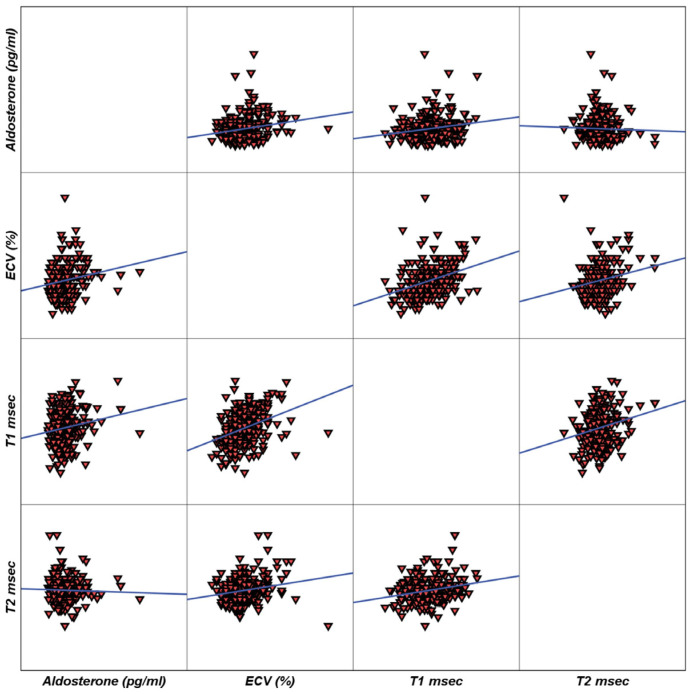 Figure 2
Peer Reviews
No public reviews on file for this paper yet. If you reviewed it on a platform where reviews are public (OpenReview, ICLR, NeurIPS, ICML), you can paste yours below so the community can read it here.
Videos
No videos yet. Explain this paper in a talk, walkthrough, or lecture? Add one.
Taxonomy
TopicsSarcoidosis and Beryllium Toxicity Research · Hormonal Regulation and Hypertension · Myasthenia Gravis and Thymoma