Terpenoid Mixtures as Repellents Against the American Cockroach: Their Synergy and Low Toxicity Against Non-Target Species
Hataichanok Passara, Tanapoom Moungthipmalai, Chamroon Laosinwattana, Sirawut Sittichok, Kouhei Murata, Mayura Soonwera

TL;DR
A natural mixture of geranial and trans-cinnamaldehyde is more effective at repelling American cockroaches than DEET and is safe for non-target species like earthworms and guppies.
Contribution
The study identifies a synergistic terpenoid mixture that outperforms DEET in cockroach repellency while being non-toxic to non-target organisms.
Findings
The geranial + trans-cinnamaldehyde (1:1) mixture was the most effective cockroach repellent, surpassing DEET in efficacy.
All terpenoid mixtures showed strong synergy, with repellency values increasing by 79 to 96%.
The terpenoid mixtures were non-toxic to non-target species, unlike DEET, which caused 100% mortality in some cases.
Abstract
The American cockroach (Periplaneta americana (L.)) is a serious vector of human diseases and allergens, especially in children. Safe and effective natural insecticides and repellents are needed to safeguard human health and environmental safety, especially in sensitive areas where American cockroaches reside, such as the sewers and drains of hospitals and nursing homes, residential homes, and cafeterias or other food-handling places. Natural repellents, namely, terpenoids from plant essential oils, are understood to be strong candidates for cockroach management. In this study, the repellent efficacy of lone terpenoids and terpenoid mixtures—geranial, trans-anethole, and trans-cinnamaldehyde—as repellents against adult cockroaches was investigated and compared with those of DEET (N,N-diethyl-meta-toluamide) and distilled water. The mixture of geranial + trans-cinnamaldehyde (1:1) was…
Genes, proteins, chemicals, diseases, species, mutations and cell lines named across the full text — each resolved to its canonical identifier and authoritative record.
Click any figure to enlarge with its caption.
 Figure 1
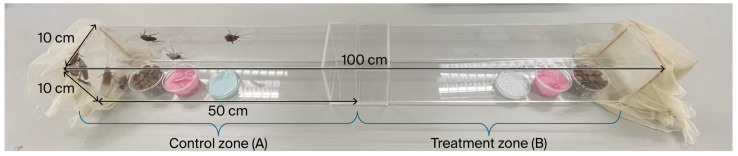 Figure 2
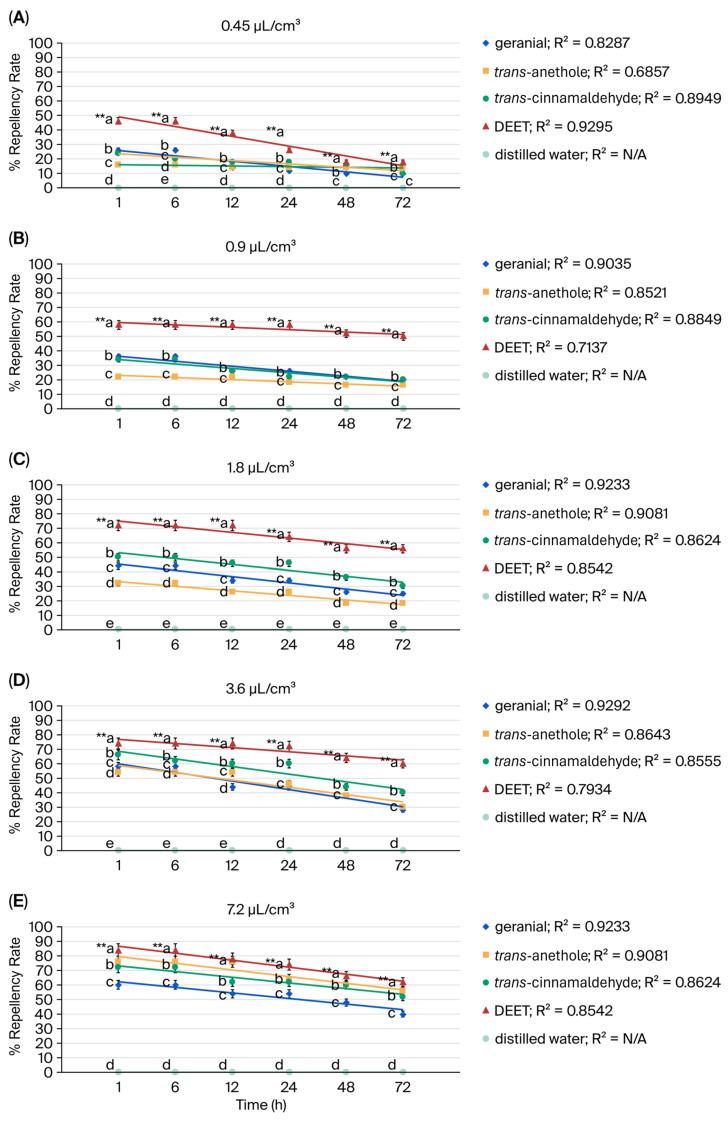 Figure 3
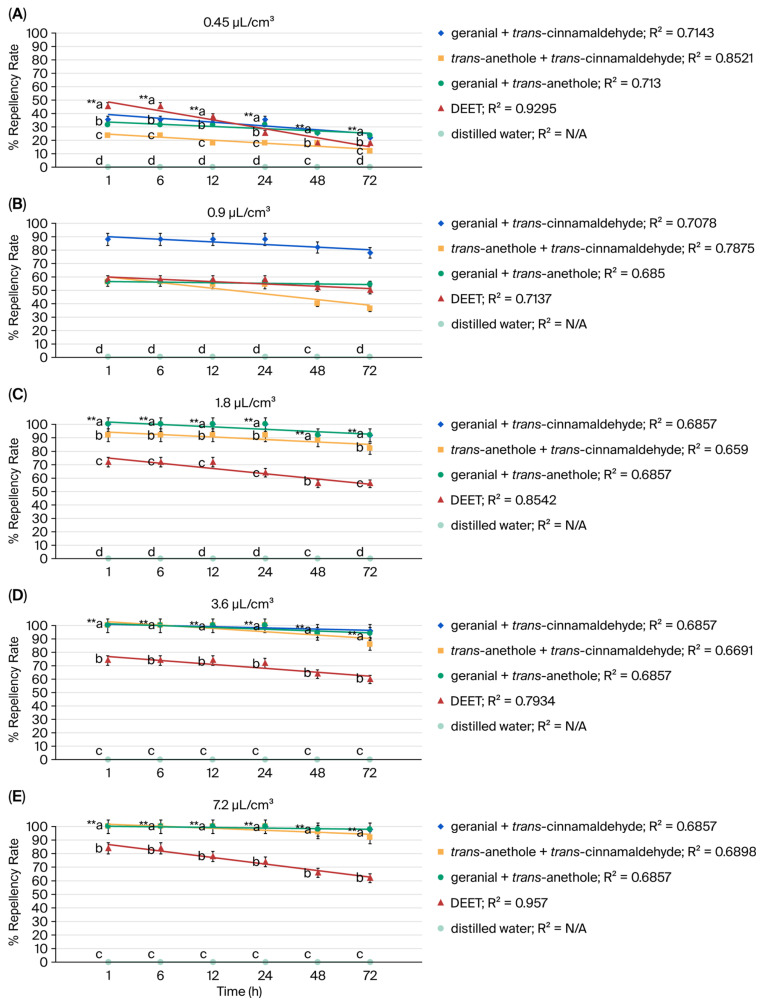 Figure 4
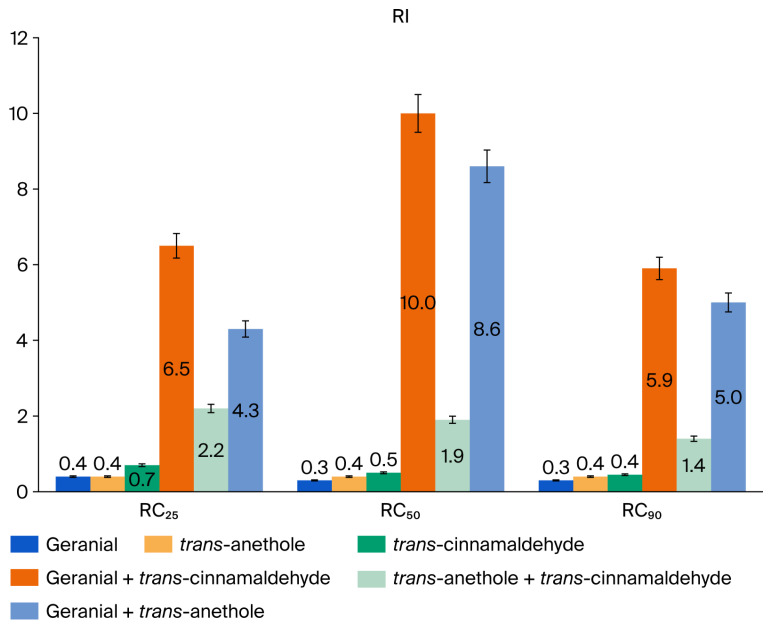 Figure 5
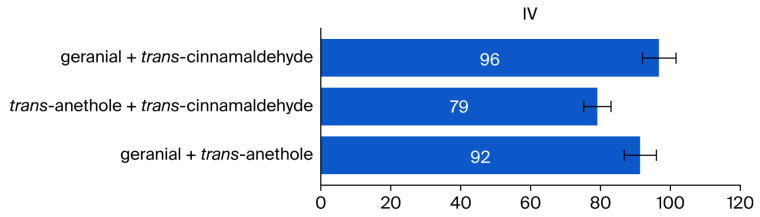 Figure 6
Peer Reviews
No public reviews on file for this paper yet. If you reviewed it on a platform where reviews are public (OpenReview, ICLR, NeurIPS, ICML), you can paste yours below so the community can read it here.
Videos
No videos yet. Explain this paper in a talk, walkthrough, or lecture? Add one.
Taxonomy
TopicsInsects and Parasite Interactions · Insect Pest Control Strategies · Insect Utilization and Effects