A Method for the Analysis of the Symmetry of Excited States from GW-BSE
Mohammad Maymoun, Marah Jamil Alrahamneh, Alessio Saccomani, Iogann Tolbatov, Paolo Umari

TL;DR
This paper introduces a method to analyze the symmetry of excited states calculated using the GW-BSE approach, enabling better classification and understanding of these states.
Contribution
The novelty is a method to assign GW-BSE excited states to irreducible representations using symmetry operators.
Findings
The method identifies how excited states transform under various symmetry operations.
It determines if an excited state is an eigenstate of an angular momentum operator.
Results are demonstrated on a set of small molecules.
Abstract
We present a method for analyzing the symmetries of excited states previously calculated with the popular GW-BSE approach. These are expressed through the Tamm-Dancoff approximation using the so-called batches representation. The method allows to establish how an excited state is transformed by symmetry operators as plane-reflection, proper and improper axis-rotation, point-inversions. It can also report if an excited state is eigen-state of an angular momentum operator. This permits the assignment to an irreducible representation of the underlying symmetry group and a prompt labeling of the GW-BSE states. We show results for a significant set of small molecules. Our approach can be easily extended to TD-DFT and can be used to probe the local environment of localized excitations.
Click any figure to enlarge with its caption.
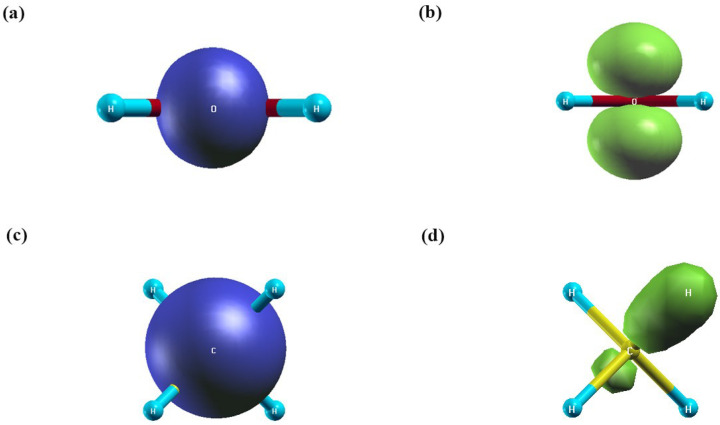 Figure 1
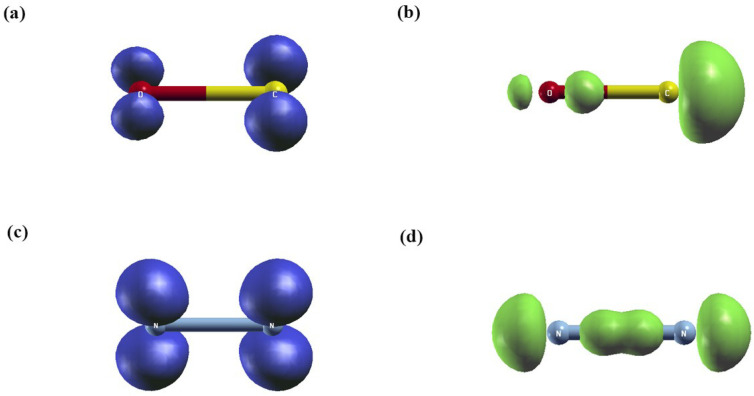 Figure 2
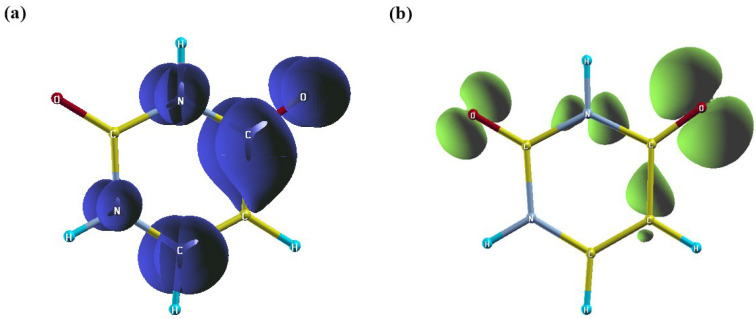 Figure 3
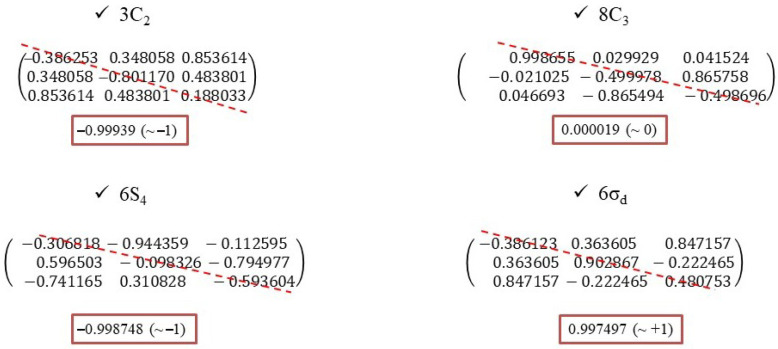 Figure 4
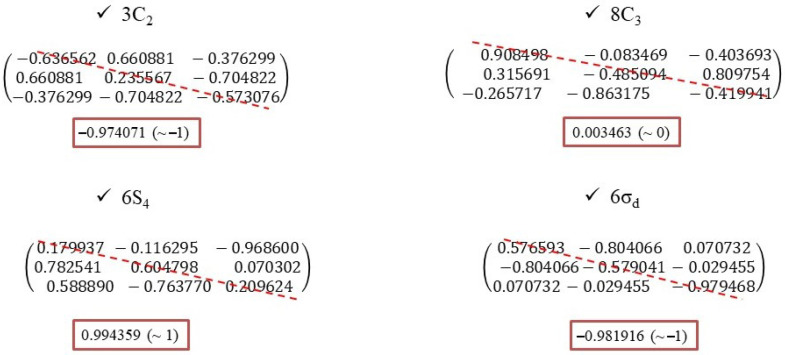 Figure 5
Peer Reviews
No public reviews on file for this paper yet. If you reviewed it on a platform where reviews are public (OpenReview, ICLR, NeurIPS, ICML), you can paste yours below so the community can read it here.
Videos
No videos yet. Explain this paper in a talk, walkthrough, or lecture? Add one.
Taxonomy
TopicsAdvanced Chemical Physics Studies · Advanced Physical and Chemical Molecular Interactions · Quantum Mechanics and Non-Hermitian Physics