A Retrospective Chart Review Study on the Burden of Illness of Acid Sphingomyelinase Deficiency in Brazil
Roberto Giugliani, Ana Cecília Menezes de Siqueira, Ana Maria Martins, Bianca Fernandes Marcondes, Carolina Fischinger Moura de Souza, Dafne Dain Gandelman Horovitz, Emília Katiane Embiruçu Leão, Gaelle Gusto, Gerson da Silva Carvalho, Osvaldo Artigalás, Raquel Boy

TL;DR
This study examines the health impact of a rare disease called acid sphingomyelinase deficiency in Brazil, showing that it causes significant liver and spleen issues and often leads to hospitalization.
Contribution
The study is the first to provide detailed insights into the disease burden of ASMD in Brazil, emphasizing the need for early diagnosis and awareness.
Findings
Hepatobiliary and splenic manifestations were the most common clinical findings at diagnosis and follow-up.
Over half of the patients had comorbidities at diagnosis, and nearly half required hospitalization.
Two patients with ASMD type A/B died during the study period, highlighting the disease's severity.
Abstract
Background: Acid sphingomyelinase deficiency (ASMD) is a rare, progressive lysosomal storage disease with heterogeneous clinical manifestations. Evidence on the disease burden of ASMD is limited in Brazil. Methods: This observational, multicenter, retrospective study assessed the characteristics and clinical data of patients with ASMD type B and type A/B. Patients’ demographic data were retrieved from Hospital de Clínicas de Porto Alegre between January 1, 1986 and May 31, 2021, and available medical records were collected from eight centers in Brazil. Results: The study included 124 patients (full cohort: ASMD type B [75.8%] and type A/B [24.2%]; median [interquartile range {IQR}] age: 10.0 [3.6–19.9] years at diagnosis, n = 94), while medical records were available for 24 patients (subset cohort: ASMD type B [87.5%] and type A/B [12.5%]; median [IQR] age: 6.7 [1.9–11.3] years at…
Genes, proteins, chemicals, diseases, species, mutations and cell lines named across the full text — each resolved to its canonical identifier and authoritative record.
Click any figure to enlarge with its caption.
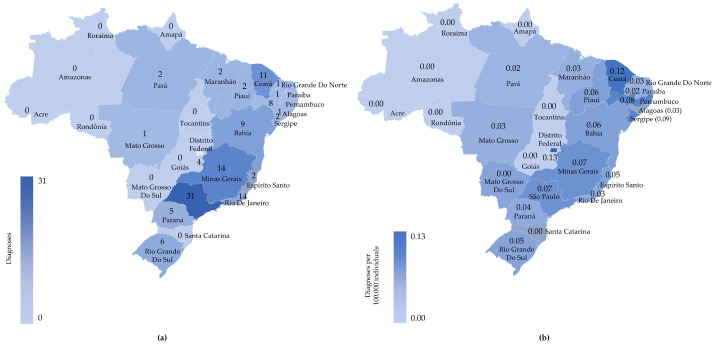 Figure 1
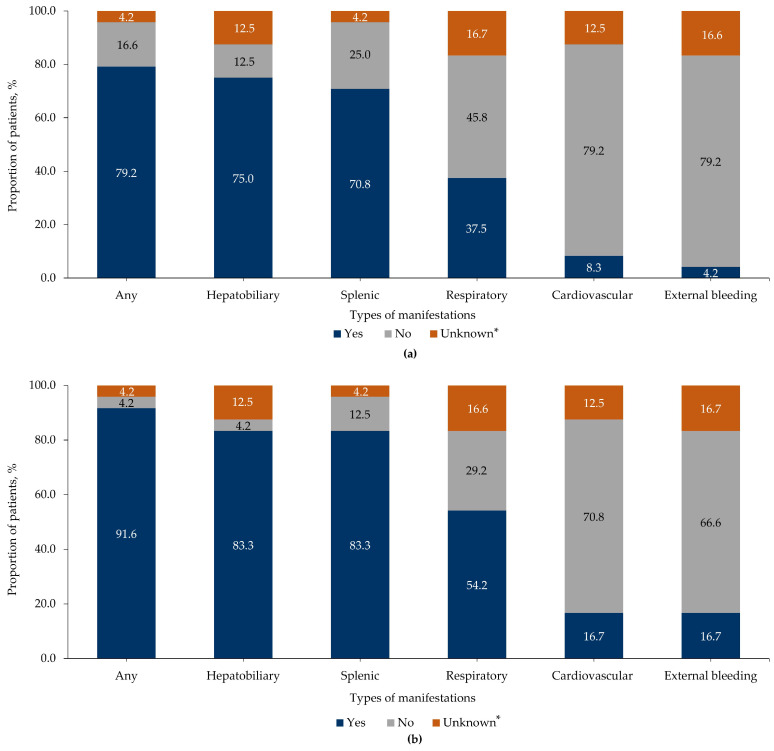 Figure 2
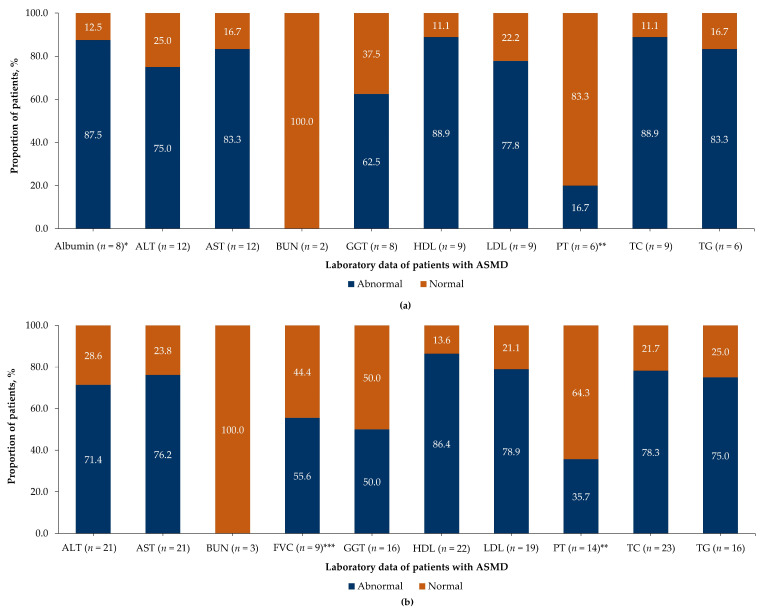 Figure 3
Peer Reviews
No public reviews on file for this paper yet. If you reviewed it on a platform where reviews are public (OpenReview, ICLR, NeurIPS, ICML), you can paste yours below so the community can read it here.
Videos
No videos yet. Explain this paper in a talk, walkthrough, or lecture? Add one.
Taxonomy
TopicsLysosomal Storage Disorders Research · Sphingolipid Metabolism and Signaling · Biomedical Research and Pathophysiology