Hospital-Wide Sepsis Detection: A Machine Learning Model Based on Prospectively Expert-Validated Cohort
Marcio Borges-Sa, Andres Giglio, Maria Aranda, Antonia Socias, Alberto del Castillo, Cristina Pruenza, Gonzalo Hernández, Sofía Cerdá, Lorenzo Socias, Victor Estrada, Roberto de la Rica, Elisa Martin, Ignacio Martin-Loeches

TL;DR
A new machine learning model called BiAlert improves sepsis detection in hospitals by combining expert validation and natural language processing, outperforming traditional methods.
Contribution
A hospital-wide machine learning model for sepsis detection using prospectively validated cases and NLP-derived features.
Findings
The BiAlert model achieved an AUC-ROC of 0.95, sensitivity of 0.93, and specificity of 0.84.
BiAlert reduced false positives by 39.6% compared to traditional rule-based methods.
The model received European Medicines Agency approval as a medical device in June 2024.
Abstract
Background/Objectives: Sepsis detection remains challenging due to clinical heterogeneity and limitations of traditional scoring systems. This study developed and validated a hospital-wide machine learning model for sepsis detection using retrospectively developed data from prospectively expert-validated cases, aiming to improve diagnostic accuracy beyond conventional approaches. Methods: This retrospective cohort study analysed 218,715 hospital episodes (2014–2018) at a tertiary care centre. Sepsis cases (n = 11,864, 5.42%) were prospectively validated in real-time by a Multidisciplinary Sepsis Unit using modified Sepsis-2 criteria with organ dysfunction. The model integrated structured data (26.95%) and unstructured clinical notes (73.04%) extracted via natural language processing from 2829 variables, selecting 230 relevant predictors. Thirty models including random forests, support…
Genes, proteins, chemicals, diseases, species, mutations and cell lines named across the full text — each resolved to its canonical identifier and authoritative record.
Click any figure to enlarge with its caption.
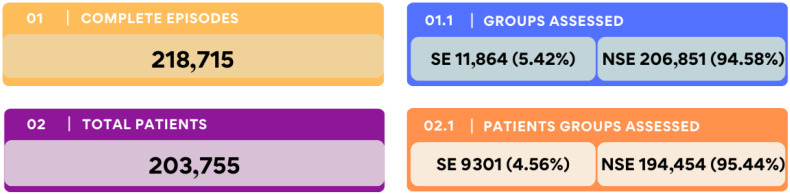 Figure 1
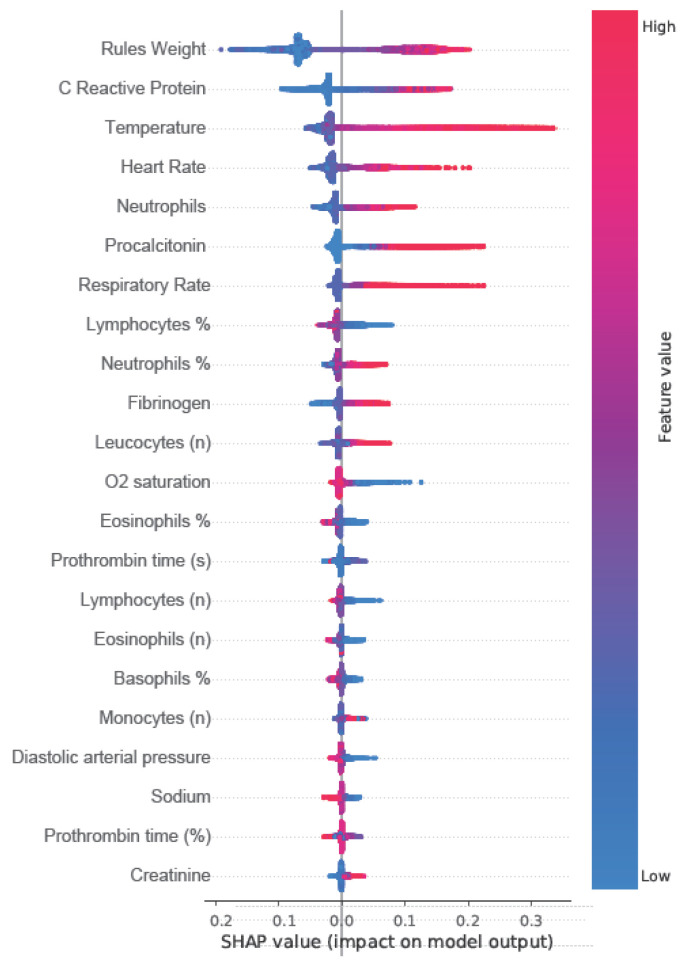 Figure 2
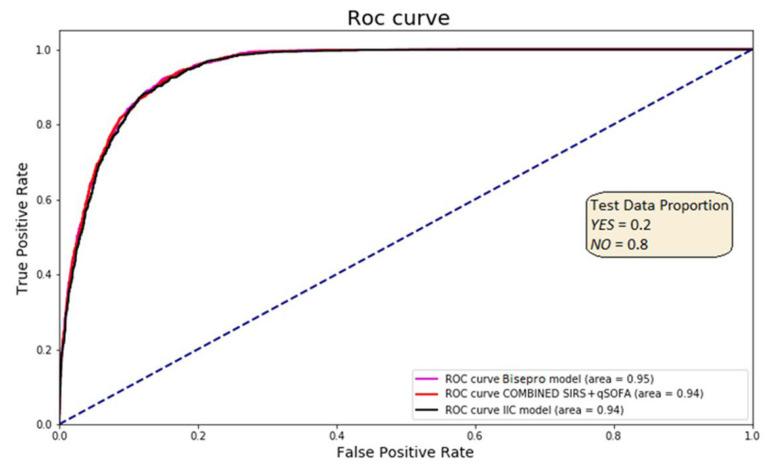 Figure 3
Peer Reviews
No public reviews on file for this paper yet. If you reviewed it on a platform where reviews are public (OpenReview, ICLR, NeurIPS, ICML), you can paste yours below so the community can read it here.
Videos
No videos yet. Explain this paper in a talk, walkthrough, or lecture? Add one.
Taxonomy
TopicsSepsis Diagnosis and Treatment · Bacterial Identification and Susceptibility Testing · Machine Learning in Healthcare