Inflammatory Reactions Within the Epicardial Adipose Tissue Are Associated with the Expression of the Receptor for Advanced Glycation End Products in Aortic Stenosis
Atsunobu Oryoji, Kosuke Saku, Nobuhiro Tahara, Sho-ichi Yamagishi, Eiki Tayama

TL;DR
Epicardial adipose tissue in aortic stenosis shows increased inflammation linked to a receptor for advanced glycation end products, suggesting a potential biomarker and treatment target.
Contribution
This study identifies a novel role of the AGEs-RAGE axis in inflammatory processes within epicardial adipose tissue in aortic stenosis.
Findings
Epicardial adipose tissue volume and RAGE expression are significantly higher in aortic stenosis patients compared to controls.
Macrophage infiltration in epicardial adipose tissue correlates with RAGE-positive cells and is mediated through the AGEs-RAGE axis.
EAT volume independently correlates with macrophage activation, but not with the severity of aortic stenosis.
Abstract
Background: Epicardial adipose tissue (EAT) is a metabolically active organ implicated in coronary artery disease (CAD); however, its role in aortic stenosis (AS) remains unclear. Advanced glycation end products (AGEs) and their receptor (RAGE) promote cardiovascular tissue inflammation. This study aimed to investigate whether inflammatory activity within the EAT, particularly involving the AGEs-RAGE axis, is associated with AS. Methods: We studied 42 patients (isolated AS, n = 15; AS with CAD, n = 15; and CAD alone, n = 12) undergoing surgical intervention, along with 10 autopsy controls. EAT volume was assessed via computed tomography and indexed to body surface area. Furthermore, macrophage infiltration (CD68) and RAGE expression in EAT samples were analyzed using immunohistochemistry and immunofluorescence imaging. Results: EAT volume index was significantly higher in all surgical…
Genes, proteins, chemicals, diseases, species, mutations and cell lines named across the full text — each resolved to its canonical identifier and authoritative record.
Click any figure to enlarge with its caption.
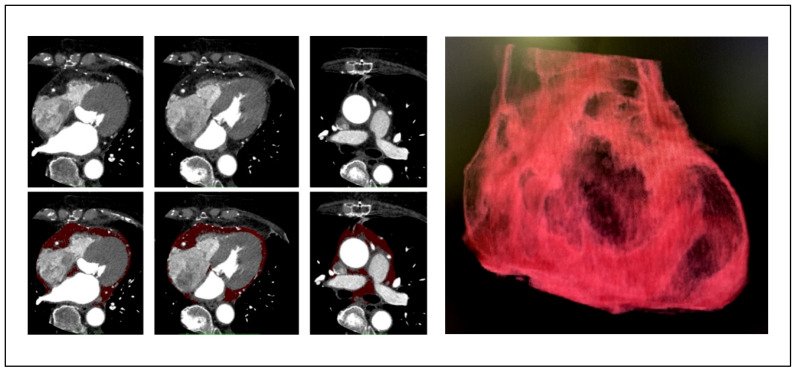 Figure 1
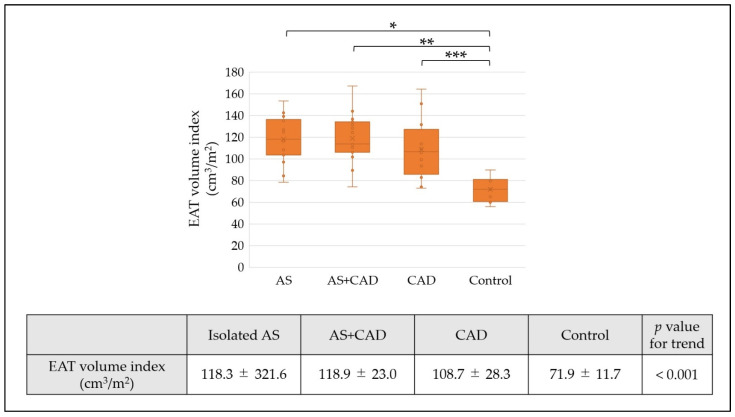 Figure 2
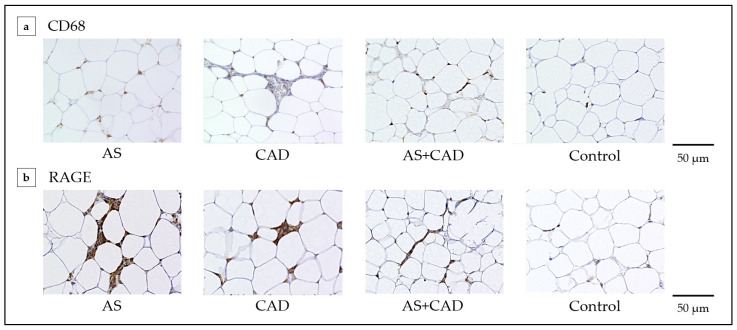 Figure 3
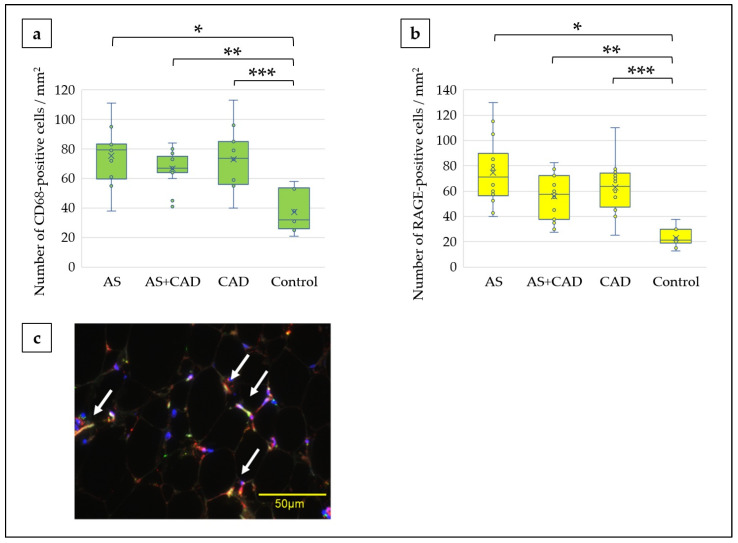 Figure 4
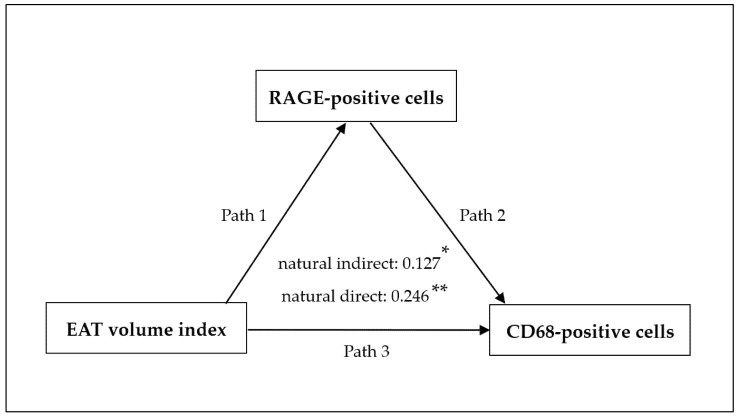 Figure 5
Peer Reviews
No public reviews on file for this paper yet. If you reviewed it on a platform where reviews are public (OpenReview, ICLR, NeurIPS, ICML), you can paste yours below so the community can read it here.
Videos
No videos yet. Explain this paper in a talk, walkthrough, or lecture? Add one.
Taxonomy
TopicsCardiovascular Disease and Adiposity · Congenital heart defects research · Cardiac Fibrosis and Remodeling