Percutaneous Coronary Intervention for Chronic Total Occlusions Modulates Cardiac Hypoxic and Inflammatory Stress
Luis Carlos Maestre-Luque, Rafael Gonzalez-Manzanares, Ignacio Gallo, Francisco Hidalgo, Javier Suárez de Lezo, Miguel Romero, Simona Espejo-Perez, Carlos Perez-Sanchez, Julio Manuel Martínez-Moreno, Rafael González-Fernandez, Manuel Pan, Soledad Ojeda

TL;DR
This study shows that a heart procedure called CTO-PCI reduces heart stress and inflammation, which may improve heart function over time.
Contribution
The study is the first to explore acute cardiac microenvironment changes and their link to long-term heart function improvement after CTO-PCI.
Findings
CTO-PCI significantly reduced pro-angiogenic biomarkers like angiopoietin-1 and vascular endothelial growth factors.
The procedure increased anti-inflammatory interleukin-10 and decreased pro-inflammatory interleukin-1β in the cardiac microenvironment.
Interleukin-10 levels predicted improvement in left ventricular ejection fraction at 6-month follow-up.
Abstract
Background/Objectives: The cardiac hypoxia- and inflammation-associated processes in patients with chronic coronary artery disease remain unknown. The coronary sinus (CS) can be used to explore changes in cardiac microenvironment. This study sought to evaluate acute changes in the CS concentration of hypoxia and inflammation-associated biomarkers after the percutaneous revascularization of chronic total occlusions (CTO-PCI). Additionally, we explored changes in systemic inflammation and the potential of CS biomarkers to predict left ventricular ejection fraction (LVEF) improvement on follow-up. Methods: Thirty-three patients undergoing CTO-PCI were included. Samples from CS were collected before and after the revascularization. Twenty-six protein biomarkers associated with hypoxia and inflammation were measured using proximity extension assay technology. Systemic inflammation markers…
Genes, proteins, chemicals, diseases, species, mutations and cell lines named across the full text — each resolved to its canonical identifier and authoritative record.
Click any figure to enlarge with its caption.
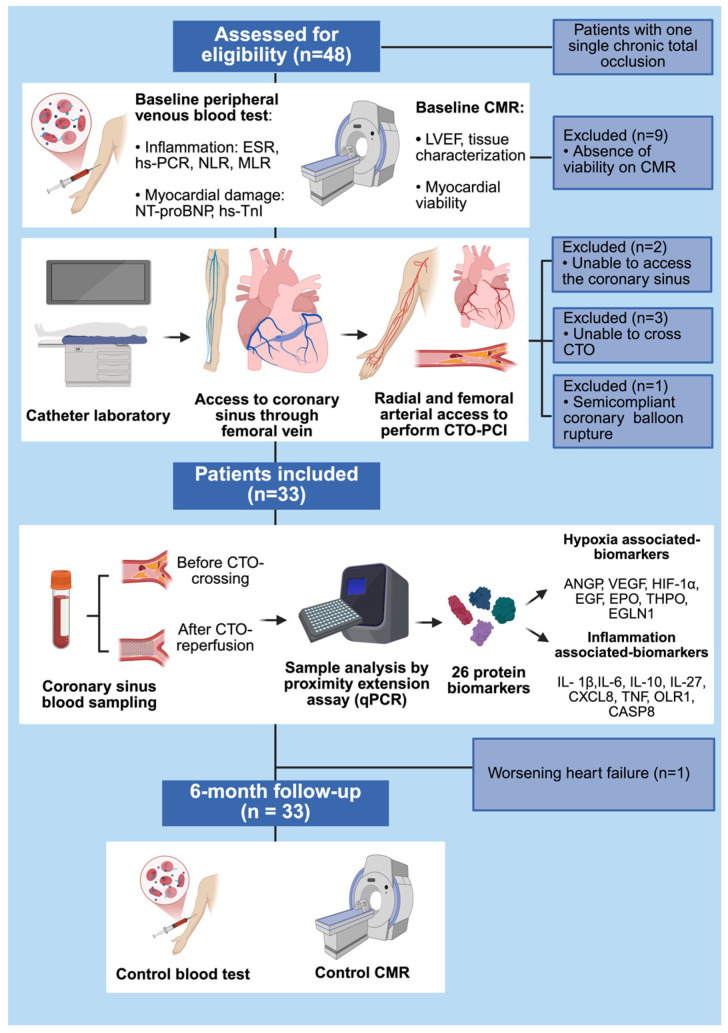 Figure 1
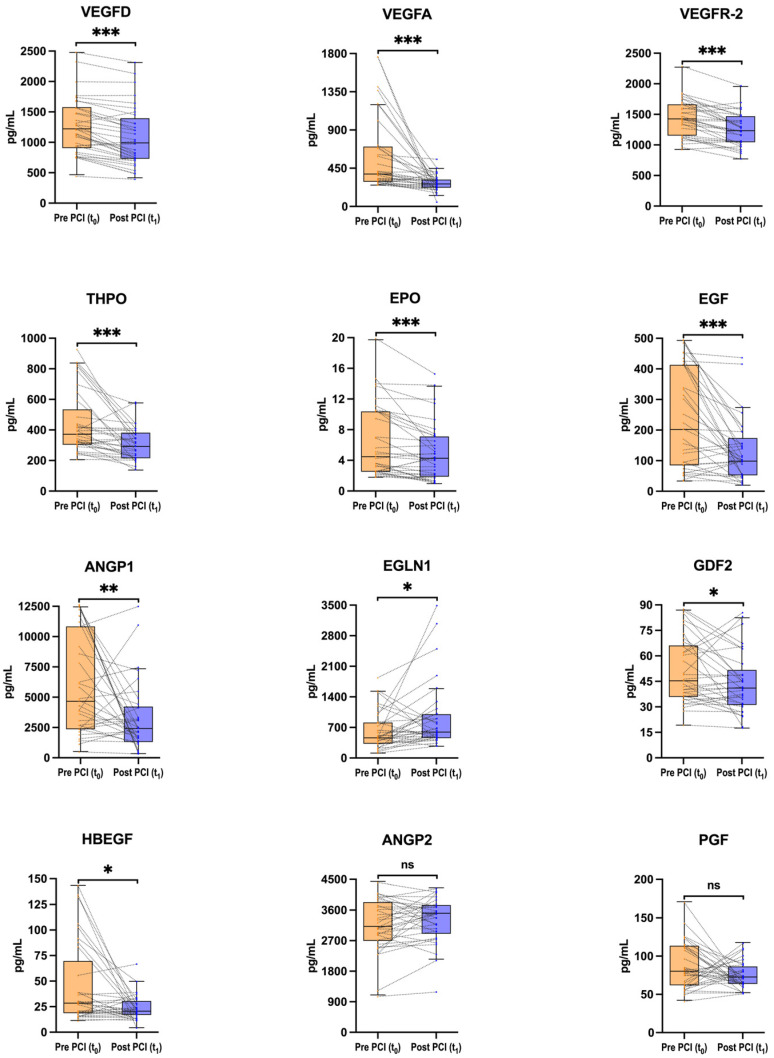 Figure 2
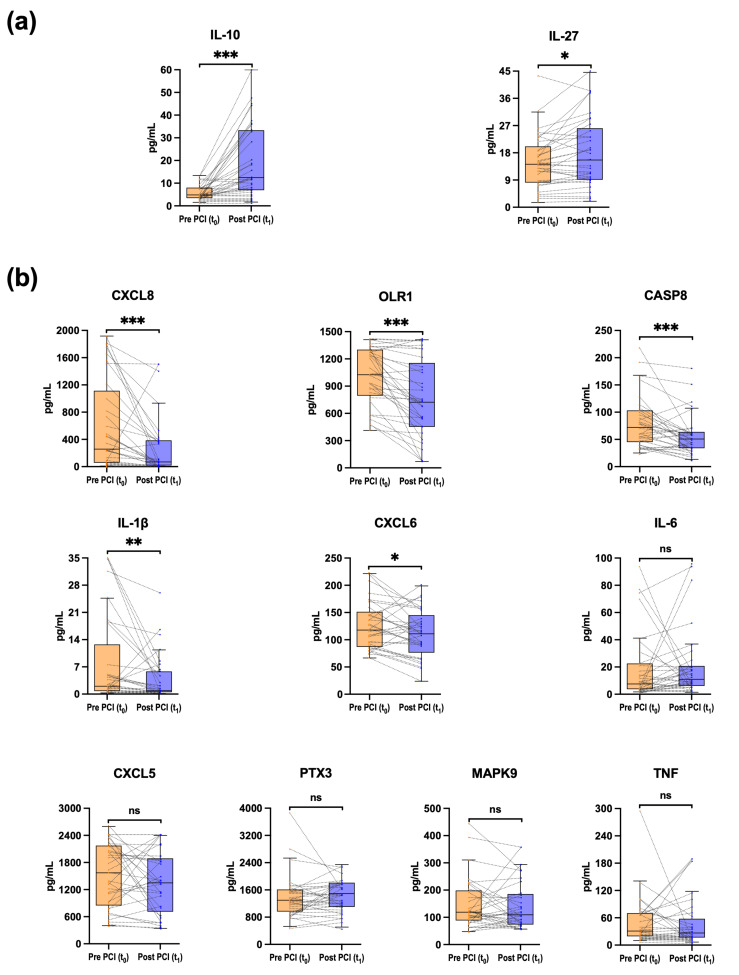 Figure 3
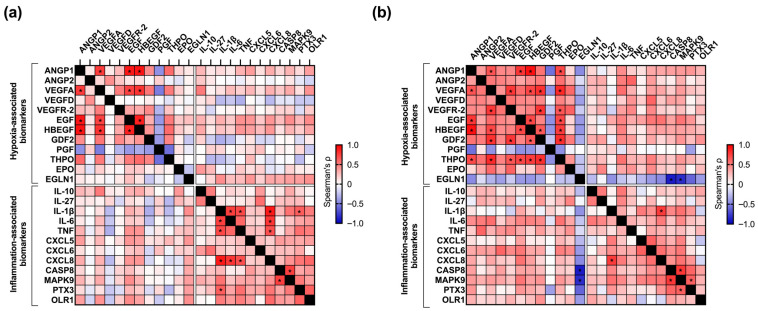 Figure 4
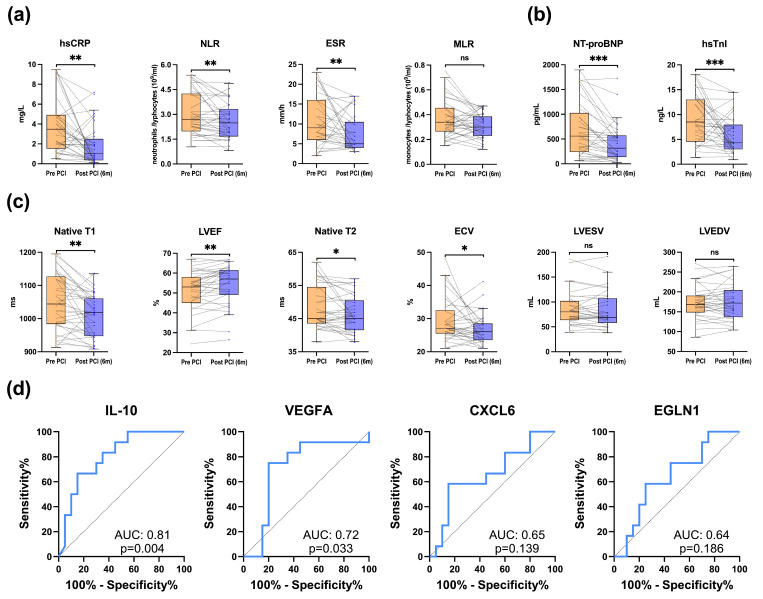 Figure 5
Peer Reviews
No public reviews on file for this paper yet. If you reviewed it on a platform where reviews are public (OpenReview, ICLR, NeurIPS, ICML), you can paste yours below so the community can read it here.
Videos
No videos yet. Explain this paper in a talk, walkthrough, or lecture? Add one.
Taxonomy
TopicsCardiovascular Disease and Adiposity · Coronary Interventions and Diagnostics · Cardiac and Coronary Surgery Techniques