Perioperative Cerebral Protection and Monitoring of Acute Stanford Type A Aortic Dissection: A Retrospective Cohort Study
Yi Jiang, Jianing Wang, Chang Liu, Yong Liu, Lin Mi, Tian Fang, Yongqing Cheng, Hoshun Chong, Dongjin Wang, Yunxing Xue

TL;DR
This study shows that near-infrared spectroscopy monitoring during aortic dissection surgery can help predict and reduce brain-related complications.
Contribution
The study introduces procedure-specific thresholds for cerebral desaturation that guide real-time clinical decisions during aortic dissection surgery.
Findings
ΔNIRS correlated with lower temperatures in Total-Arch and Arch-Stent procedures.
Higher ΔNIRS values were linked to increased risk of major adverse cardiovascular events.
Procedure-specific ΔNIRS thresholds were identified to predict stroke and MACE risk.
Abstract
Background: Optimal cerebral protection strategies for acute Stanford type A aortic dissection (aTAAD) surgery remain controversial. This study aimed to evaluate the role of near-infrared spectroscopy (NIRS)-guided monitoring and its association with clinical outcomes. Methods: We retrospectively analyzed 619 patients undergoing aTAAD surgery (Hemi-Arch, Total-Arch, or Arch-Stent procedures). Intraoperative cerebral oxygenation was monitored using NIRS, with the magnitude of desaturation quantified as ΔNIRS. We assessed correlations between ΔNIRS and nasopharyngeal temperature, employed generalized additive models (GAM) to analyze nonlinear relationships with major adverse cardiovascular events (MACE), and used piecewise logistic regression to identify procedure-specific ΔNIRS risk thresholds. Results: ΔNIRS showed a significant positive correlation with lower temperatures in Total-Arch…
Genes, proteins, chemicals, diseases, species, mutations and cell lines named across the full text — each resolved to its canonical identifier and authoritative record.
Click any figure to enlarge with its caption.
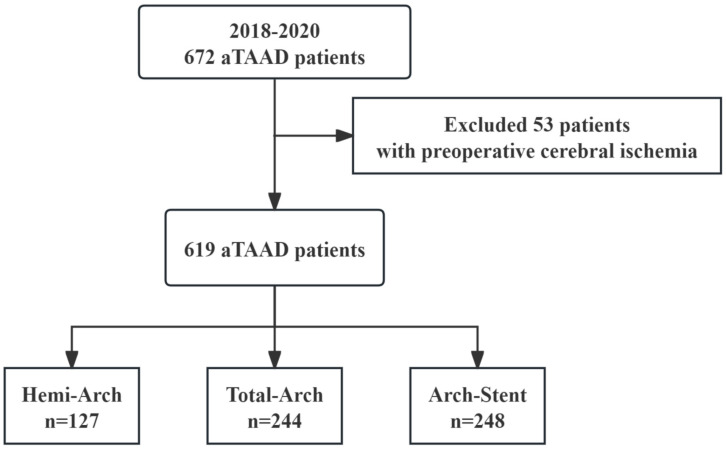 Figure 1
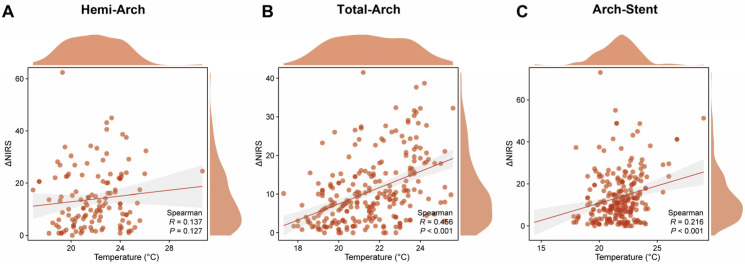 Figure 2
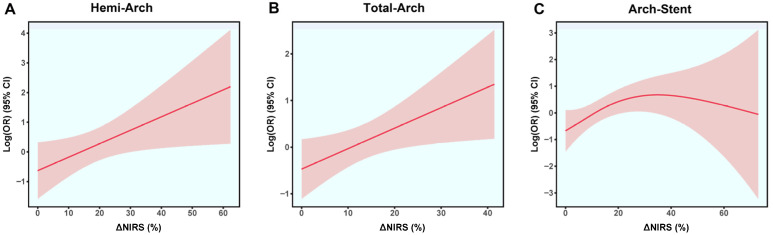 Figure 3
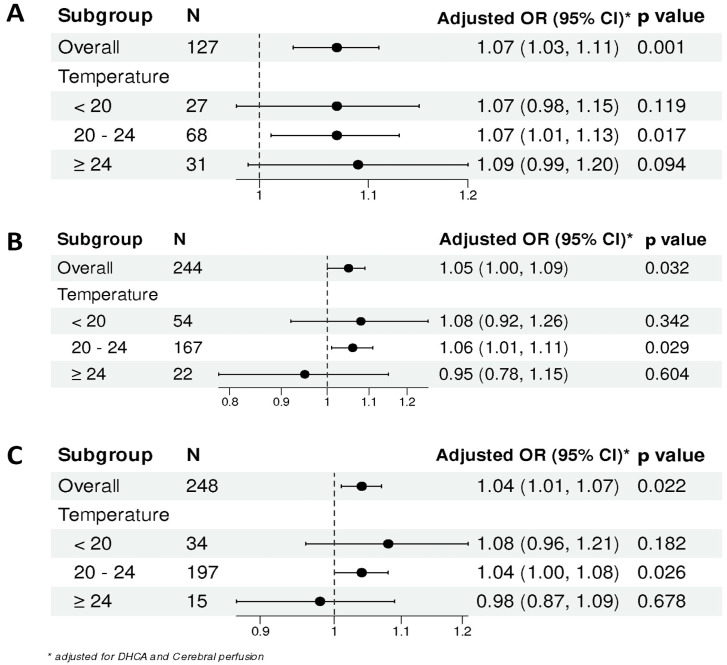 Figure 4
Peer Reviews
No public reviews on file for this paper yet. If you reviewed it on a platform where reviews are public (OpenReview, ICLR, NeurIPS, ICML), you can paste yours below so the community can read it here.
Videos
No videos yet. Explain this paper in a talk, walkthrough, or lecture? Add one.
Taxonomy
TopicsAortic Disease and Treatment Approaches · Aortic aneurysm repair treatments · Optical Imaging and Spectroscopy Techniques