Bacterial Metabolites in the Plasma of Type 1 Diabetes Patients: Acetate Levels Are Elevated and Correlate with Glycated Haemoglobin and Para-Cresol Is Associated with Liver Disturbances and Hypertension
Inés Jiménez-Varas, Martín Cuesta-Hernández, María Inmaculada Domínguez-Mozo, Iván Pérez-Gutiérrez, Stefano Ruberto, Esther Palacios, Ana Moreno-Blanco, Rosa Del Campo, María Ángel García-Martínez, Roberto Álvarez-Lafuente

TL;DR
Type 1 Diabetes patients have higher levels of acetate and altered gut metabolite profiles linked to blood sugar control and liver issues.
Contribution
Identified elevated acetate and para-cresol in T1D patients and their associations with glycemic control and comorbidities.
Findings
T1D patients had higher plasma acetate levels and altered SCFA ratios compared to healthy controls.
Acetate levels correlated with HbA1c, especially in women, while para-cresol was linked to liver dysfunction and hypertension.
SCFA diversity was lower in T1D patients, with reduced detection of butyrate.
Abstract
Type 1 Diabetes (T1D) is thought to result from the interaction of genetic and environmental factors, with different studies highlighting a potential role for the gut microbiota and its metabolites in modulating immune responses and disease development. We hypothesized that patients with T1D exhibited altered levels of circulating bacterial metabolites compared with healthy controls (HC), and that these metabolite profiles were associated with key demographic, clinical, and analytical features of the disease. A total of 91 T1D patients and 58 HC were recruited. Plasma samples were collected and analyzed with gas chromatography coupled to mass spectrometry for the detection of the metabolites: short-chain fatty acids (SCFAs: acetate [AA], propionate [PA], isobutyrate [IBA], butyrate [BA], isovalerate [IVA], valerate [VA], and methyl valerate [MVA]), medium-chain fatty acids (MCFAs:…
Genes, proteins, chemicals, diseases, species, mutations and cell lines named across the full text — each resolved to its canonical identifier and authoritative record.
Click any figure to enlarge with its caption.
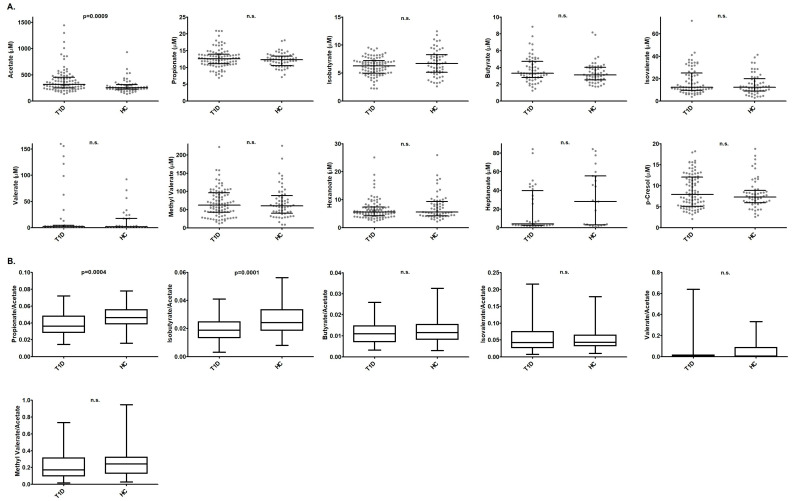 Figure 1
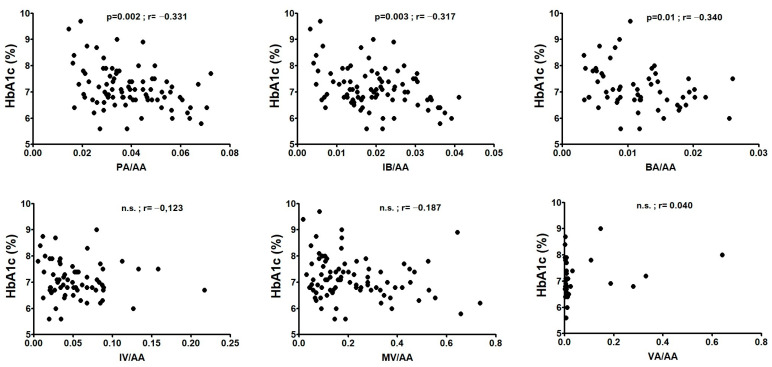 Figure 2
Peer Reviews
No public reviews on file for this paper yet. If you reviewed it on a platform where reviews are public (OpenReview, ICLR, NeurIPS, ICML), you can paste yours below so the community can read it here.
Videos
No videos yet. Explain this paper in a talk, walkthrough, or lecture? Add one.
Taxonomy
TopicsGut microbiota and health · Diabetes and associated disorders · Metabolomics and Mass Spectrometry Studies