Antibody–Drug Conjugates in Hematological Malignancies: Current Landscape and Future Perspectives
Maria Chiara Montalbano, Matilde Micillo, Silvia Deaglio, Tiziana Vaisitti

TL;DR
Antibody-drug conjugates (ADCs) are transforming treatment for blood cancers by delivering powerful drugs directly to cancer cells, improving outcomes and reducing side effects.
Contribution
This review provides a comprehensive overview of current ADCs for blood cancers and outlines future strategies to enhance their effectiveness.
Findings
ADCs have significantly improved the efficacy of immune-based treatments for hematological malignancies.
Optimizing antibody selectivity, linker stability, and payload potency has led to more effective ADCs reaching clinical use.
Next-generation ADCs aim to overcome current limitations and improve long-term patient prognosis.
Abstract
The therapeutic landscape for hematological malignancies has been fundamentally revolutionized over the last decade by the introduction of targeted antibodies. Notably, antibody–drug conjugates (ADCs) have emerged as a critical breakthrough, significantly improving the efficacy of immune-based treatment. ADCs function as highly sophisticated delivery systems: a selective monoclonal antibody recognizes a specific cell-surface target, guiding a potent toxic payload, attached via a chemical linker, directly into the cancer cell upon internalization. Intensive research has been dedicated to optimizing these components—improving antibody selectivity, enhancing linker stability, and utilizing highly effective payloads—which has resulted in a plethora of compounds that have reached patients’ bedsides and improved the clinical course of different tumors. This review provides a crucial overview…
Genes, proteins, chemicals, diseases, species, mutations and cell lines named across the full text — each resolved to its canonical identifier and authoritative record.
Click any figure to enlarge with its caption.
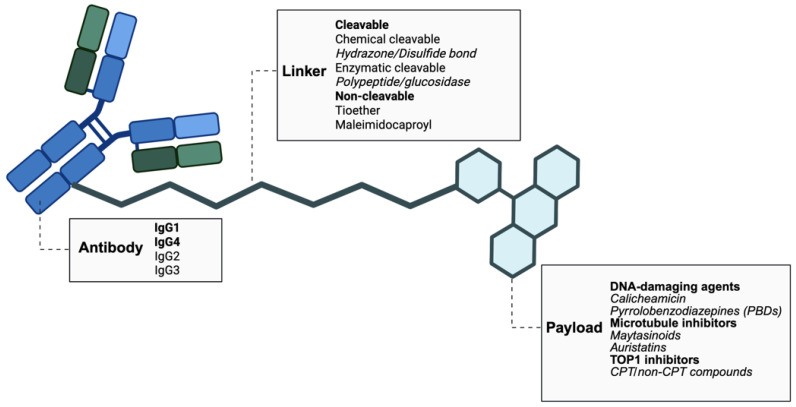 Figure 1
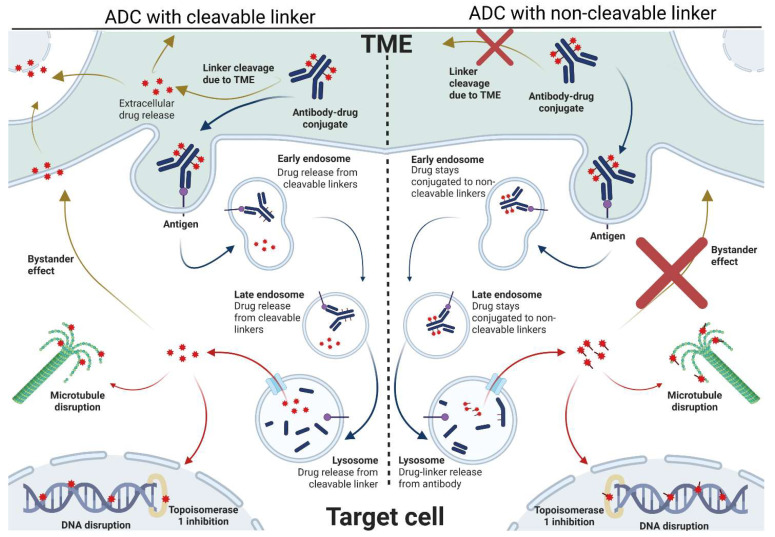 Figure 2
Peer Reviews
No public reviews on file for this paper yet. If you reviewed it on a platform where reviews are public (OpenReview, ICLR, NeurIPS, ICML), you can paste yours below so the community can read it here.
Videos
No videos yet. Explain this paper in a talk, walkthrough, or lecture? Add one.
Taxonomy
TopicsHER2/EGFR in Cancer Research · CAR-T cell therapy research · Monoclonal and Polyclonal Antibodies Research