Factors Predicting Guselkumab Treatment Response in Patients with Moderate-to-Severe Plaque Psoriasis: A Post Hoc Analysis of Korean Real-World Data
Young Bok Lee, Bong Seok Shin, Miri Kim, Moo Kyu Suh, Sang Woong Youn, Ji Yeoun Lee, Chul Woo Kim, Ga-Young Lee, Kwang Ho Kim, Jihye An, Youngdoe Kim, Kwang Joong Kim, Dong Hyun Kim, Sang Wook Son

TL;DR
This study identifies baseline factors that predict a strong response to guselkumab treatment in Korean patients with severe plaque psoriasis.
Contribution
The study provides new insights into baseline predictors of guselkumab treatment response in a real-world Korean psoriasis population.
Findings
Absence of family history of psoriasis and higher PASI scores predict better guselkumab response.
Prior phototherapy and reduced topical agent use are associated with higher PASI 90 response rates.
PASI 90 responders showed significantly better quality of life outcomes compared to non-responders.
Abstract
Background: This study aimed to identify the baseline characteristics predictive of Psoriasis Area and Sensitivity Index (PASI) 90 response to guselkumab and assess treatment effectiveness outcomes for PASI 90 responders and PASI 90 non-responders. Methods: This post hoc analysis used data from a prospective, multicenter, observational study of guselkumab in Korean patients with moderate-to-severe psoriasis conducted between February 2019 and March 2022. Stepwise logistic regression analysis was used to identify baseline characteristics predictive of PASI 90 response. Results: Of 339 patients, 245 (72.3%) week-28 PASI 90 responders and 94 (27.7%) non-responders were identified. Baseline characteristics significantly predictive of PASI 90 response in multivariate logistic regression were absence of family history of psoriasis (odds ratio [OR]: 0.35; p = 0.0266), higher PASI score (OR:…
Genes, proteins, chemicals, diseases, species, mutations and cell lines named across the full text — each resolved to its canonical identifier and authoritative record.
Click any figure to enlarge with its caption.
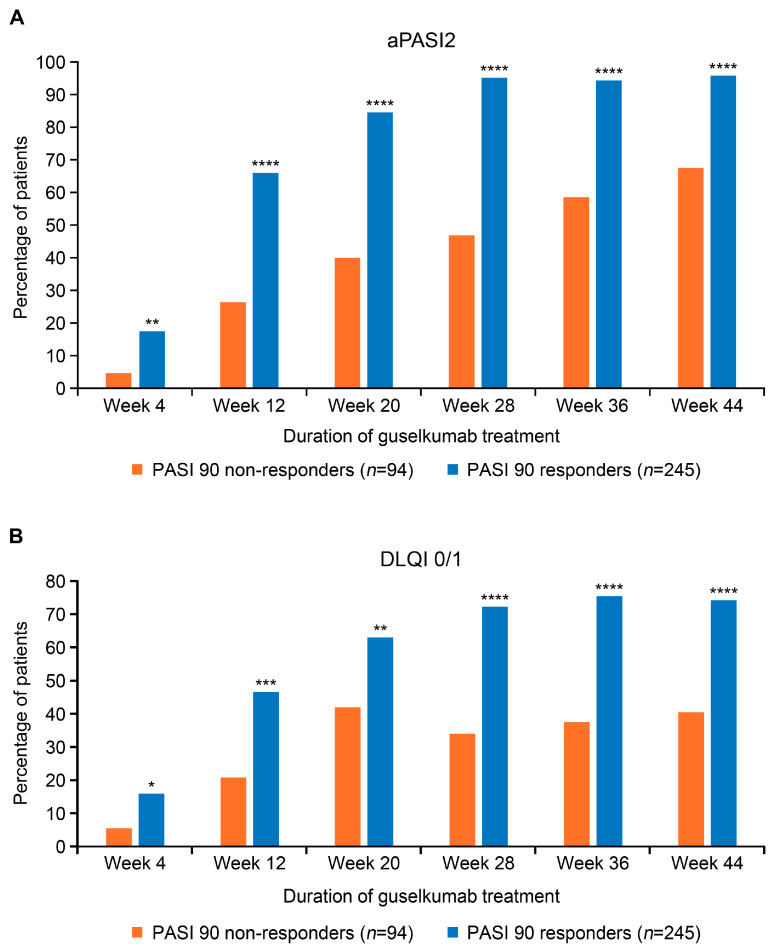 Figure 1
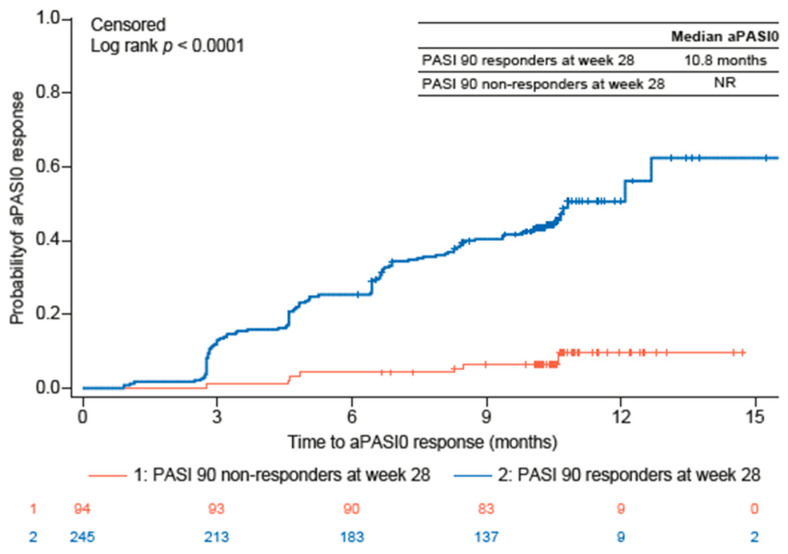 Figure 2
Peer Reviews
No public reviews on file for this paper yet. If you reviewed it on a platform where reviews are public (OpenReview, ICLR, NeurIPS, ICML), you can paste yours below so the community can read it here.
Videos
No videos yet. Explain this paper in a talk, walkthrough, or lecture? Add one.
Taxonomy
TopicsPsoriasis: Treatment and Pathogenesis · Spondyloarthritis Studies and Treatments · Hidradenitis Suppurativa and Treatments