Comparing the Effect of Spinal Versus General Anesthesia on Postoperative Opioid Use in Minimally Invasive Transforaminal Lumbar Interbody Fusion: A Patient Matched Study
Harshvardhan G. Iyer, Jesus E. Sanchez-Garavito, Jorge Rios-Zermeno, Andrew P. Roberts, Juan P. Navarro Garcia de Llano, Loizos Michaelides, Jimena Gonzalez-Salido, Benjamin F. Gruenbaum, Elird Bojaxhi, Oluwaseun O. Akinduro, Ian A. Buchanan, Kingsley O. Abode-Iyamah

TL;DR
This study found that spinal anesthesia leads to less opioid use and shorter hospital stays after a specific type of back surgery compared to general anesthesia.
Contribution
The study demonstrates that spinal anesthesia reduces postoperative opioid consumption and hospital length of stay in minimally invasive lumbar fusion surgery.
Findings
Patients under spinal anesthesia used fewer opioids post-surgery compared to those under general anesthesia.
Spinal anesthesia was associated with shorter operating room time and shorter hospital stays.
Multivariate analysis confirmed reduced opioid use and hospital length of stay with spinal anesthesia.
Abstract
Background/Objectives: Postoperative opioid exposure after lumbar fusion remains a key clinical concern. Understanding which perioperative factors are associated with lower postoperative opioid use may help optimize recovery after minimally invasive (MIS) transforaminal lumbar interbody fusion (TLIF). This study aimed to determine if patients undergoing MIS-TLIF under spinal anesthesia (SA) showed lower postoperative opioid use compared to those undergoing MIS-TLIF under general anesthesia (GA). Methods: We retrospectively studied all adult patients (>18 years) undergoing 1- and contiguous 2-level MIS-TLIFs performed by a single surgeon. Patients undergoing the procedure under GA were compared to those undergoing the procedure under SA. Postoperative oral opioid use, up to 3 months post discharge, was collected. A 1:1 propensity score matching (PSM) protocol was implemented. Each…
Genes, proteins, chemicals, diseases, species, mutations and cell lines named across the full text — each resolved to its canonical identifier and authoritative record.
Click any figure to enlarge with its caption.
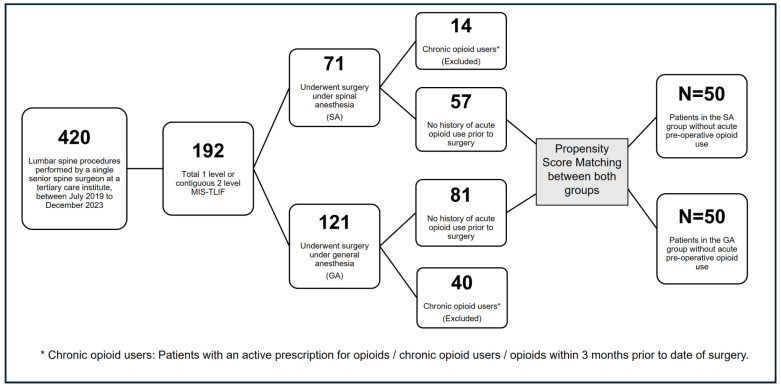 Figure 1
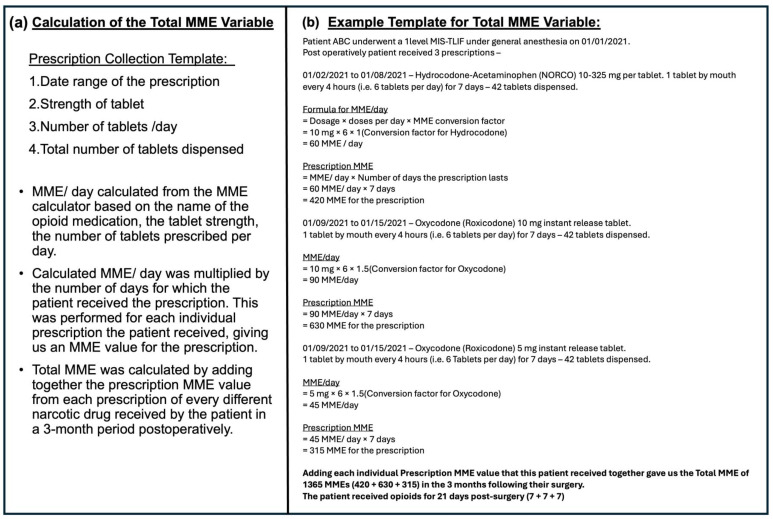 Figure 2
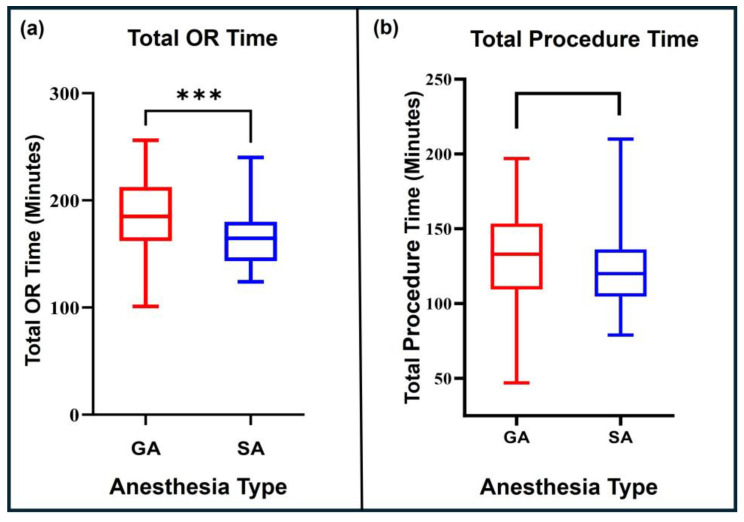 Figure 3
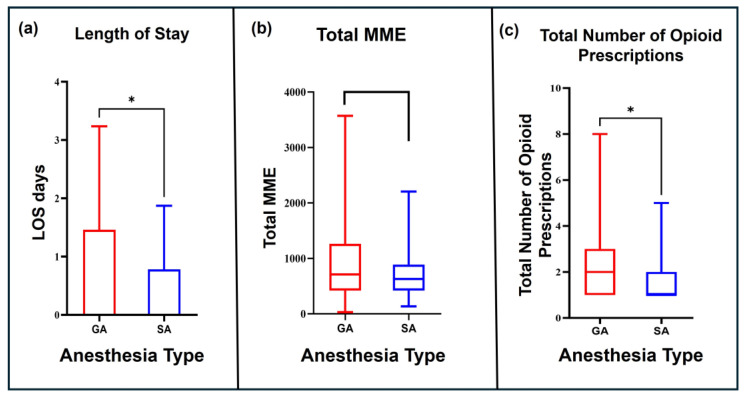 Figure 4
Peer Reviews
No public reviews on file for this paper yet. If you reviewed it on a platform where reviews are public (OpenReview, ICLR, NeurIPS, ICML), you can paste yours below so the community can read it here.
Videos
No videos yet. Explain this paper in a talk, walkthrough, or lecture? Add one.
Taxonomy
TopicsAnesthesia and Pain Management · Opioid Use Disorder Treatment · Pain Management and Opioid Use