Characterization of Chemical Defensive Behavior and Associated Glands in the Destructive Invasive Longhorn Beetle Aromia bungii
Ruixu Chen, Lisheng Hong, Jie Gao, Wenbo Wang, Quanmin Wen, Guangyu Wang, Tong Zhang, Tian Xu

TL;DR
This study reveals how the invasive red-necked longhorn beetle defends itself using specialized glands and a spray mechanism, offering insights into its survival and reproduction strategies.
Contribution
The first detailed characterization of a chemical defense system in the longhorn beetle Aromia bungii, including its morphology and function.
Findings
Aromia bungii has triangular sac-like glands in the metathorax that eject defensive substances through small openings.
The beetle's defensive spray contains significant amounts of substances, but these are not quickly replenished after use.
The chemical defense system reflects an energy trade-off between reproduction and defense in this short-lived species.
Abstract
The red-necked longhorn beetle Aromia bungii is a destructive invasive pest that causes substantial damage to economically important stone fruit trees such as cherries and plums. While chemical defenses are common in insects, they are rarely reported and remain poorly understood in longhorn beetles (Cerambycidae). This study aimed to characterize the chemical defense system of this species for the first time. Using advanced imaging techniques, we identified a pair of unique, triangular-shaped, sac-like glands storing liquid defensive substances, located in the beetle’s metathorax. When threatened, the beetle rapidly ejects this liquid over a long distance through a pair of tiny openings on its body. A single spray contains a substantial amount of defensive substances. However, the beetle probably cannot quickly replenish these substances, because in a second spray performed after 10…
Genes, proteins, chemicals, diseases, species, mutations and cell lines named across the full text — each resolved to its canonical identifier and authoritative record.
Click any figure to enlarge with its caption.
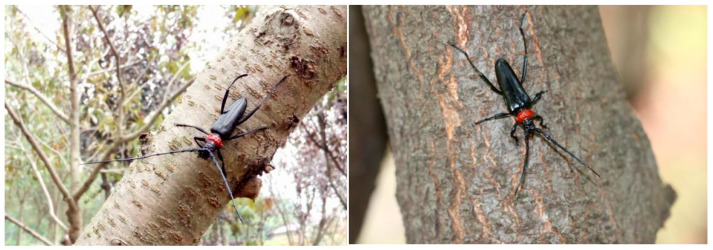 Figure 1
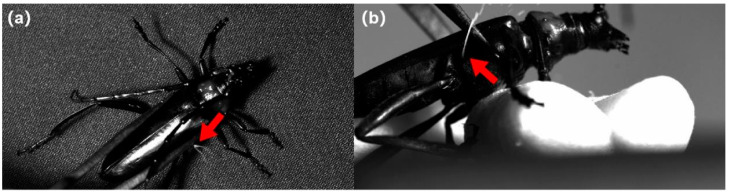 Figure 2
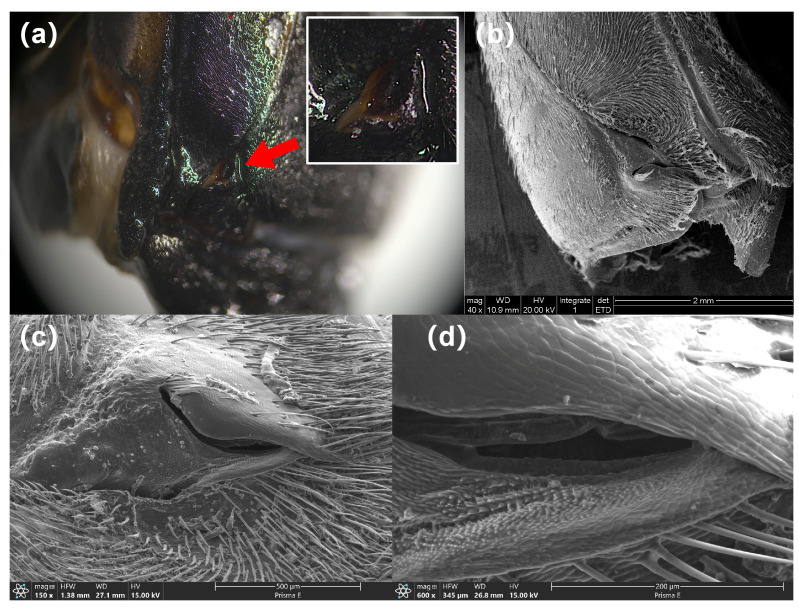 Figure 3
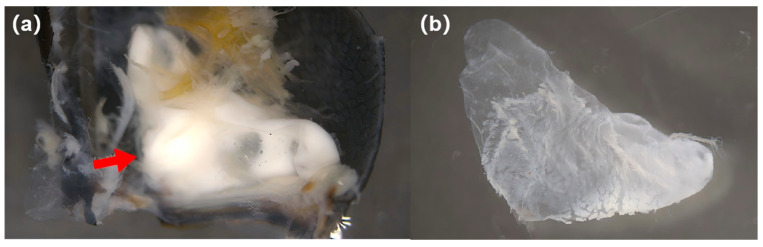 Figure 4
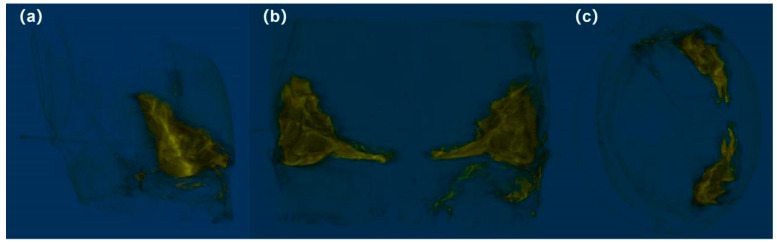 Figure 5
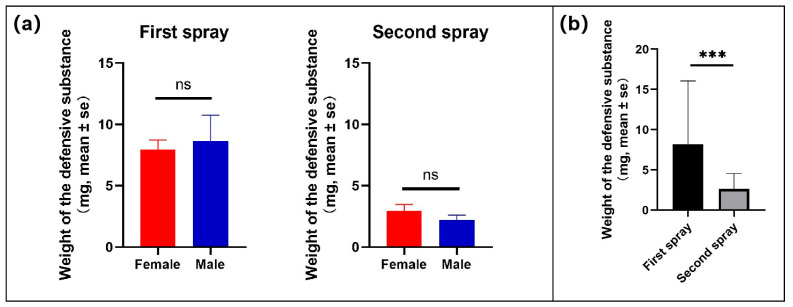 Figure 6
Peer Reviews
No public reviews on file for this paper yet. If you reviewed it on a platform where reviews are public (OpenReview, ICLR, NeurIPS, ICML), you can paste yours below so the community can read it here.
Videos
No videos yet. Explain this paper in a talk, walkthrough, or lecture? Add one.
Taxonomy
TopicsForest Insect Ecology and Management · Coleoptera: Cerambycidae studies · Entomological Studies and Ecology