Risk Factors for Post-ERCP Pancreatitis: Impact of Transpancreatic Septotomy, Needle–Knife Precut, and Duodenal Diverticulum in 1226 Procedures
Mehmet Kasım Aydın, Mehmet Cudi Tuncer

TL;DR
This study finds that advanced ERCP techniques like transpancreatic septotomy and needle–knife precut significantly increase the risk of post-procedure pancreatitis.
Contribution
The study provides new evidence that transpancreatic septotomy has the strongest association with post-ERCP pancreatitis compared to other techniques.
Findings
Transpancreatic septotomy increased PEP risk nearly fivefold in multivariable analysis.
Needle–knife precut sphincterotomy increased PEP risk by 2.45-fold.
Periampullary duodenal diverticulum and pancreatic duct stenting were not independently linked to PEP.
Abstract
Background: Post-ERCP pancreatitis (PEP) remains the most common and clinically relevant adverse event following endoscopic retrograde cholangiopancreatography (ERCP). The impact of periampullary duodenal diverticulum and advanced cannulation techniques—particularly needle–knife precut sphincterotomy and transpancreatic septotomy (TPS)—on PEP risk remains debated. This study aimed to evaluate the association of these factors with PEP development in a large tertiary-center cohort. Methods: This retrospective study included 1226 patients who underwent ERCP between January 2018 and October 2022. Demographic, clinical, and procedural variables were recorded. Outcomes included PEP, hyperamylasemia, bleeding, and perforation. Univariable analyses were followed by multivariable logistic regression to identify independent predictors of PEP. Adjusted odds ratios (aORs) with 95% confidence…
Genes, proteins, chemicals, diseases, species, mutations and cell lines named across the full text — each resolved to its canonical identifier and authoritative record.
Click any figure to enlarge with its caption.
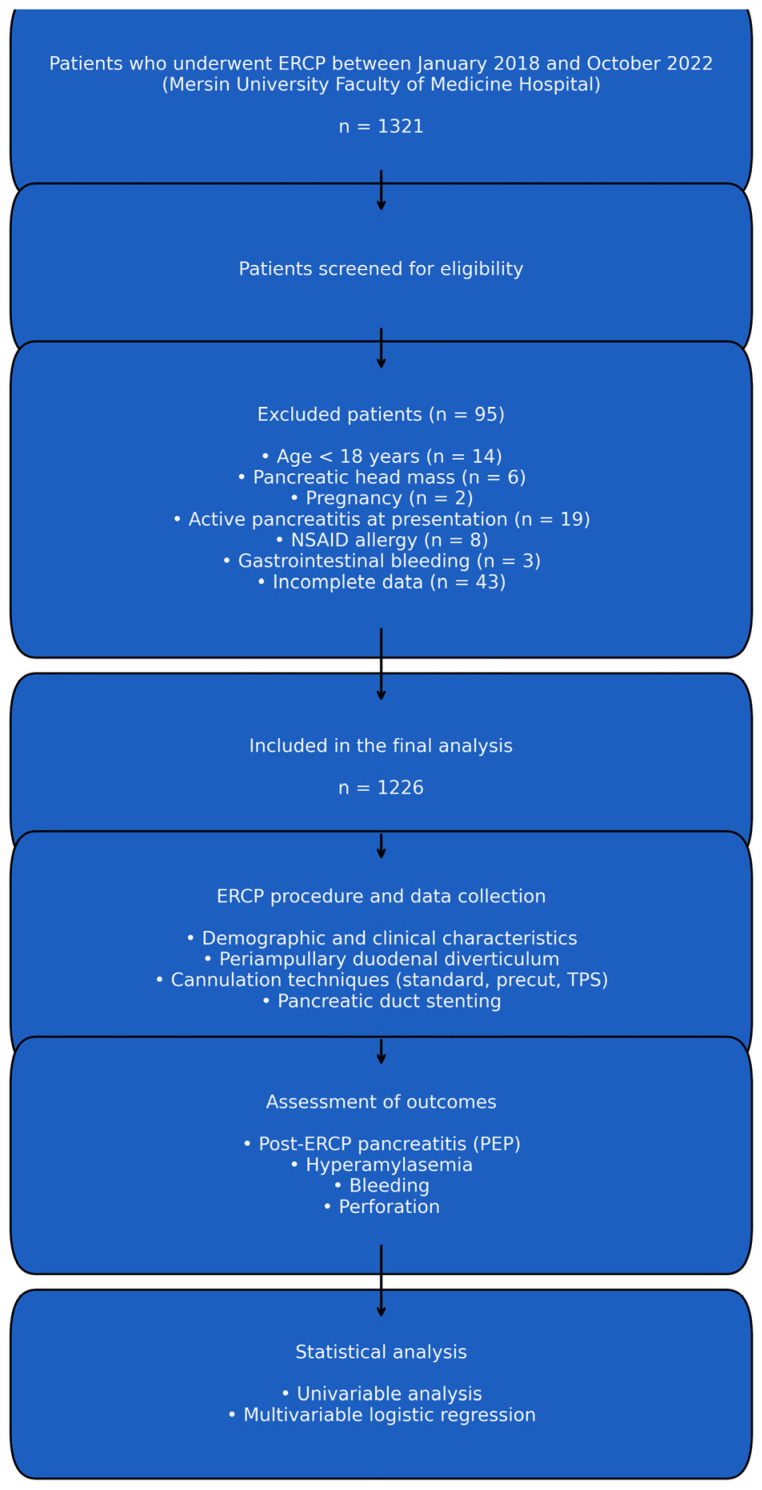 Figure 1
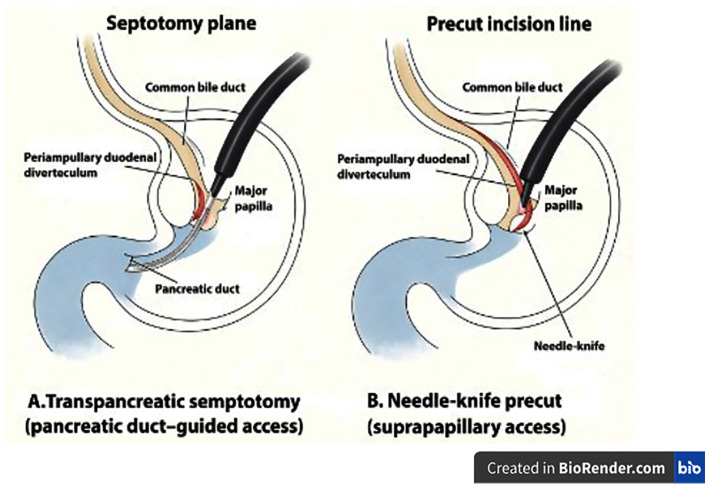 Figure 2
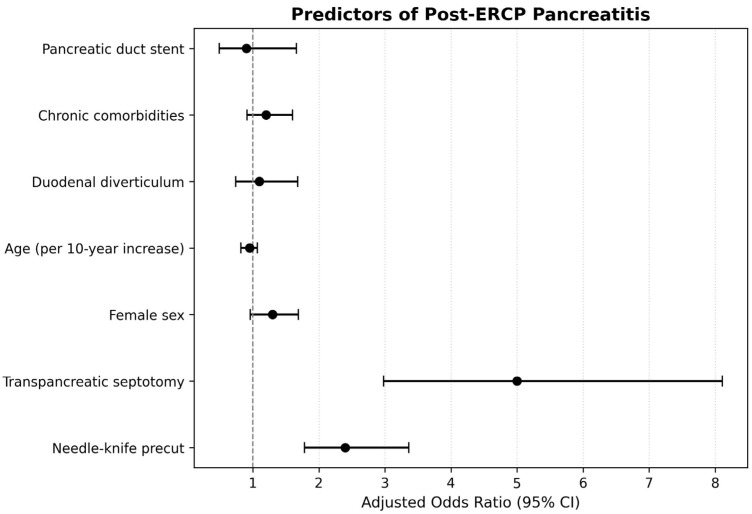 Figure 3
Peer Reviews
No public reviews on file for this paper yet. If you reviewed it on a platform where reviews are public (OpenReview, ICLR, NeurIPS, ICML), you can paste yours below so the community can read it here.
Videos
No videos yet. Explain this paper in a talk, walkthrough, or lecture? Add one.
Taxonomy
TopicsGallbladder and Bile Duct Disorders · Minimally Invasive Surgical Techniques · Tracheal and airway disorders