Culture Condition-Dependent Acylation Patterns of Trichothecenes in a T-2 Toxin-Producing Strain of Fusarium sporotrichioides NBRC 9955
Kazuyuki Maeda, Yuya Tanaka, Yuichi Nakajima, Kosuke Matsui, Yoshiaki Koizumi, Shuichi Ohsato, Naoko Takahashi-Ando, Makoto Kimura

TL;DR
This study shows how the production of toxic trichothecene compounds by a fungus varies depending on the culture conditions, which can affect toxin monitoring.
Contribution
The study reveals culture condition-dependent acylation patterns of trichothecenes in a T-2 toxin-producing Fusarium strain.
Findings
Deacetylated trichothecenes accumulate in yeast extract-rich media during late growth stages.
3-O-acetylation of T-2 toxin increases in micronutrient-poor synthetic medium at late stages.
Toxin mixtures on brown rice flour include T-2 toxin, neosolaniol, HT-2 toxin, and their acetylated forms.
Abstract
Fusarium sporotrichioides strain M-1-1, originally deposited as Fusarium solani IFO 9955 in 1974 and later moved to NBRC, is known for producing T-2 toxin. In addition to NRRL 3299, which was used in the United States to study T-2 toxin biosynthesis, NBRC 9955 has been extensively used for trichothecene research in Japan. To facilitate and accurately document studies on trichothecene biosynthesis using NBRC 9955, its phylogenetic classification and trichothecene metabolite profiles were determined. As anticipated, NBRC 9955 was classified as F. sporotrichioides, which exhibited a more distant phylogenetic relationship to other strains within the same species. Time-course TLC analyses demonstrated the accumulation of various deacetylated trichothecenes in yeast extract-rich liquid media during the late growth stages. Conversely, an increase in 3-O-acetylation of T-2 toxin was observed at…
Genes, proteins, chemicals, diseases, species, mutations and cell lines named across the full text — each resolved to its canonical identifier and authoritative record.
Click any figure to enlarge with its caption.
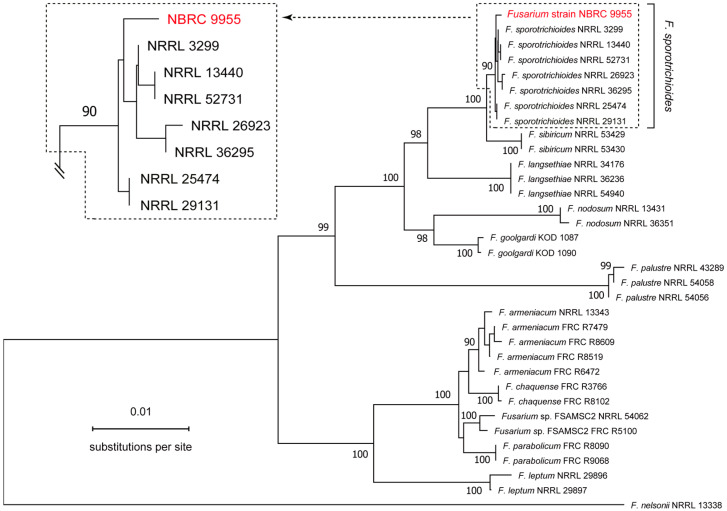 Figure 1
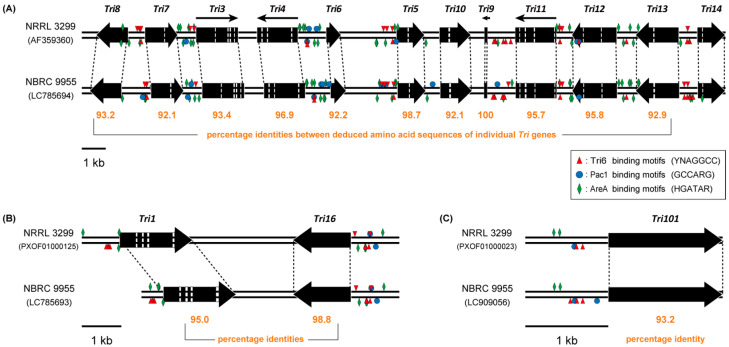 Figure 2
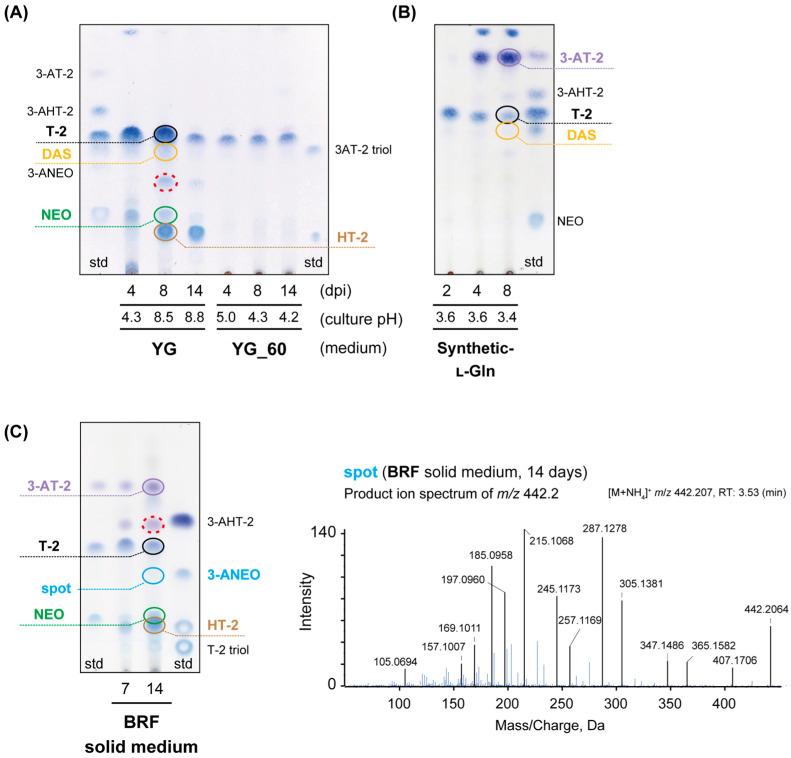 Figure 3
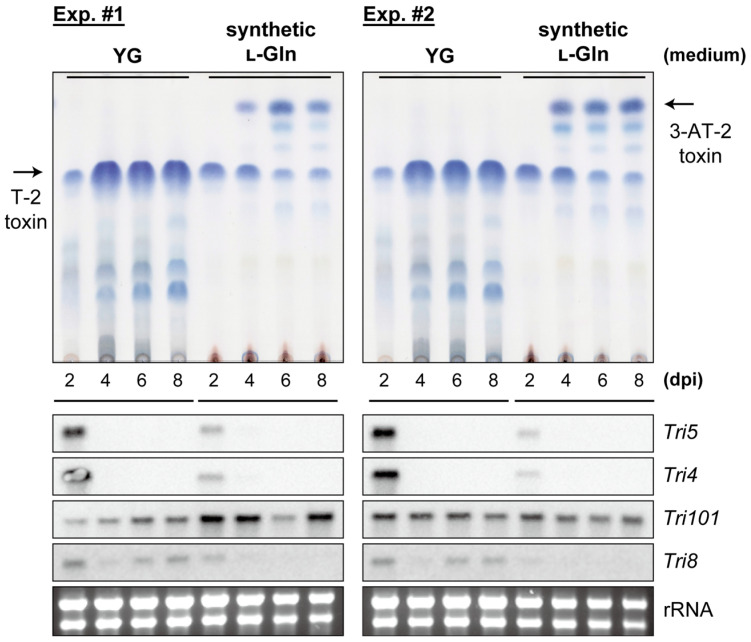 Figure 4
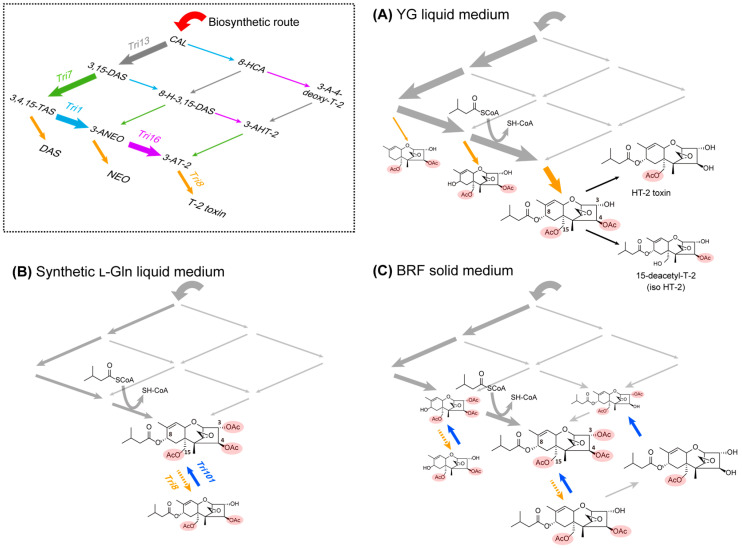 Figure 5
Peer Reviews
No public reviews on file for this paper yet. If you reviewed it on a platform where reviews are public (OpenReview, ICLR, NeurIPS, ICML), you can paste yours below so the community can read it here.
Videos
No videos yet. Explain this paper in a talk, walkthrough, or lecture? Add one.
Taxonomy
TopicsMycotoxins in Agriculture and Food · Fungal and yeast genetics research · Marine Toxins and Detection Methods