First Glance at Myeloid Leukaemia Factor 2 in Cardiomyocytes
Jakob Christoph Voran, Lucia Sophie Kilian, Simone Martini, Marcin Luzarowski, Marie Isabel Noormalal, Oliver Josef Müller, Ashraf Yusuf Rangrez, Derk Frank

TL;DR
This study explores how MLF2, a protein linked to heart disease, may help regulate protein balance and reduce heart cell enlargement in heart failure.
Contribution
The study identifies MLF2 as a novel regulator of protein homeostasis and hypertrophic signaling in cardiomyocytes.
Findings
MLF2 is overrepresented in protein aggregates in mouse models of desmin-related cardiomyopathies.
MLF2 overexpression reduces pro-hypertrophic gene expression in cardiomyocyte models.
MLF2 interacts with αB-crystallin and is upregulated in heart failure models.
Abstract
Understanding the molecular mechanisms that maintain protein homeostasis in cardiomyocytes is fundamental for the development of causal therapies for heart failure. Chaperones, the ubiquitin–proteasome system and autophagy are major regulators of cardiac homeostasis and are crucial for cardiomyocyte function and survival. In this context, myeloid leukaemia factor 2 (MLF2) emerged as a candidate of interest, as we found it overrepresented in protein aggregates in the hearts of mouse models of desmin-related cardiomyopathies (DRM), and it has also been suggested to be associated with dilated cardiomyopathy (DCM). Here, we identified αB-crystallin (CryAB), among other proteins, as a potential interaction partner of MLF2. Functionally, MLF2 was significantly upregulated in mouse models of heart failure and in two in vitro models of cardiomyocyte hypertrophy, and its overexpression resulted…
Genes, proteins, chemicals, diseases, species, mutations and cell lines named across the full text — each resolved to its canonical identifier and authoritative record.
Click any figure to enlarge with its caption.
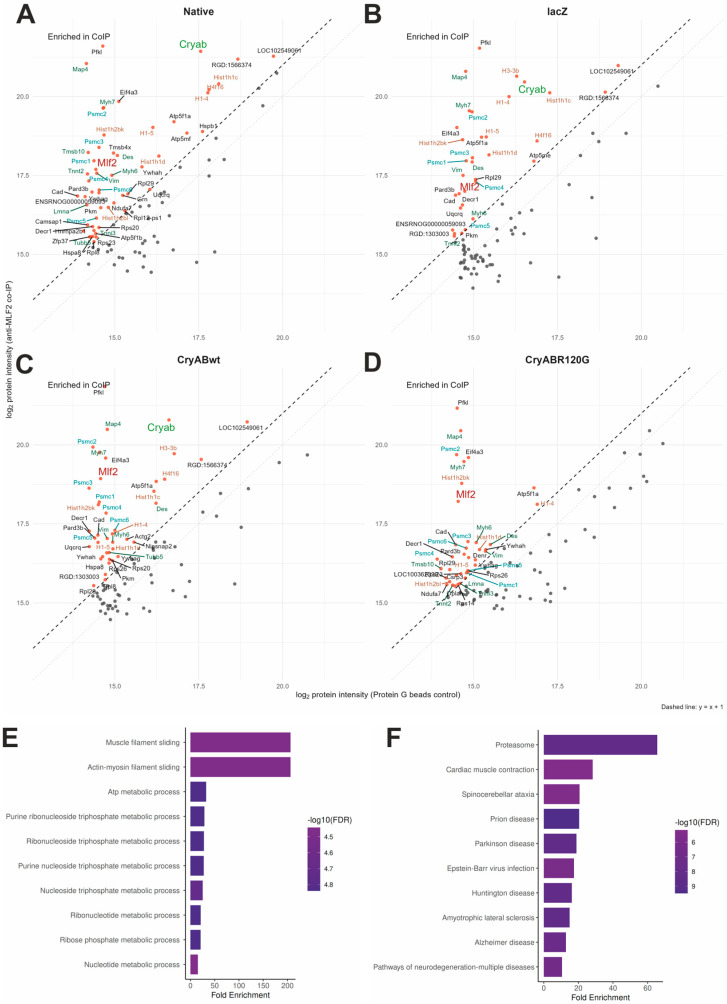 Figure 1
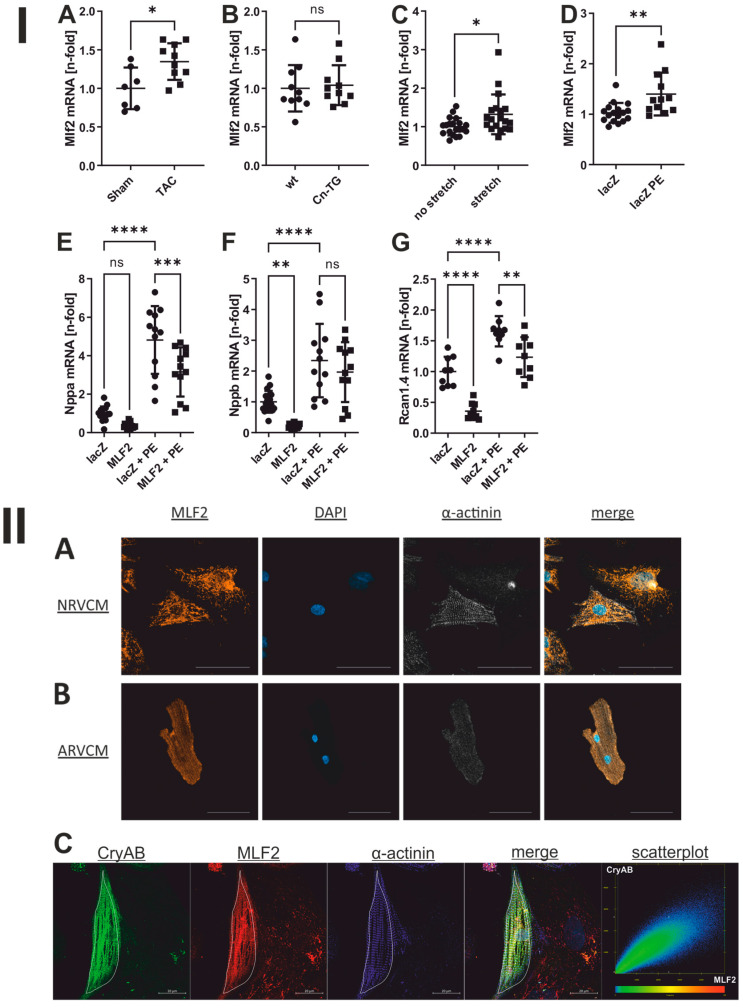 Figure 2
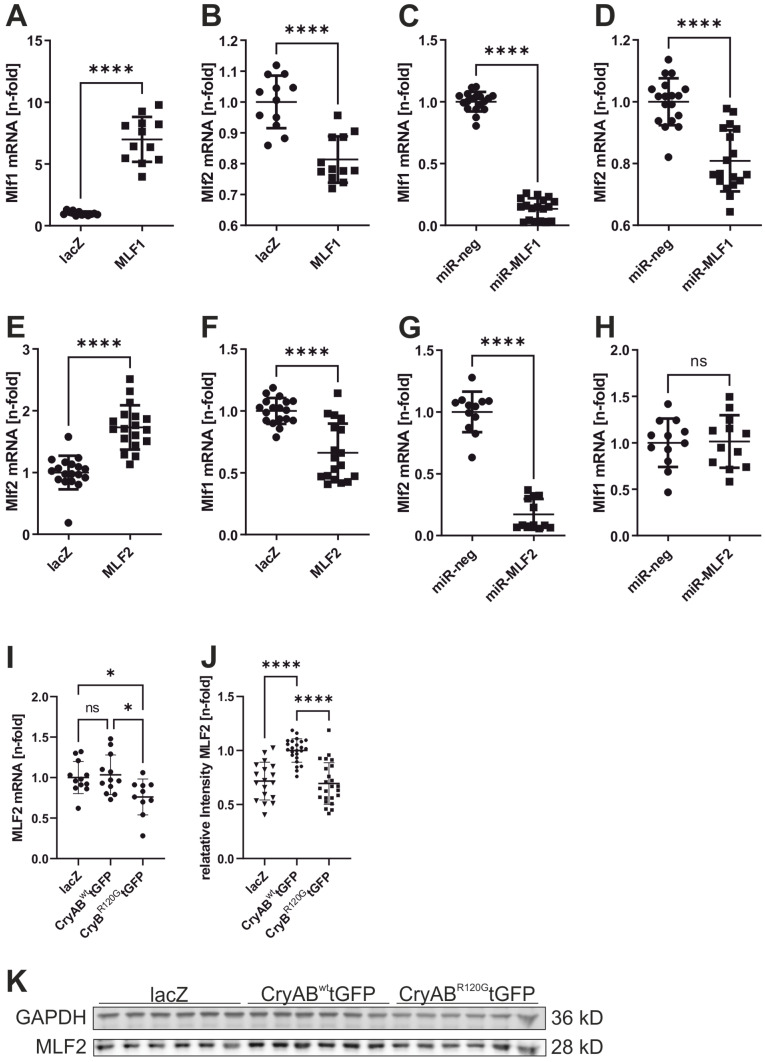 Figure 3
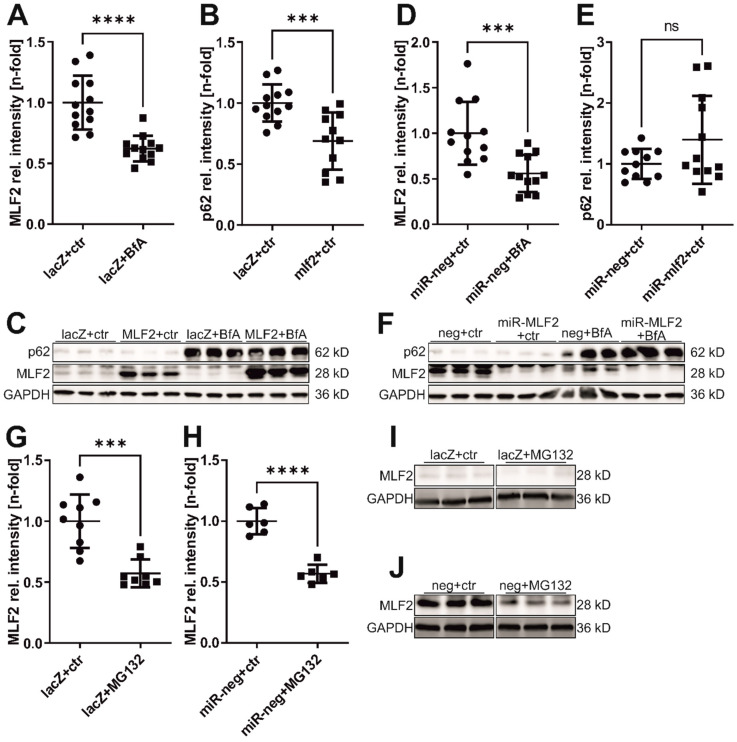 Figure 4
Peer Reviews
No public reviews on file for this paper yet. If you reviewed it on a platform where reviews are public (OpenReview, ICLR, NeurIPS, ICML), you can paste yours below so the community can read it here.
Videos
No videos yet. Explain this paper in a talk, walkthrough, or lecture? Add one.
Taxonomy
TopicsNuclear Structure and Function · Cardiomyopathy and Myosin Studies · Heat shock proteins research