Machine Learning Model for Sepsis Prediction in Prolonged and Chronic Critical Illness: Development and Validation Using Retrospective Real-World ICU Data
Mikhail Ya. Yadgarov, Olga Yu. Rebrova, Levan B. Berikashvili, Petr A. Polyakov, Kristina K. Kadantseva, Alexey A. Yakovlev, Andrey V. Grechko, Valery V. Likhvantsev

TL;DR
This study develops a machine learning model to predict sepsis in patients with prolonged or chronic critical illness, finding it works well in its specific group but fails in broader ICU populations.
Contribution
The novel contribution is developing and validating a sepsis prediction model specifically for prolonged/chronic critical illness patients using real-world ICU data.
Findings
A PCI/CCI-focused XGBoost model achieved an AUROC of 0.82 in its cohort but only 0.47 in external populations.
A universal model trained on mixed data showed reduced discrimination in PCI/CCI patients.
Respiratory rate, heart rate, body temperature, and age were key features for prediction.
Abstract
Background: No machine learning (ML) models for sepsis prediction have been specifically developed for patients with prolonged or chronic critical illness (PCI/CCI). Objective: This study aimed to develop and validate an ML-based sepsis prediction model for this cohort. Methods: We analyzed ICU admissions from the Russian Intensive Care Dataset (RICD, 575 patients with PCI/CCI) and two public ICU datasets from the PhysioNet (>40,000 patients with acute critical illness). Models were trained within a right-aligned prediction framework using a case–crossover–control sampling approach and a 6 h prediction window. Two strategies were evaluated: (1) a PCI/CCI-focused model trained on RICD with external testing on PhysioNet data and (2) a universal model trained on combined RICD and PhysioNet cohorts. Models were developed with tree-based algorithms (XGBoost, LightGBM, Random Forest,…
Genes, proteins, chemicals, diseases, species, mutations and cell lines named across the full text — each resolved to its canonical identifier and authoritative record.
Click any figure to enlarge with its caption.
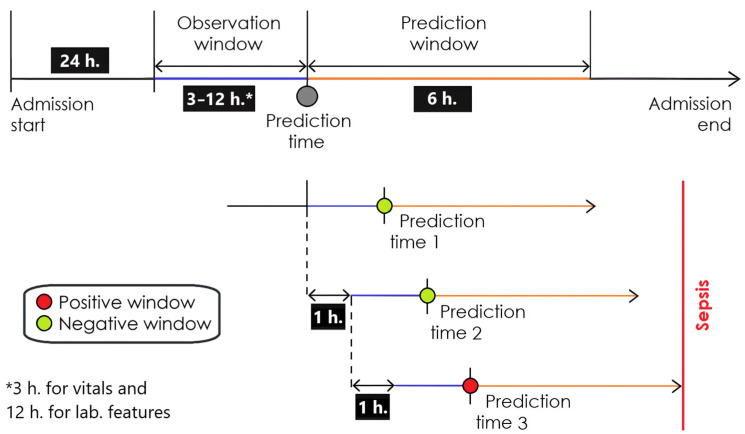 Figure 1
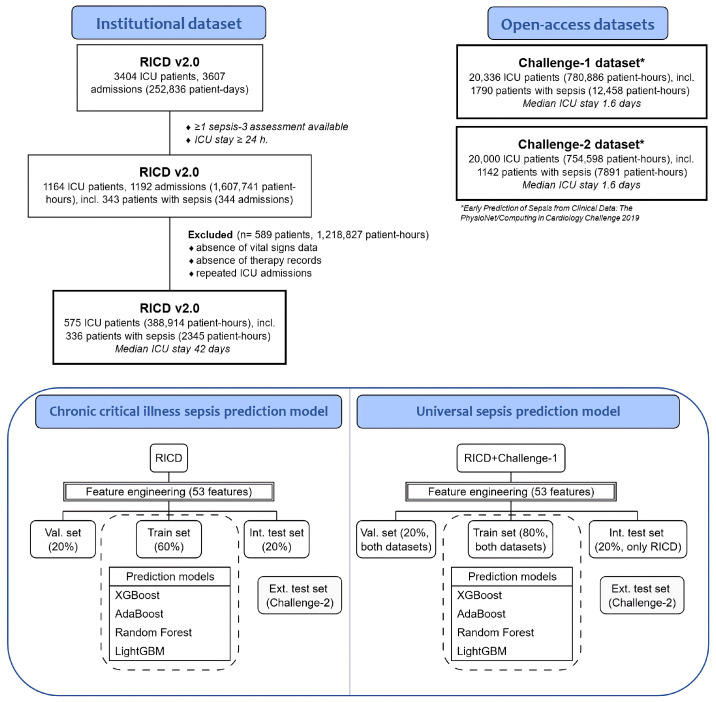 Figure 2
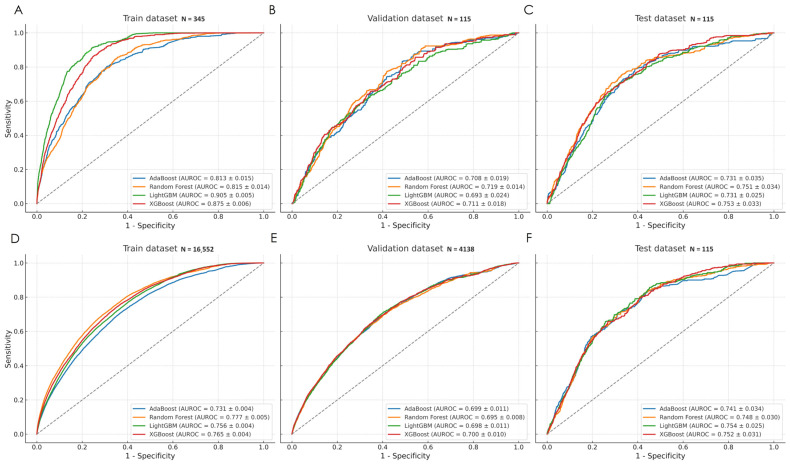 Figure 3
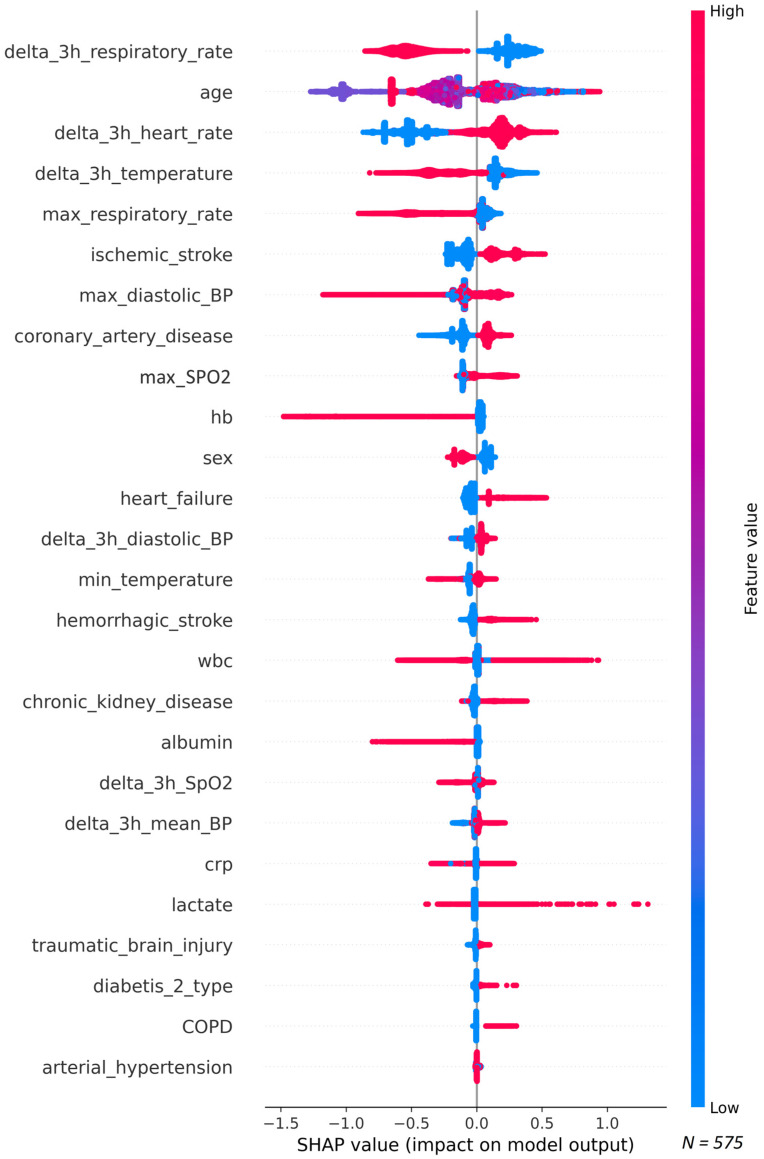 Figure 4
Peer Reviews
No public reviews on file for this paper yet. If you reviewed it on a platform where reviews are public (OpenReview, ICLR, NeurIPS, ICML), you can paste yours below so the community can read it here.
Videos
No videos yet. Explain this paper in a talk, walkthrough, or lecture? Add one.
Taxonomy
TopicsSepsis Diagnosis and Treatment · Machine Learning in Healthcare · Intensive Care Unit Cognitive Disorders