Systolic Versus Diastolic Echocardiographic Assessment of Epicardial Adipose Tissue for the Detection of Obstructive Coronary Artery Disease: A Systematic Review and Meta-Analysis
Andrea Sonaglioni, Giulio Francesco Gramaglia, Gian Luigi Nicolosi, Massimo Baravelli, Michele Lombardo

TL;DR
This study compares systolic and diastolic echocardiographic measurements of epicardial fat to detect coronary artery disease, finding both are effective but not fully interchangeable.
Contribution
The study is the first to systematically compare systolic and diastolic EAT measurements for obstructive CAD detection using a meta-analysis of over 6500 patients.
Findings
Both systolic and diastolic EAT thickness are significantly greater in patients with obstructive CAD.
Systolic and diastolic EAT measurements show strong and consistent associations with obstructive CAD.
Effect magnitude differs between systolic and diastolic measurements, suggesting they may not be fully interchangeable.
Abstract
Background: Epicardial adipose tissue (EAT) is a metabolically active visceral fat depot increasingly associated with the development and progression of coronary artery disease (CAD). Transthoracic echocardiography is the most widely used modality for EAT assessment; however, substantial heterogeneity exists regarding the timing of measurement within the cardiac cycle, with EAT thickness variably assessed during systole or diastole. Whether these measurements provide equivalent information for identifying obstructive CAD remains unclear. This systematic review and meta-analysis evaluated the association between echocardiographically measured EAT thickness and angiographically confirmed obstructive CAD, with specific focus on systolic versus diastolic assessments. Methods: PubMed, Scopus, and EMBASE were systematically searched through December 2025 for observational studies comparing…
Genes, proteins, chemicals, diseases, species, mutations and cell lines named across the full text — each resolved to its canonical identifier and authoritative record.
Click any figure to enlarge with its caption.
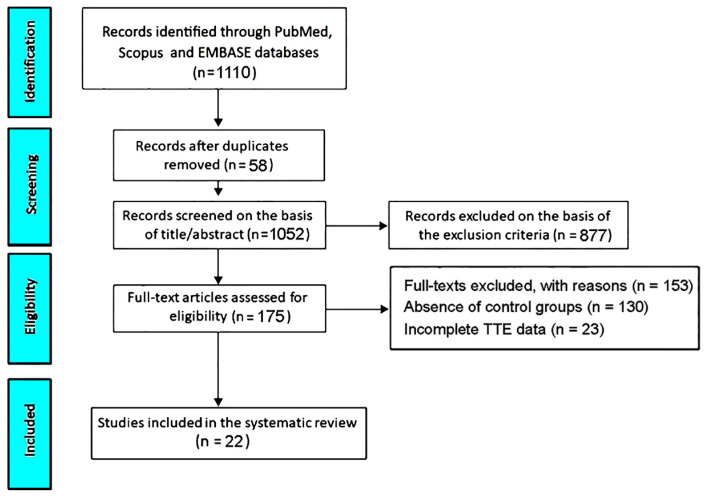 Figure 1
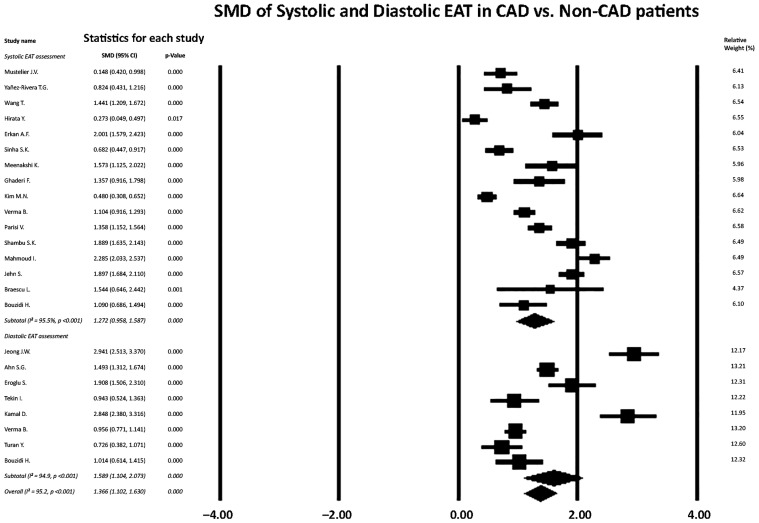 Figure 2
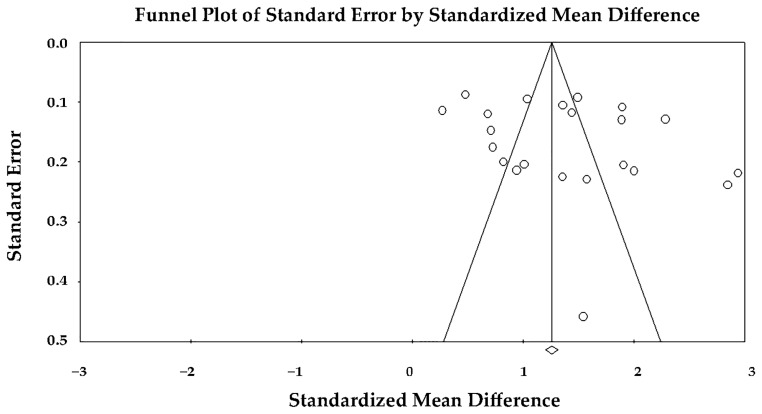 Figure 3
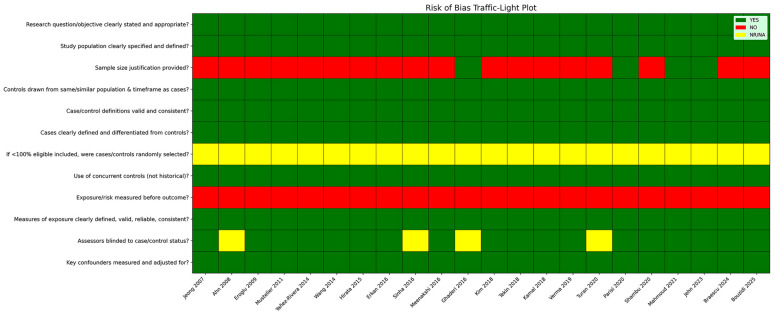 Figure 4
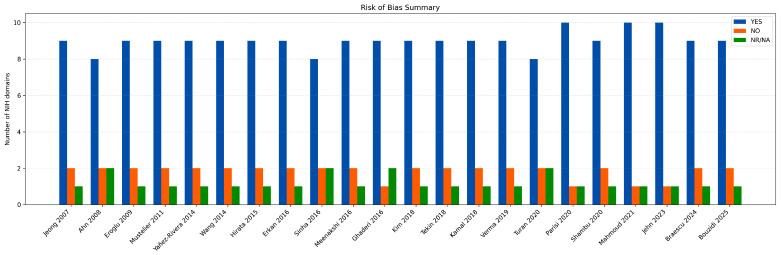 Figure 5
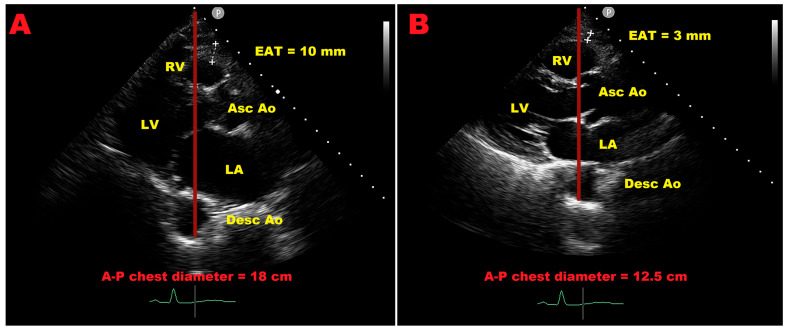 Figure 6
Peer Reviews
No public reviews on file for this paper yet. If you reviewed it on a platform where reviews are public (OpenReview, ICLR, NeurIPS, ICML), you can paste yours below so the community can read it here.
Videos
No videos yet. Explain this paper in a talk, walkthrough, or lecture? Add one.
Taxonomy
TopicsCardiovascular Disease and Adiposity · Adipokines, Inflammation, and Metabolic Diseases · Cardiovascular Function and Risk Factors