Effects of Bubbles During Water Resistance Therapy on the Vibration Characteristics of Vocal Folds During the Phonation of Different Vowels
Marie-Anne Kainz, Rebekka Hoppermann, Theresa Pilsl, Marie Köberlein, Jonas Kirsch, Michael Döllinger, Matthias Echternach

TL;DR
This study explores how using water resistance therapy with different vowel sounds affects vocal fold vibrations, finding that vowel-specific differences are reduced during the therapy.
Contribution
The study introduces findings on how vowel articulation during water resistance therapy influences vocal fold dynamics using a specific mask design.
Findings
Vowel-specific differences in vocal fold vibration patterns are reduced during water resistance therapy.
The DoctorVox® mask allows for near-natural vowel articulation while submerged in water, affecting vocal fold oscillation.
During therapy, differences in open and closing quotients between vowels were no longer statistically significant.
Abstract
Background: Semi-occluded vocal tract exercises (SOVTE) improve vocal quality and capacity. Water resistance therapy (WRT), a specific form of SOVTE with a tube submerged under water, generates increased and oscillating oral pressure through bubble formation during phonation, thereby influencing transglottal pressure and vocal fold dynamics. While the physiological effects of WRT using tube-based systems have been extensively studied, the influence of vowel-specific vocal tract configurations during WRT remains unclarified. This study examined how different vowel qualities during WRT affect vocal fold oscillation using the DoctorVox® mask, which allows near-natural mouth opening and vowel articulation. Methods: Ten vocally healthy, untrained adults (25–50 years) performed a continuous vowel glide (/i/–/a/–/u/-/i/) at constant fundamental frequency and habitual loudness during WRT using…
Genes, proteins, chemicals, diseases, species, mutations and cell lines named across the full text — each resolved to its canonical identifier and authoritative record.
Click any figure to enlarge with its caption.
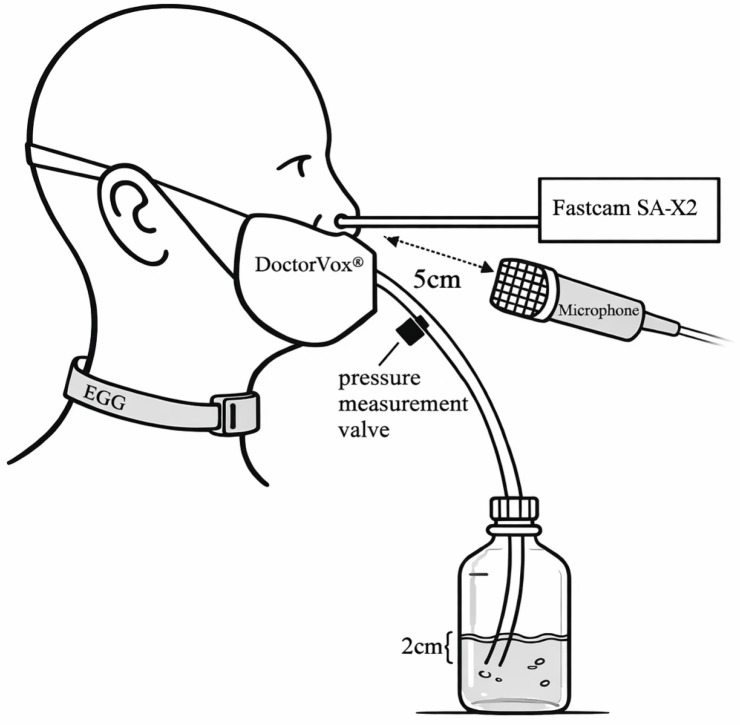 Figure 1
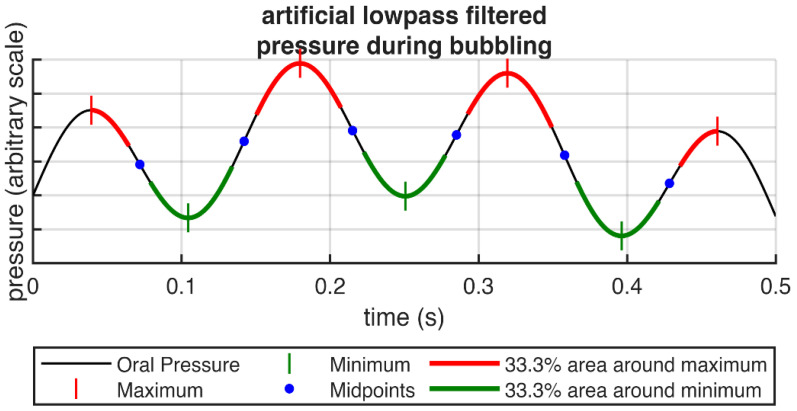 Figure 2
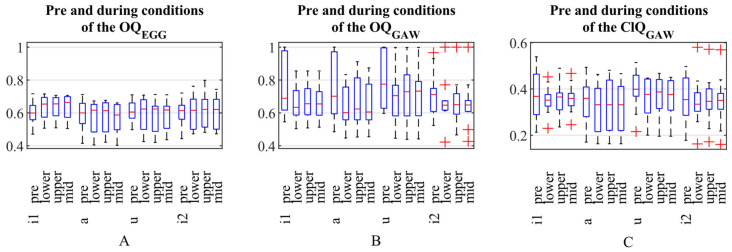 Figure 3
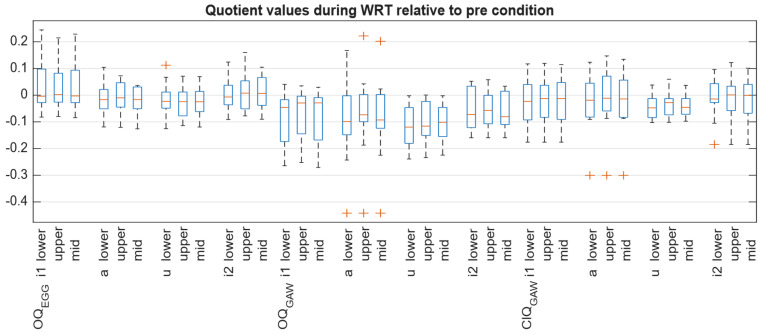 Figure 4
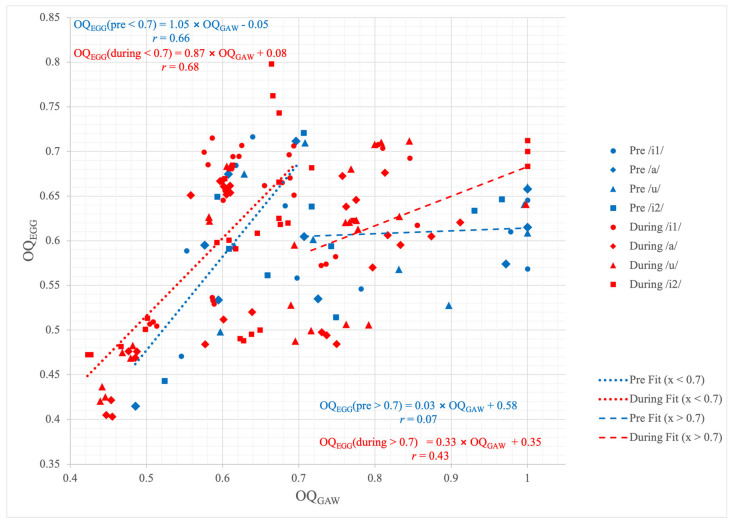 Figure 5
 Figure 6
Peer Reviews
No public reviews on file for this paper yet. If you reviewed it on a platform where reviews are public (OpenReview, ICLR, NeurIPS, ICML), you can paste yours below so the community can read it here.
Videos
No videos yet. Explain this paper in a talk, walkthrough, or lecture? Add one.
Taxonomy
TopicsVoice and Speech Disorders · Dysphagia Assessment and Management · Phonetics and Phonology Research