Three-Chamber Images Are More Useful than Four-Chamber Images for the Volumetric Method of Degenerative Mitral Regurgitation
Ami Tateyama-Niwano, Haruka Sasaki, Hiroyuki Takaoka, Haruto Matsumoto, Kazuki Yoshida, Moe Matsumoto, Yoshitada Noguchi, Shuhei Aoki, Katsuya Suzuki, Satomi Yashima, Makiko Kinoshita, Noriko Suzuki-Eguchi, Kenji Kawasaki, Yoshio Kobayashi, Kazuyuki Matsushita

TL;DR
Using three-chamber images improves accuracy in measuring mitral regurgitation severity compared to four-chamber images.
Contribution
Shows that A3C-A2C view combination provides more accurate EROA measurements than the conventional A4C-A2C method in degenerative mitral regurgitation.
Findings
EROA calculated from A3C-A2C views correlated strongly with 3D TEE VCA (r = 0.829).
EROA from A4C-A2C views was significantly larger than VCA and less correlated (r = 0.638).
A3C-A2C method did not significantly differ from 3D TEE VCA measurements.
Abstract
Background/Objectives: Effective regurgitant orifice area (EROA) is a critical parameter in assessing mitral regurgitation (MR) severity. The Japanese Circulation Society recommends a volumetric method which uses mitral annular diameters from apical four-chamber (A4C) and two-chamber (A2C) views. However, given the elliptical shape of the mitral annulus, use of apical long-axis (A3C) and A2C views, which reflect the anatomical long and short axes, may improve measurement accuracy. This study aimed to determine the optimal echocardiographic view combination for precise EROA quantification in degenerative MR (DMR). Methods: We retrospectively analyzed 98 patients with DMR who underwent both transthoracic echocardiography (TTE) and three-dimensional transesophageal echocardiography (3D TEE) within three months between April 2018 and December 2023. EROA was calculated using volumetric…
Genes, proteins, chemicals, diseases, species, mutations and cell lines named across the full text — each resolved to its canonical identifier and authoritative record.
Click any figure to enlarge with its caption.
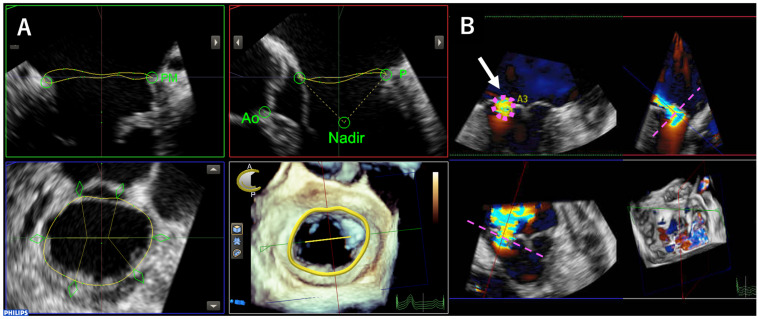 Figure 1
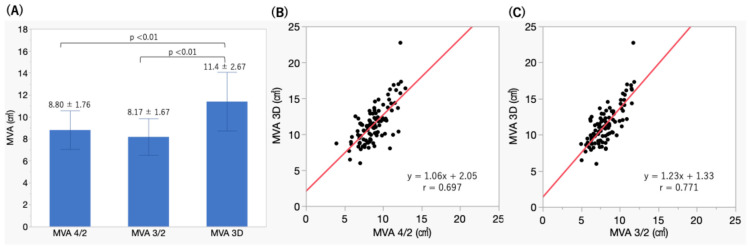 Figure 2
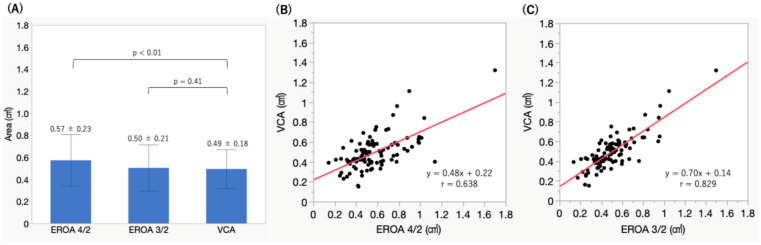 Figure 3
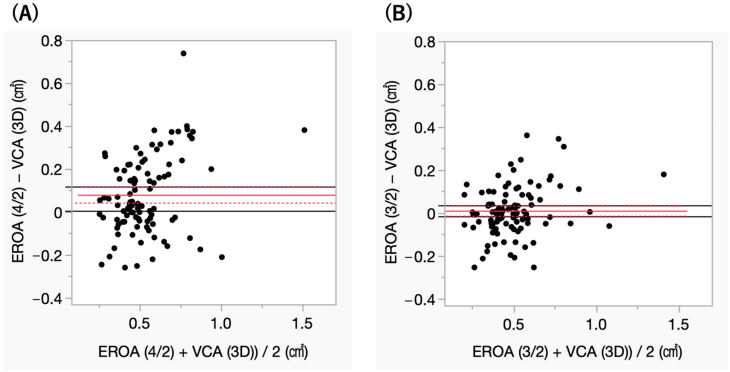 Figure 4
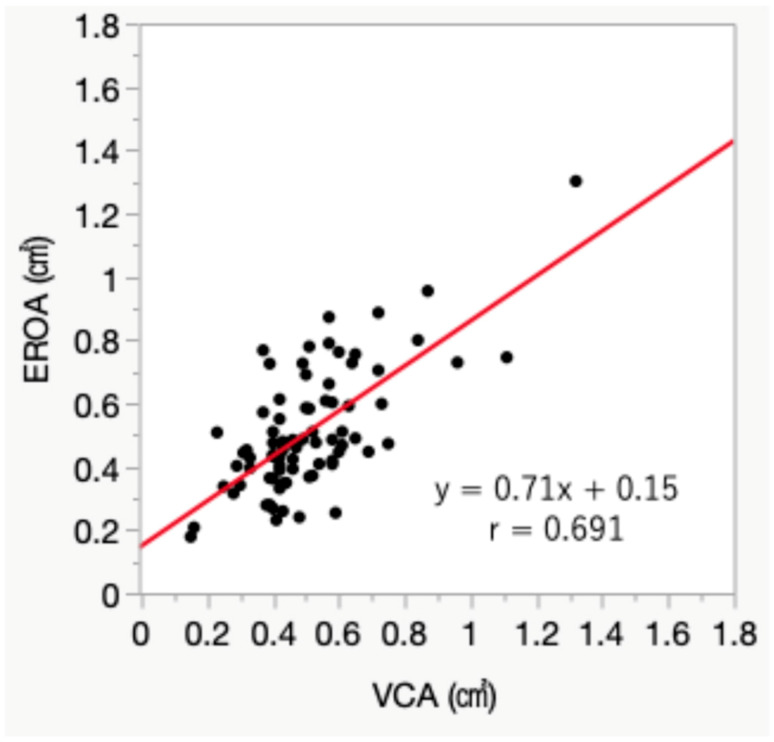 Figure 5
Peer Reviews
No public reviews on file for this paper yet. If you reviewed it on a platform where reviews are public (OpenReview, ICLR, NeurIPS, ICML), you can paste yours below so the community can read it here.
Videos
No videos yet. Explain this paper in a talk, walkthrough, or lecture? Add one.
Taxonomy
TopicsCardiac Valve Diseases and Treatments · Atrial Fibrillation Management and Outcomes · Cardiovascular Function and Risk Factors