Serum Lipidomic Profile Signature of Active Acromegaly and Relationships to Cardiovascular Disease
Oana Stănoiu-Pînzariu, Thalijn L. C. Wolters, Carmen Socaciu, Cristina Alina Silaghi, Ana Valea, Ioana Popa-Ilie, Georgeta Hazi, Andreea Iulia Socaciu, Romana Teodora Netea-Maier, Carmen Emanuela Georgescu

TL;DR
This study identifies specific lipid patterns in acromegaly patients that distinguish them from healthy individuals and are linked to cardiovascular complications.
Contribution
The study introduces novel lipidomic biomarkers, SM 34:0;O2 and phosphorylcholine, for acromegaly and its cardiovascular risks.
Findings
SM 34:0;O2 and phosphorylcholine best differentiate acromegaly patients from healthy controls.
SM 34:0;O2 levels are higher in treatment-naïve patients and correlate with GH and IGF-1 levels.
Lipid changes like ST 24:1;O3 and Cer 38:0;O4 are linked to cardiovascular complications in acromegaly.
Abstract
Acromegaly is a rare endocrine disease characterized by multiple metabolic abnormalities and high cardiovascular risk. This cross-sectional study evaluated the lipidomic serum profile of 109 participants (59 acromegaly patients versus 50 healthy controls) via high-performance liquid chromatography combined with mass spectrometry (HPLC-MS). The lipidomic profile that differentiated acromegaly from controls included sphingomyelins (SMs), glycerophospholipids, glycerolipids, ceramides, fatty acids, wax esters (WEs), carnitines, and sterol (ST) lipids. SM 34:0;O2 and phosphorylcholine best distinguished acromegaly patients from controls (VIP > 2.49). SM 34:0;O2 levels were significantly elevated in treatment-naïve versus uncontrolled patients (p < 0.0001). Furthermore, SM 34:0;O2 positively correlated with random GH and IGF-1. Lack of therapy predicted SM 34:0;O2 serum titers in acromegaly.…
Genes, proteins, chemicals, diseases, species, mutations and cell lines named across the full text — each resolved to its canonical identifier and authoritative record.
Click any figure to enlarge with its caption.
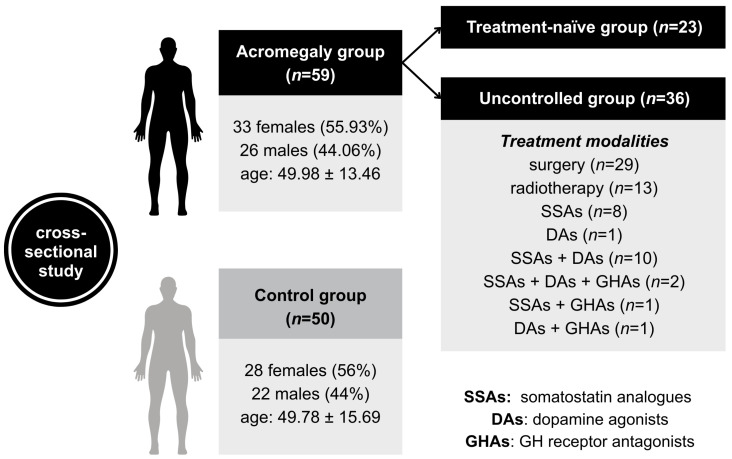 Figure 1
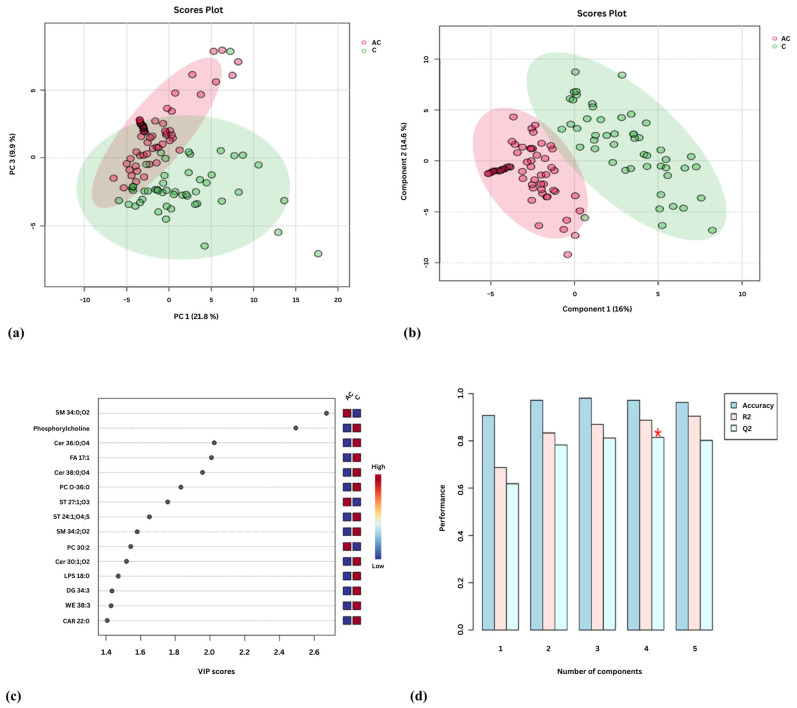 Figure 2
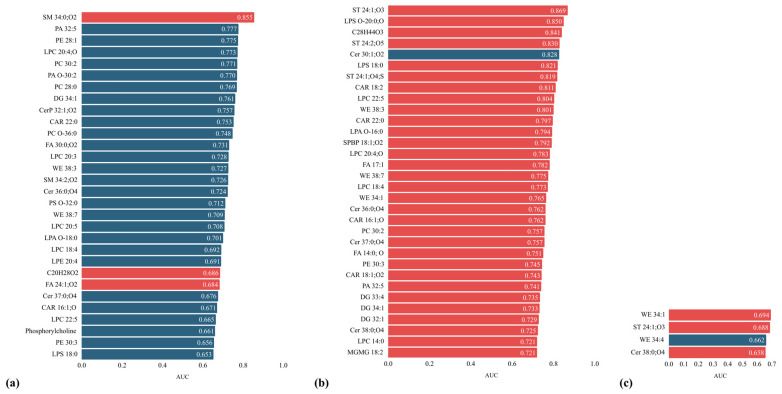 Figure 3
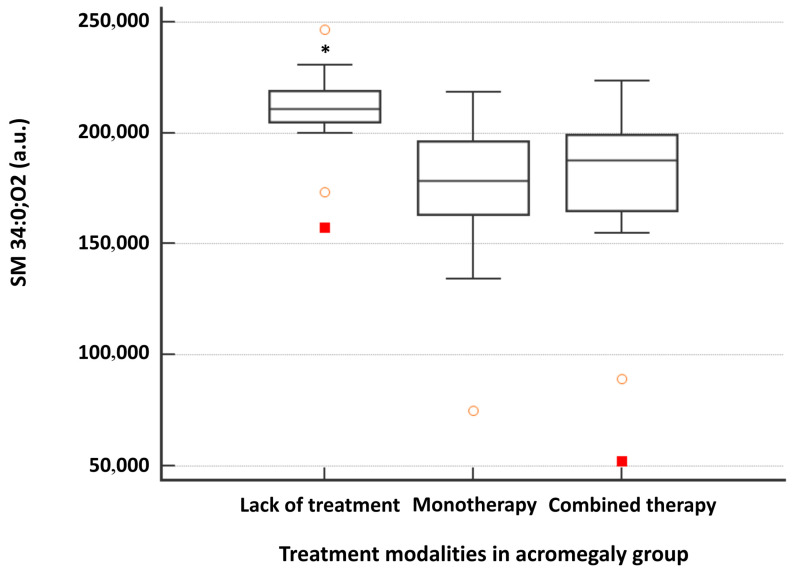 Figure 4
Peer Reviews
No public reviews on file for this paper yet. If you reviewed it on a platform where reviews are public (OpenReview, ICLR, NeurIPS, ICML), you can paste yours below so the community can read it here.
Videos
No videos yet. Explain this paper in a talk, walkthrough, or lecture? Add one.
Taxonomy
TopicsPituitary Gland Disorders and Treatments · Coagulation, Bradykinin, Polyphosphates, and Angioedema · Adrenal Hormones and Disorders