Integrative Multi-Omics Analysis Reveals Molecular Signatures of Recurrence in Paired Primary and Recurrent High-Grade Serous Ovarian Cancer
Min-A Kim, Johyeon Nam, Ha-Yeon Shin, Jue Young Kim, Anna Jun, Hanbyoul Cho, Mi-Ryung Han, Jae-Hoon Kim

TL;DR
This study identifies molecular signatures linked to recurrence in high-grade serous ovarian cancer using multi-omics data from paired primary and recurrent tumors.
Contribution
The study introduces a novel integrative multi-omics approach to uncover molecular alterations and potential biomarkers for HGSOC recurrence.
Findings
185 differentially expressed genes and 36 differentially expressed proteins were identified in recurrent HGSOC tumors.
IL7R, IRF8, and PTPRC were upregulated in recurrent tumors and linked to poor prognosis, while NSG1 was downregulated and associated with better outcomes.
Recurrent tumor-specific genes were functionally connected to MAPK signaling and showed dynamic regulatory interactions with proteins.
Abstract
High-grade serous ovarian cancer (HGSOC) is the most prevalent and aggressive form of epithelial ovarian cancer and is characterized by high recurrence rates and poor clinical outcomes. In this study, we identify molecular signatures associated with recurrence by conducting integrative transcriptomic and proteomic analyses on paired primary and recurrent HGSOC tissues from 34 patients. RNA sequencing and proteomic profiling revealed 185 differentially expressed genes (DEGs) and 36 differentially expressed proteins (DEPs) linked to recurrence. Pathway enrichment and Ingenuity pathway analyses highlighted the involvement of immune cell trafficking, cell signaling, and MAPK pathway activation in recurrent tumors. A survival analysis identified seven DEGs that correlated significantly with recurrence-free survival; among them, IL7R, IRF8, and PTPRC were upregulated in recurrent tumors and…
Genes, proteins, chemicals, diseases, species, mutations and cell lines named across the full text — each resolved to its canonical identifier and authoritative record.
Click any figure to enlarge with its caption.
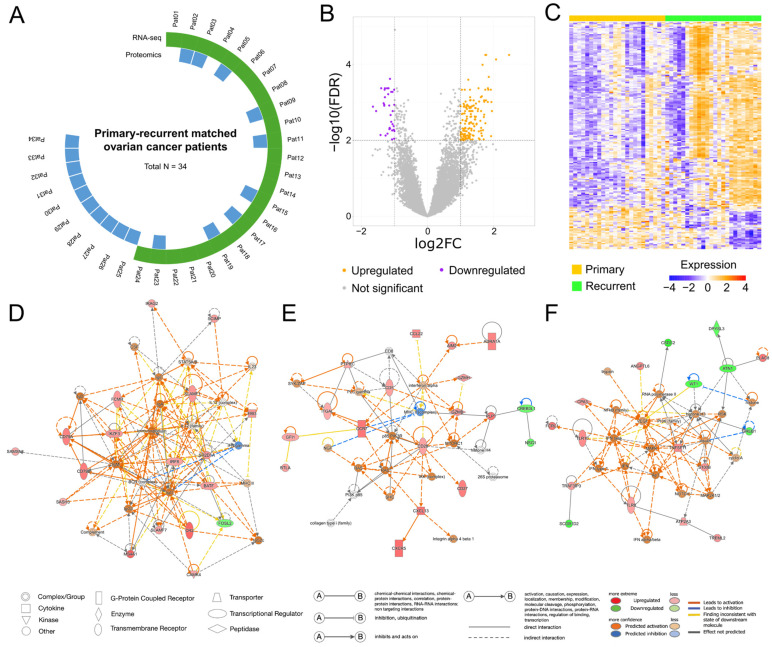 Figure 1
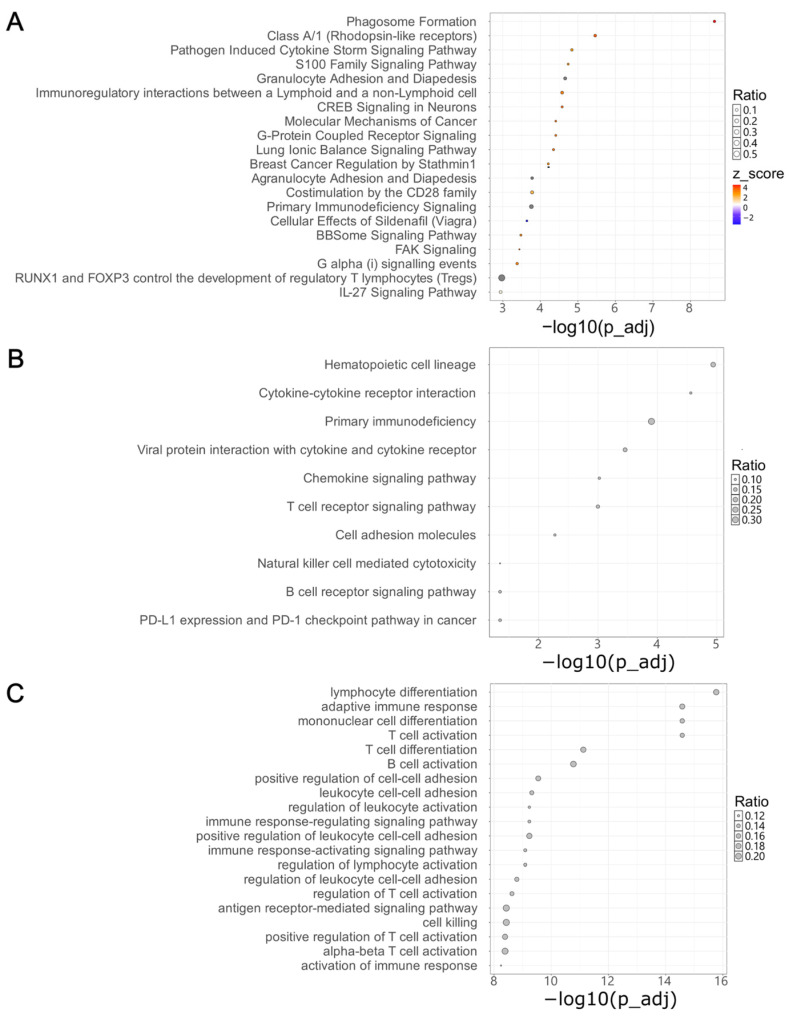 Figure 2
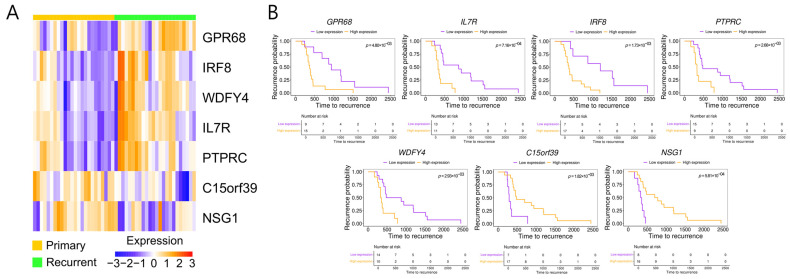 Figure 3
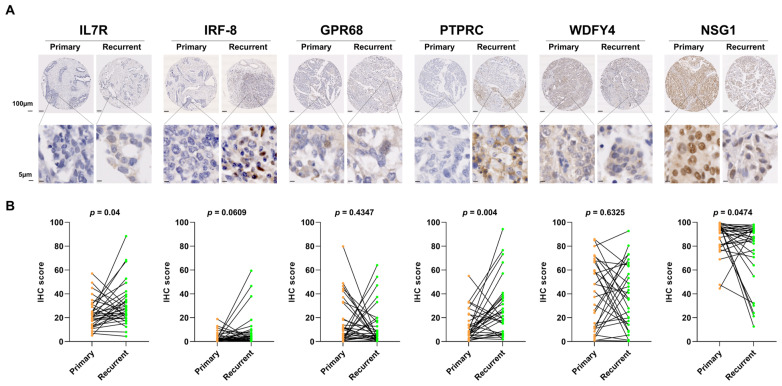 Figure 4
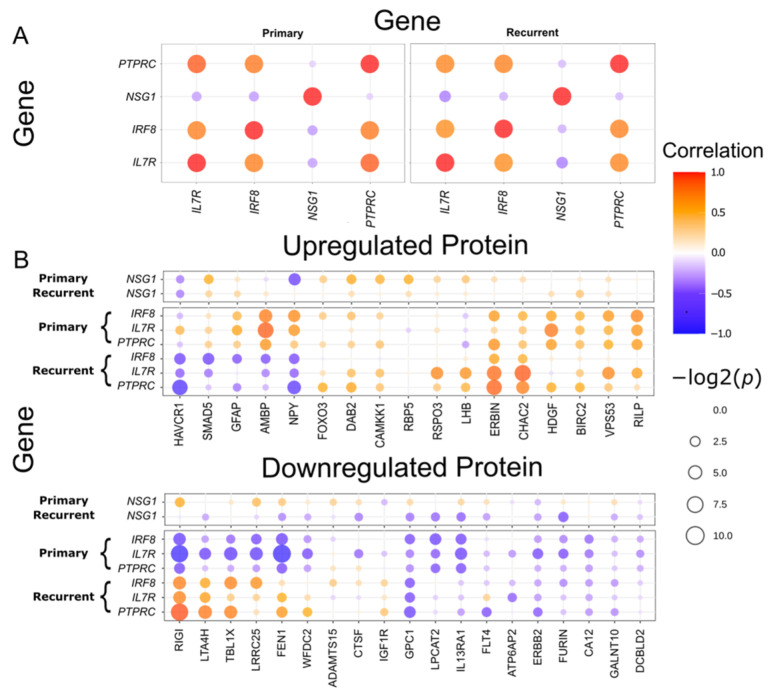 Figure 5
Peer Reviews
No public reviews on file for this paper yet. If you reviewed it on a platform where reviews are public (OpenReview, ICLR, NeurIPS, ICML), you can paste yours below so the community can read it here.
Videos
No videos yet. Explain this paper in a talk, walkthrough, or lecture? Add one.
Taxonomy
TopicsOvarian cancer diagnosis and treatment · Ferroptosis and cancer prognosis · Protein Tyrosine Phosphatases