Validity of DEXA-Derived Thigh Muscle Quantification Against AI-Assisted CT: Inter-Limb Asymmetry Provides Superior Agreement over Absolute Values
Do Kyung Lee

TL;DR
This study compares DEXA and AI-assisted CT for measuring thigh muscle and finds that inter-limb asymmetry improves DEXA accuracy for lean mass but not for fat.
Contribution
The study introduces inter-limb asymmetry as a novel approach to improve DEXA's agreement with CT for lean mass quantification.
Findings
DEXA lean mass correlated with CT pure muscle volume, and inter-limb asymmetry improved this correlation.
Inter-limb asymmetry showed narrower agreement limits compared to absolute DEXA measurements.
DEXA fat mass asymmetry did not align with CT intramuscular adipose tissue asymmetry.
Abstract
Background/Objectives: This study evaluated the validity of DEXA-derived muscle quantification by assessing its agreement with AI-assisted CT measurements of muscle volume and intramuscular adipose tissue. It also examined whether inter-limb asymmetry improves DEXA–CT agreement beyond absolute DEXA values. The influence of lower-limb rotation on DEXA measurements was assessed, and the study aimed to clarify how DEXA should be obtained and interpreted to more accurately reflect true muscle status. Methods: Fifty-two patients who completed CT and DEXA within 14 days were included. CT was used to obtain pure muscle volume and intramuscular adipose tissue (IMAT) using a standardized AI segmentation protocol, and corresponding DEXA thigh segmentation provided lean mass and fat percentage. Position-specific correlation analysis, regression, and Bland–Altman agreement testing were performed…
Genes, proteins, chemicals, diseases, species, mutations and cell lines named across the full text — each resolved to its canonical identifier and authoritative record.
Click any figure to enlarge with its caption.
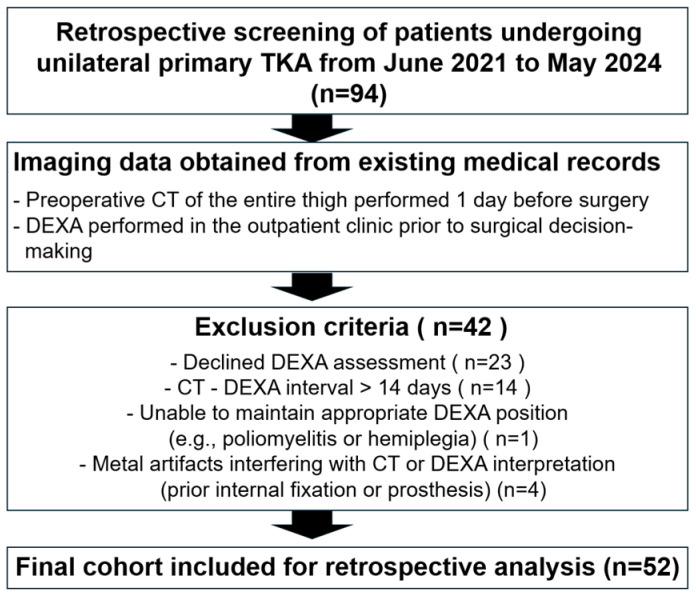 Figure 1
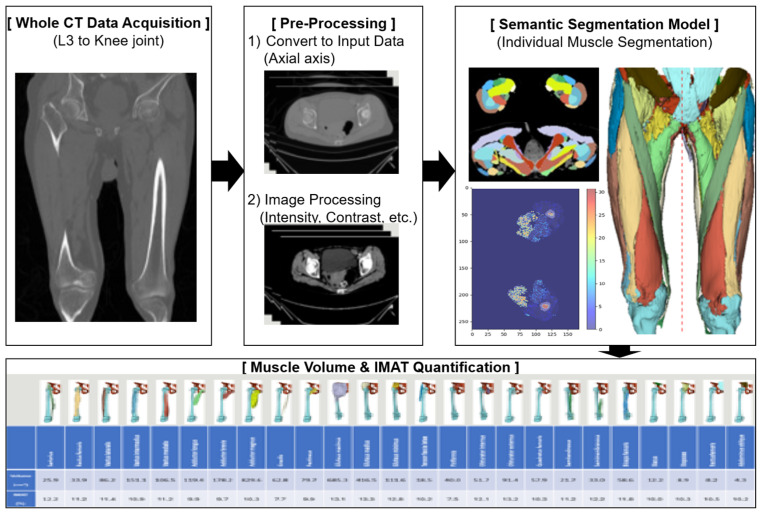 Figure 2
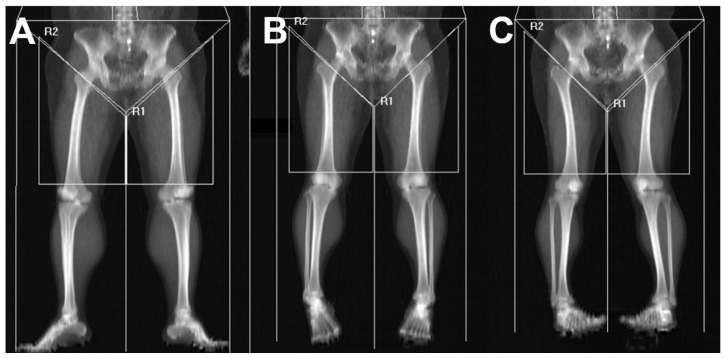 Figure 3
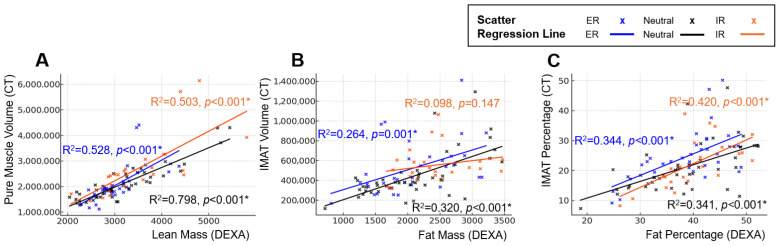 Figure 4
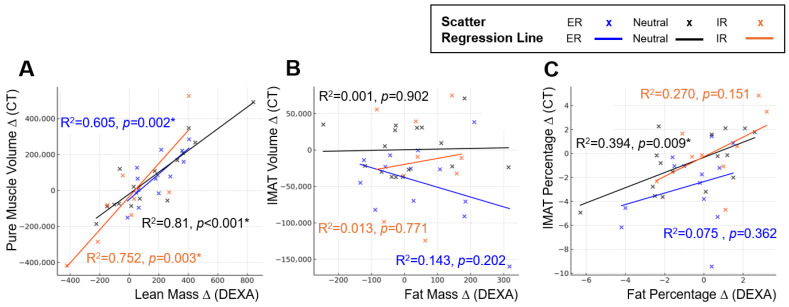 Figure 5
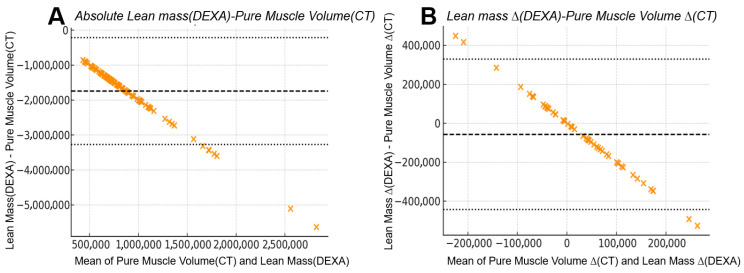 Figure 6
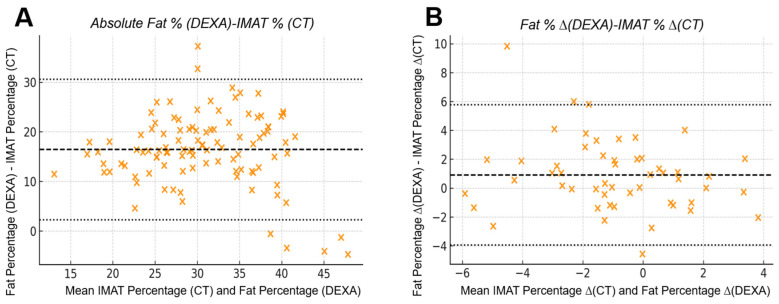 Figure 7
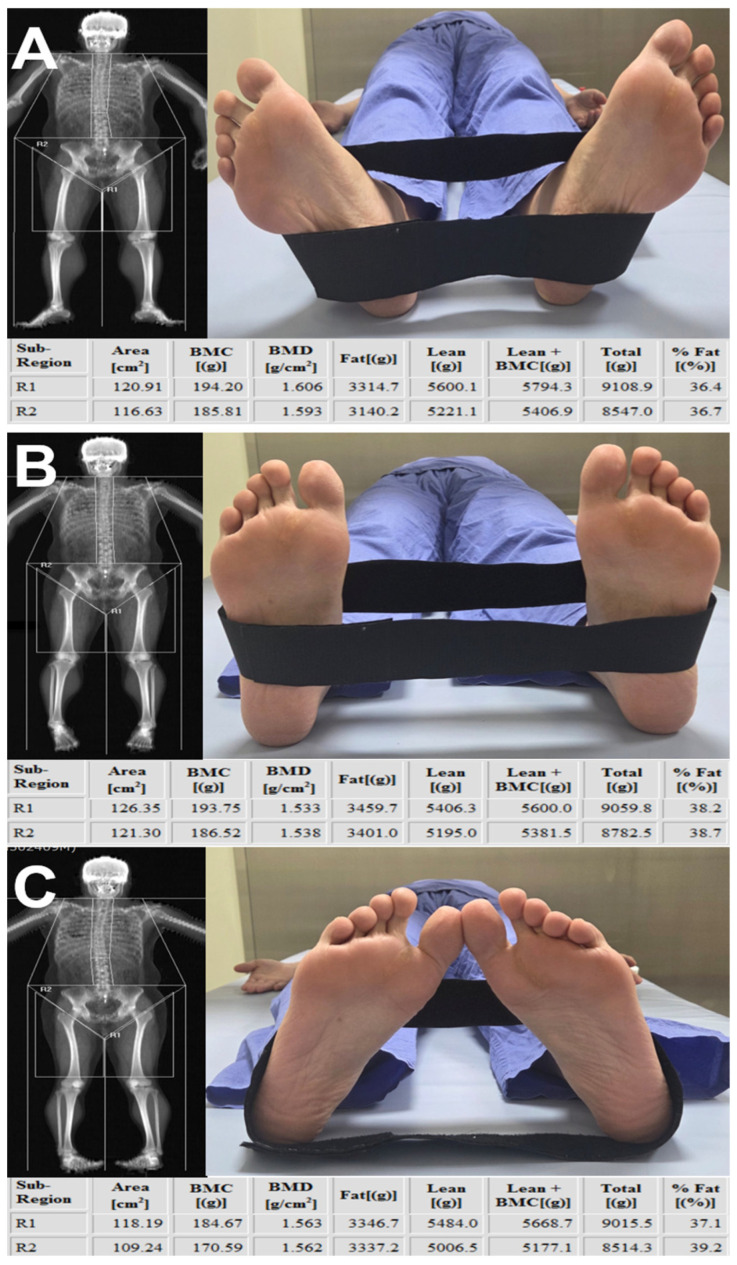 Figure 8
Peer Reviews
No public reviews on file for this paper yet. If you reviewed it on a platform where reviews are public (OpenReview, ICLR, NeurIPS, ICML), you can paste yours below so the community can read it here.
Videos
No videos yet. Explain this paper in a talk, walkthrough, or lecture? Add one.
Taxonomy
TopicsNutrition and Health in Aging · Muscle Physiology and Disorders · Body Composition Measurement Techniques