Immortalization and Targeted Enrichment of HIV-Infected CD4+ T-Cells from Patients Under Antiretroviral Therapy
Whitney E. Bruchey, Sharada Paudel, Ashley L. McCormack, Tomozumi Imamichi, Sylvain Laverdure

TL;DR
Researchers developed a new method to isolate and study HIV-infected CD4+ T-cells from patients on antiretroviral therapy, revealing active proviruses with mutations and deletions.
Contribution
A novel method for high-efficiency screening and enrichment of HIV-positive CD4+ T-cells from patients on ART.
Findings
Isolated and expanded HIV-positive CD4+ T-cells from patients on ART confirmed transcriptional and translational activity of proviruses.
Majority of proviral sequences in suppressed HIV patients show 3′-LTR deletions.
Sequence diversity using LTR-to-LTR amplification may be underestimated due to deletions.
Abstract
Defective HIV-1 proviruses harboring mutations and/or large internal deletions represent the majority of HIV-1 sequences found in circulating peripheral blood mononuclear cells of people living with HIV with viremia suppressed by combination antiretroviral therapy; indirect evidence suggests that such sequences are transcriptionally active and may contribute to immune activation. In this study, we present a new approach allowing for high-efficiency screening, immortalization, and targeted enrichment of HIV-positive CD4+ T-cells isolated from people living with HIV. Using this method, we were able to isolate and expand patient-derived cells, identify mutations and deletions via sequencing, and confirm that those proviruses were transcriptionally and translationally active in vitro. Moreover, our findings indicate that the majority of proviral sequences circulating in suppressed…
Genes, proteins, chemicals, diseases, species, mutations and cell lines named across the full text — each resolved to its canonical identifier and authoritative record.
Click any figure to enlarge with its caption.
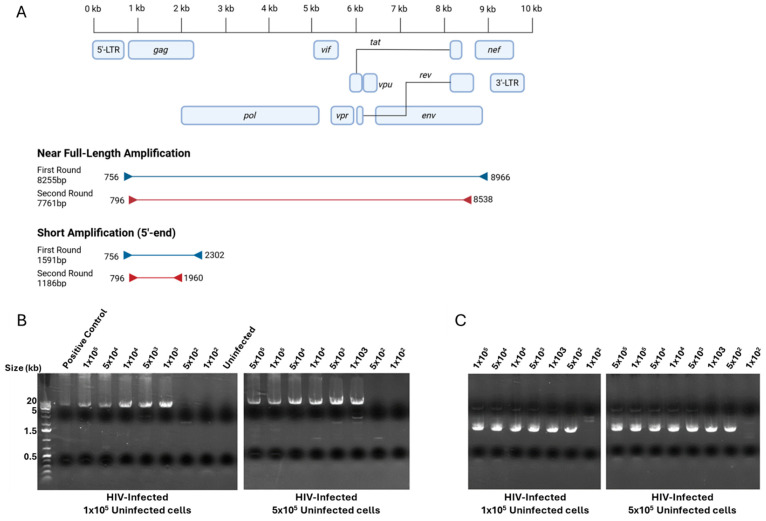 Figure 1
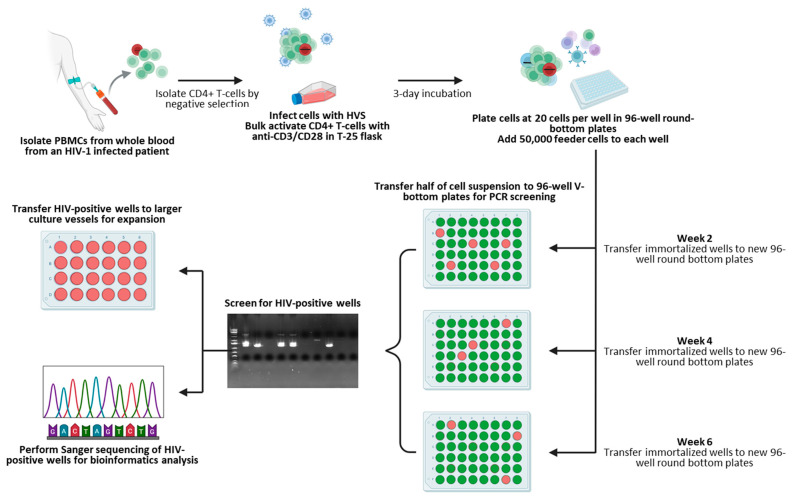 Figure 2
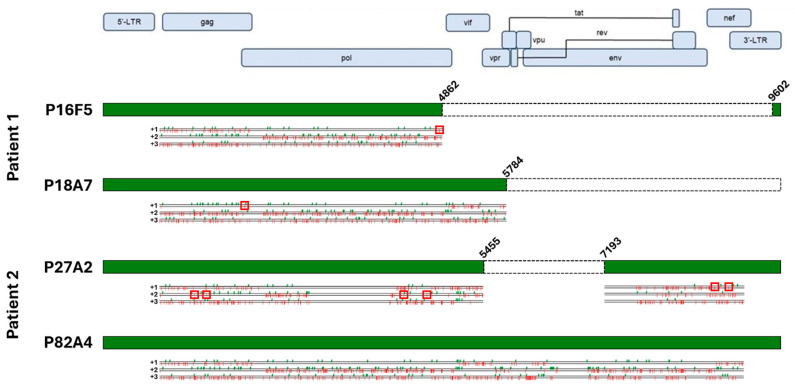 Figure 3
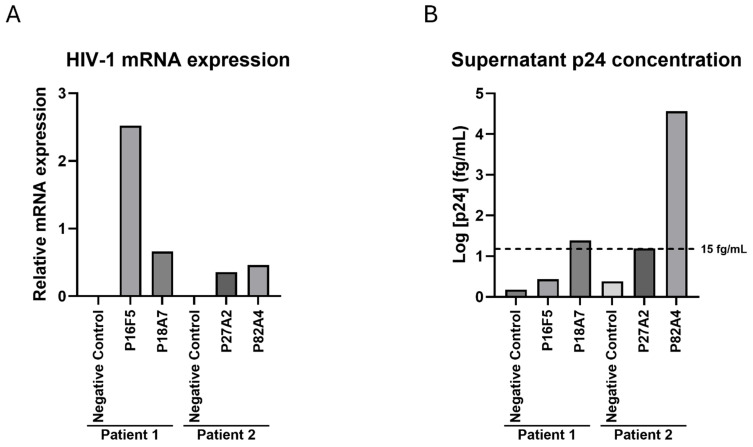 Figure 4
Peer Reviews
No public reviews on file for this paper yet. If you reviewed it on a platform where reviews are public (OpenReview, ICLR, NeurIPS, ICML), you can paste yours below so the community can read it here.
Videos
No videos yet. Explain this paper in a talk, walkthrough, or lecture? Add one.
Taxonomy
TopicsHIV Research and Treatment · HIV/AIDS drug development and treatment · Cytomegalovirus and herpesvirus research