Coxsackievirus B3 Cleaves INTS10 Through 3C Protease to Facilitate Its Replication
Luna Yuan, Liling Lin, Chunyan Bi, Xiaoyu Niu, Yang Chen, Yanru Fei, Guangtian Wang, Hui Wang, Yan Wang, Wenran Zhao, Zhaohua Zhong, Lexun Lin

TL;DR
This paper shows that Coxsackievirus B3 uses its 3C protease to cut a host protein called INTS10, which helps the virus replicate by disrupting RNA processing.
Contribution
The study identifies INTS10 as a novel substrate of CVB3 3Cpro and reveals its role in virus replication through U snRNA processing disruption.
Findings
CVB3 3Cpro cleaves INTS10 at residue Q221, generating a fragment.
INTS10 depletion increases CVB3 replication and blocks snRNA processing.
U1 and U2 snRNA levels inversely correlate with CVB3 replication.
Abstract
Coxsackieviruses possess two proteases that are engaged in cleaving viral polyprotein and hijacking host cell processes such as RNA biosynthesis. Integrator subunit 10 (INTS10), a subunit of the integrator complex, facilitates the processing of small nuclear RNAs (U1 and U2 snRNAs) to regulate cellular transcription. We found that INST10 can be cleaved by Coxsackievirus B (CVB). Hence, we hypothesized that INST10 may play a role in CVB infection. In this study, INTS10 is identified as the substrate of CVB3 protease 3C (3Cpro). The cleavage occurs at the residue Q221 and yields a fragment. Depletion of INTS10 enhanced CVB3 replication and blocked snRNA processing. Overexpression of U1 snRNA inhibited CVB3 infection, whereas its knockdown conversely enhanced it. Similarly, knockdown of U2 snRNA was found to promote CVB3 replication. Taken together, the 3Cpro-mediated cleavage of INTS10…
Genes, proteins, chemicals, diseases, species, mutations and cell lines named across the full text — each resolved to its canonical identifier and authoritative record.
Click any figure to enlarge with its caption.
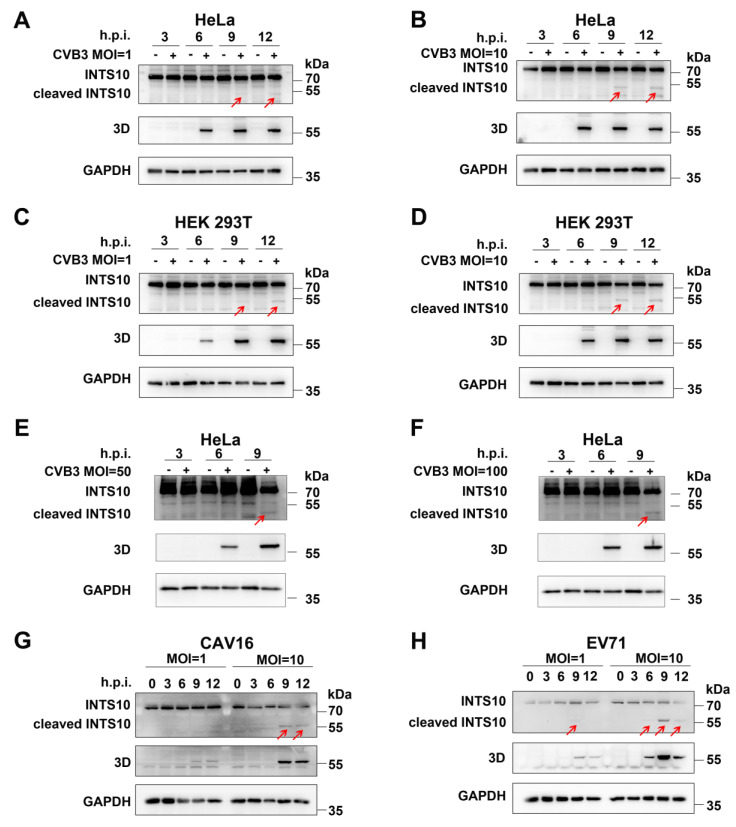 Figure 1
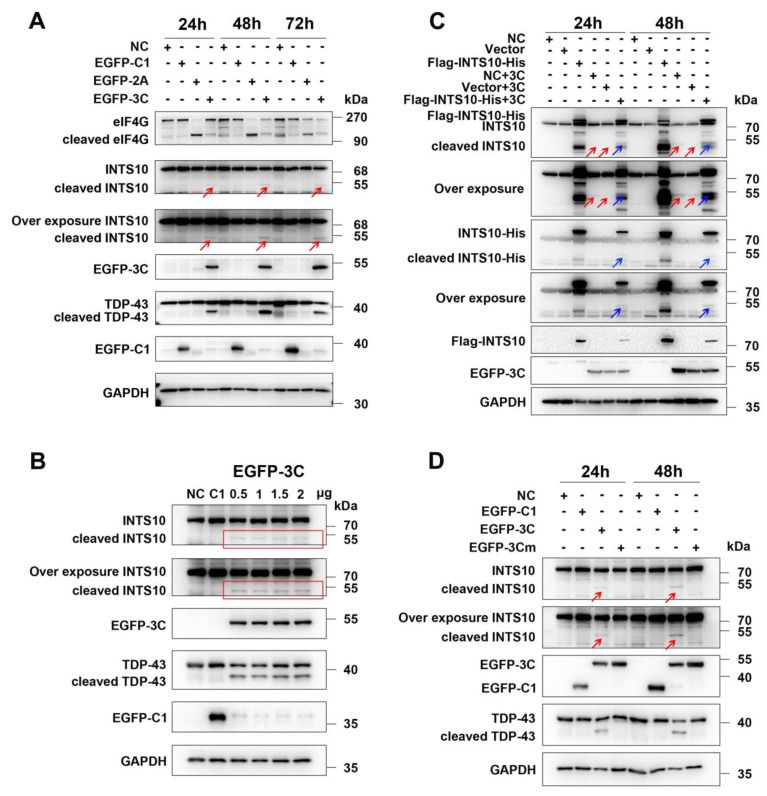 Figure 2
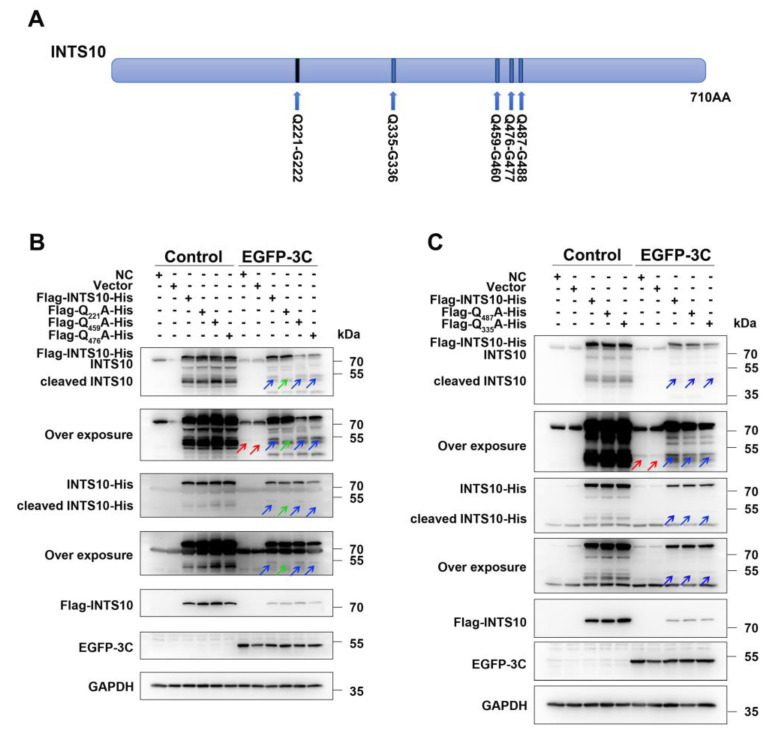 Figure 3
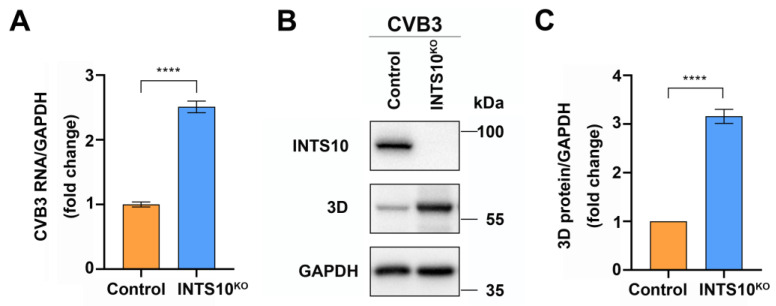 Figure 4
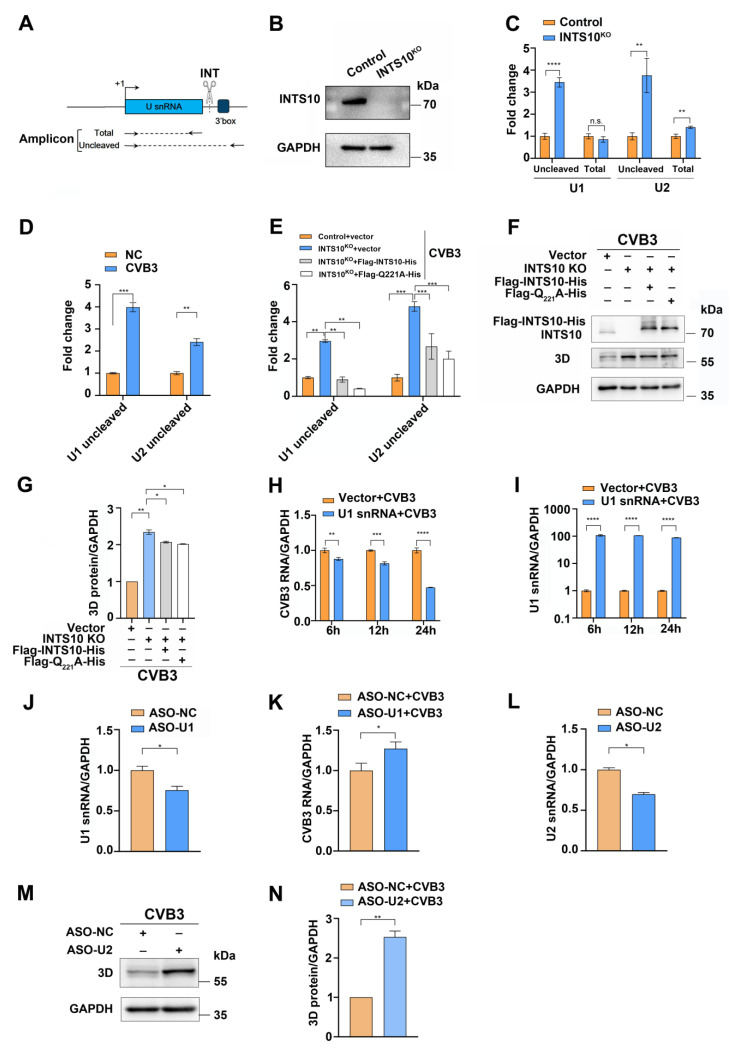 Figure 5
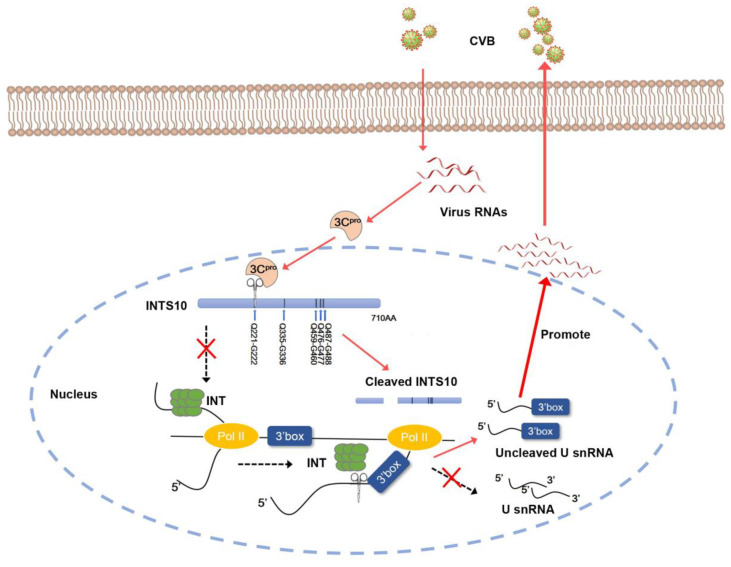 Figure 6
Peer Reviews
No public reviews on file for this paper yet. If you reviewed it on a platform where reviews are public (OpenReview, ICLR, NeurIPS, ICML), you can paste yours below so the community can read it here.
Videos
No videos yet. Explain this paper in a talk, walkthrough, or lecture? Add one.
Taxonomy
TopicsViral Infections and Immunology Research · Neurogenetic and Muscular Disorders Research · interferon and immune responses