Effects of Phenylephrine Administration on the Circulatory Dynamics of Patients with Hypotension Due to Bleeding During Surgery, Specifically Left Ventricular End-Diastolic Volume, Effective Arterial Elastance, and Left Ventricular End-Systolic Elastance
Takahiro Shiraishi, Mayuki Sato, Rina Takagi, Kenji Shigemi, Yuka Matsuki

TL;DR
This study examines how phenylephrine affects blood pressure and heart function in patients with bleeding during surgery.
Contribution
The study introduces a noninvasive method to monitor circulatory dynamics using left ventricular parameters during phenylephrine administration.
Findings
Phenylephrine administration increased mean arterial pressure, effective arterial elastance, and left ventricular end-systolic elastance.
Stroke volume variation decreased and systemic vascular resistance increased without changes in cardiac index or preload.
The noninvasive method effectively tracked hemodynamic changes without altering preload.
Abstract
Background/Objectives: Under general anesthesia, maintaining patients’ blood pressure (BP) is important to prevent organ ischemia. When bleeding occurs, it is sometimes difficult to increase BP with boluses of fluids or transfusions, and vasoconstrictors must be administered. This study investigated circulatory dynamic changes in patients who bled during surgery and were administered phenylephrine, particularly left ventricular end-diastolic volume (EDV), effective arterial elastance (Ea), and left ventricular end-systolic elastance (Ees), calculating each value from the left ventricular–arterial coupling (Ees/Ea). Methods: We calculated Ees/Ea using electrocardiograms, arterial pressure waveforms, and phonocardiograms using an esophageal stethoscope. We investigated the changes in patients’ EDV, Ea, and Ees during two periods: phenylephrine administration and after BP elevation.…
Genes, proteins, chemicals, diseases, species, mutations and cell lines named across the full text — each resolved to its canonical identifier and authoritative record.
Click any figure to enlarge with its caption.
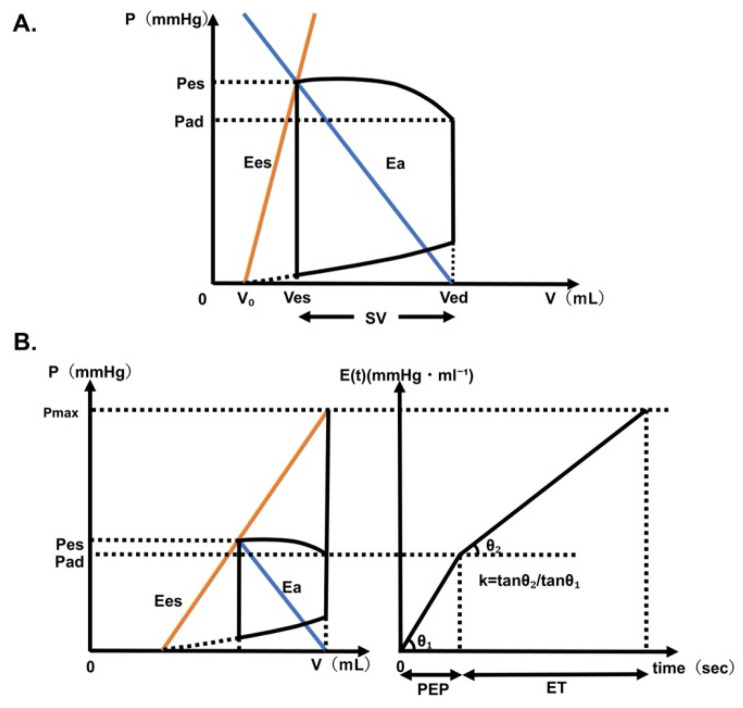 Figure 1
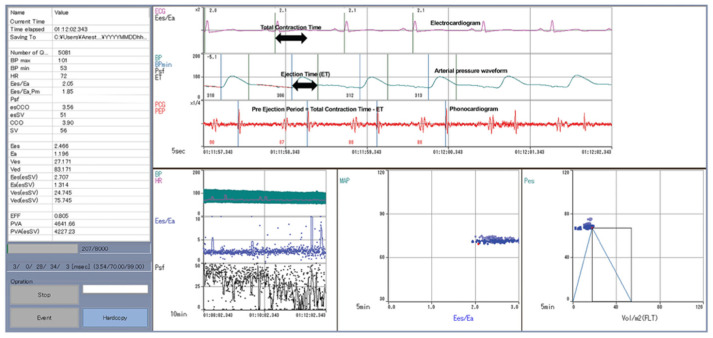 Figure 2
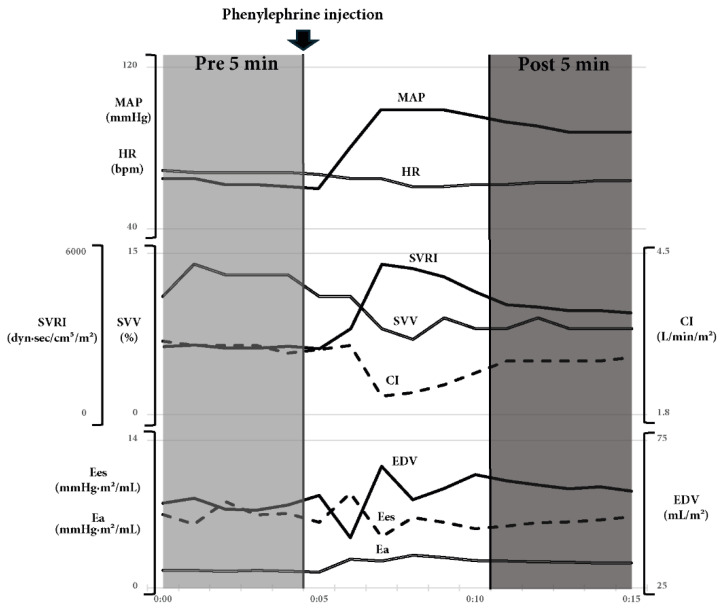 Figure 3
Peer Reviews
No public reviews on file for this paper yet. If you reviewed it on a platform where reviews are public (OpenReview, ICLR, NeurIPS, ICML), you can paste yours below so the community can read it here.
Videos
No videos yet. Explain this paper in a talk, walkthrough, or lecture? Add one.
Taxonomy
TopicsHemodynamic Monitoring and Therapy · Cardiovascular Health and Disease Prevention · Cardiovascular Function and Risk Factors