Transcriptomic Analysis of the Cold Resistance Mechanisms During Overwintering in Apis mellifera
Xiaoyin Deng, Yali Du, Jiaxu Wu, Jinming He, Haibin Jiang, Yuling Liu, Qingsheng Niu, Kai Xu

TL;DR
This study explores how Hunchun bees survive winter by analyzing gene activity changes, revealing mechanisms like osmotic balance and antioxidant production.
Contribution
The study identifies novel gene families and pathways involved in cold resistance during overwintering in Hunchun bees.
Findings
Hunchun bees maintain osmotic balance and reduce fatty acid metabolism to survive winter.
Genes encoding antifreeze proteins, HSPs, and other cold-resistant proteins are upregulated during overwintering.
Shared differentially expressed genes across winter months suggest key roles in stress mitigation and colony stability.
Abstract
The Hunchun bee is an ecotype of Apis mellifera, which is mainly distributed in Hunchun city, Jilin Province, China. It possesses excellent cold resistance, but the molecular mechanisms of its safe overwintering remain unclear. We analyzed the gene expression levels of Hunchun bees during summer breeding and four overwintering intervals, and we found that they mitigated low-temperature-induced stress during winter by maintaining osmotic pressure balance, reducing fatty acid metabolism, and increasing antioxidant capacity. In addition, their resistance to low temperatures was enhanced through the regulation of genes encoding cold-resistant macromolecular proteins, such as antifreeze proteins (AFPs), C2H2 zinc finger proteins (C2H2-ZFPs), Heat Shock Proteins (HSPs), Serine/Threonine Kinase Proteins (STKs), and leucine-rich repeat-containing proteins (LRRCs). This study provides a novel…
Genes, proteins, chemicals, diseases, species, mutations and cell lines named across the full text — each resolved to its canonical identifier and authoritative record.
Click any figure to enlarge with its caption.
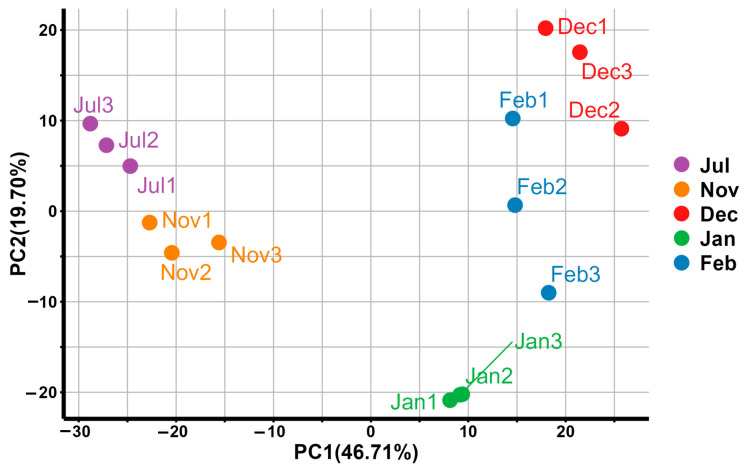 Figure 1
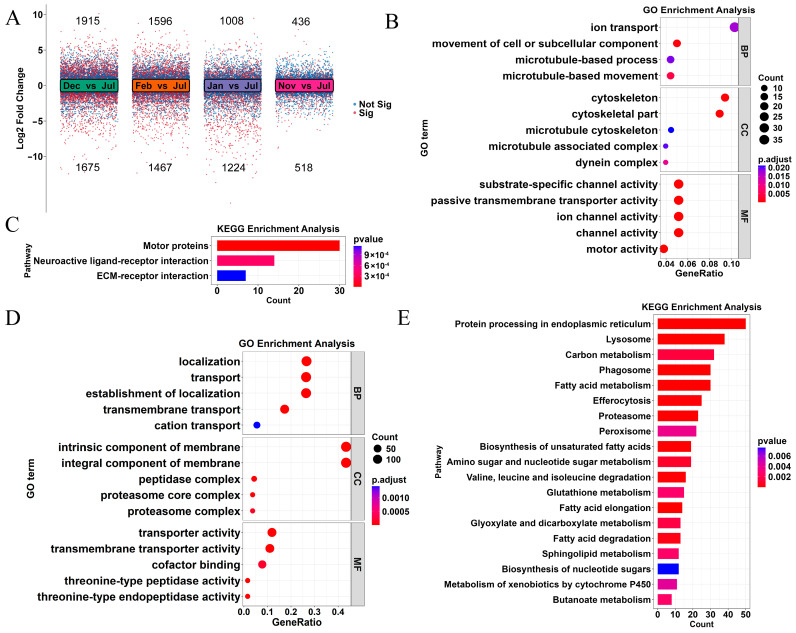 Figure 2
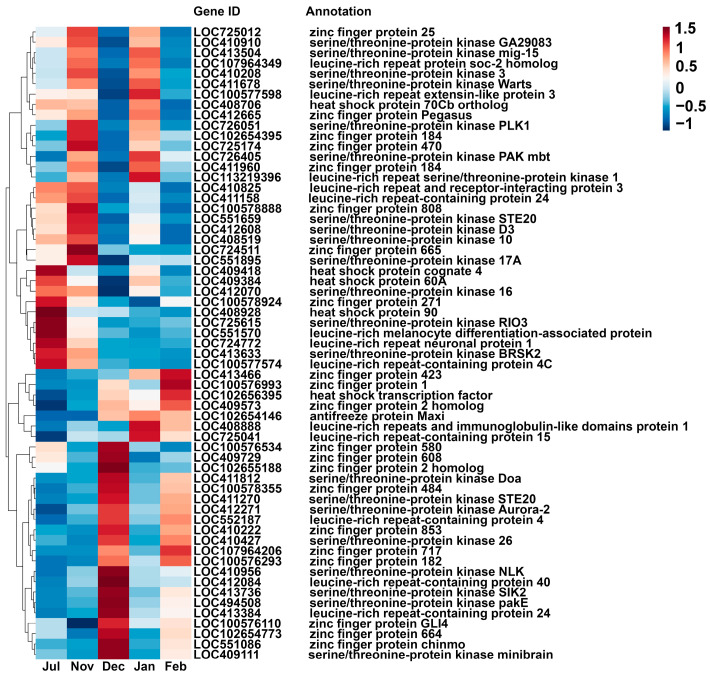 Figure 3
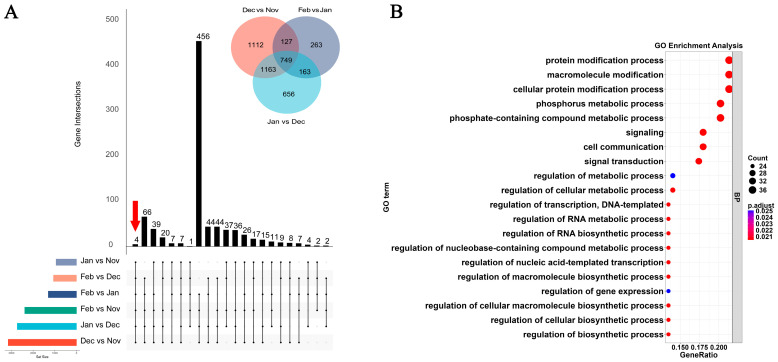 Figure 4
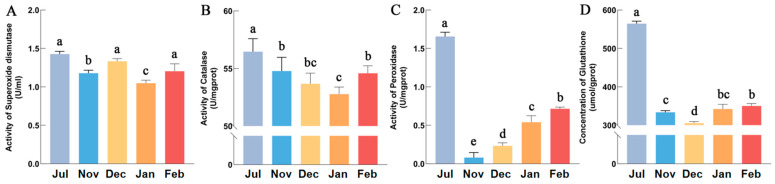 Figure 5
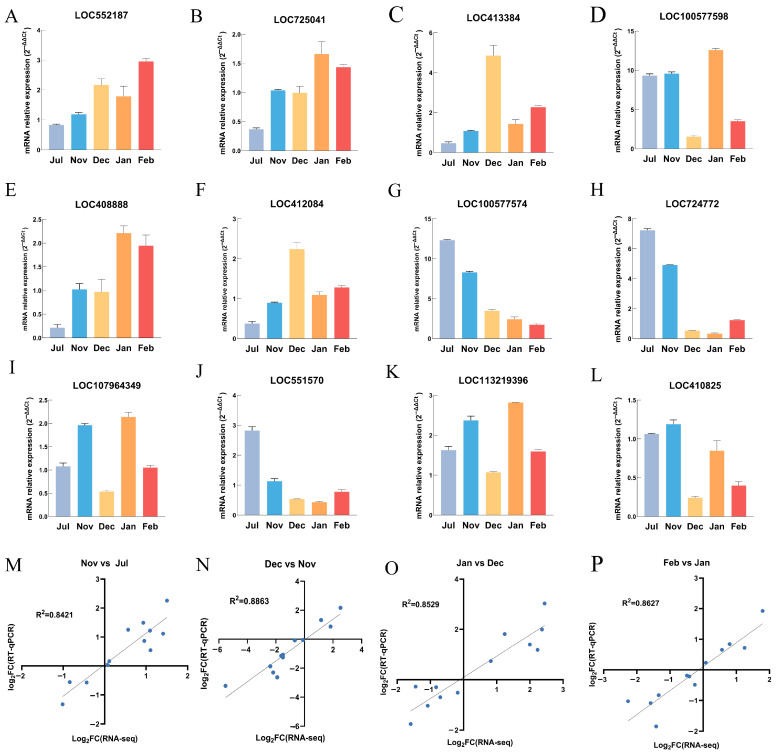 Figure 6
Peer Reviews
No public reviews on file for this paper yet. If you reviewed it on a platform where reviews are public (OpenReview, ICLR, NeurIPS, ICML), you can paste yours below so the community can read it here.
Videos
No videos yet. Explain this paper in a talk, walkthrough, or lecture? Add one.
Taxonomy
TopicsInsect and Arachnid Ecology and Behavior · Neurobiology and Insect Physiology Research · Physiological and biochemical adaptations