Association Between Asymmetrical Muscle Activation and Three-Dimensional Spinal Deformity in Thoracic-Origin Idiopathic Scoliosis Assessed Using Surface Electromyography and EOS Imaging
Sunmok Hong, Jee Hyun Suh, Jieun Kim, Jiwoon Lim, Seungeun Lee, Changwon Lee, Seon Cho, Jun Chang Lee, Jaewon Lee, Ju Seok Ryu

TL;DR
This study finds that uneven muscle activation in the back is linked to 3D spinal deformities in adolescents with thoracic-origin scoliosis.
Contribution
The study is the first to demonstrate the relationship between asymmetrical muscle activation and 3D spinal deformity in thoracic-origin scoliosis.
Findings
Asymmetrical muscle activation was observed in specific back muscles on the convex side of the scoliosis curve.
Increased axial rotation (AR_main) correlated with the Cobb angle approaching the maximal kyphosis angle (AK_max).
26 out of 31 patients showed axial rotation (AR_main) of 0° or more.
Abstract
Background/Objectives: Although scoliosis is essentially a three-dimensional (3D) deformation of the spine and has been reported to be associated with muscle activations around the vertebrae, no study has demonstrated the 3D structural deformations of the spine in relation to asymmetrical muscle activation nor revealed the neuromuscular characteristics associated with scoliosis. The purpose of this study was to investigate the association between asymmetrical muscle activation and three-dimensional spinal deformity in adolescent idiopathic scoliosis (AIS) of thoracic origin. Methods: Thirty-one patients with IS of thoracic origin (double major [DM] and single thoracic [ST] types) and 39 normal controls were included. Surface electromyographic (SEMG) signals were obtained in several back muscles while the patients were in a writing posture. 3D analyses of spinal curves with EOS imaging…
Genes, proteins, chemicals, diseases, species, mutations and cell lines named across the full text — each resolved to its canonical identifier and authoritative record.
Click any figure to enlarge with its caption.
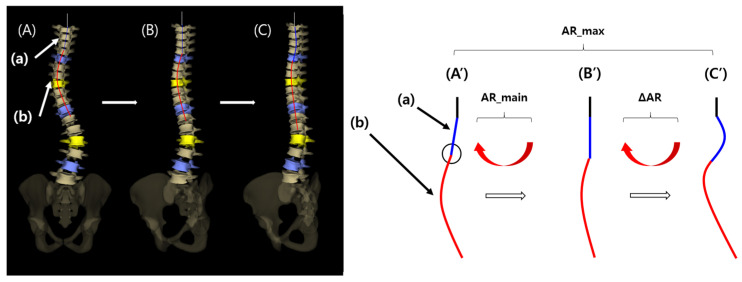 Figure 1
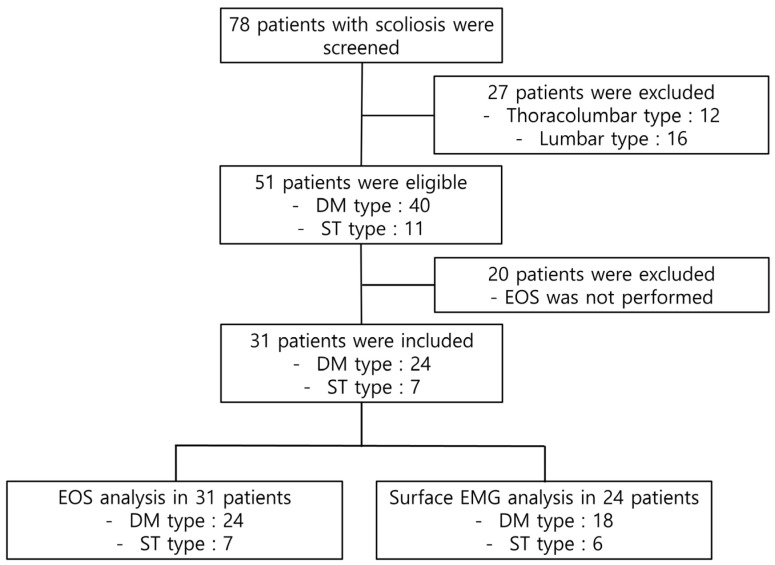 Figure 2
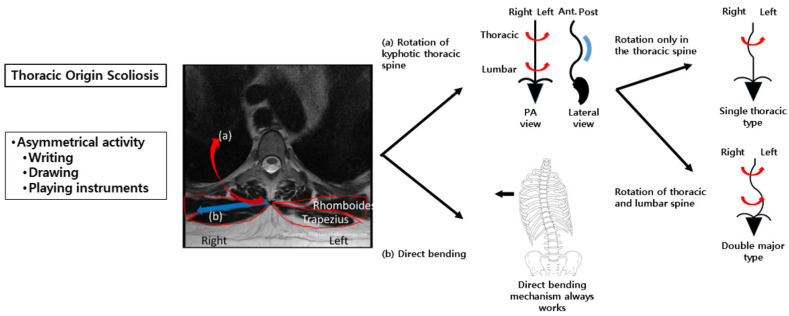 Figure 3
Peer Reviews
No public reviews on file for this paper yet. If you reviewed it on a platform where reviews are public (OpenReview, ICLR, NeurIPS, ICML), you can paste yours below so the community can read it here.
Videos
No videos yet. Explain this paper in a talk, walkthrough, or lecture? Add one.
Taxonomy
TopicsScoliosis diagnosis and treatment · Cervical and Thoracic Myelopathy · Spine and Intervertebral Disc Pathology