Compost Tea as a Natural Bioactive Solution: Unlocking the Antimicrobial and Antiviral Potential of Bell Pepper and Citrus Wastes
Maria Vittoria Verrillo, Roberta Della Marca, Vincenza Cozzolino, Annalisa Chianese, Carla Zannella, Massimiliano Galdiero, Riccardo Spaccini, Anna De Filippis

TL;DR
Compost teas from bell pepper and citrus waste show strong antibacterial and antiviral properties, offering sustainable natural alternatives for biomedical use.
Contribution
The study demonstrates the antimicrobial and antiviral potential of compost teas derived from specific agro-industrial wastes.
Findings
Compost tea from bell pepper (CT-BP) was more effective against Gram-positive bacteria like Staphylococcus aureus and Enterococcus faecalis.
CT-BP showed potent antiviral activity against herpes simplex virus type 1 (HSV-1) and respiratory syncytial virus (RSV).
Gram-negative bacteria like Escherichia coli and Pseudomonas aeruginosa were more resistant to the compost teas.
Abstract
The growing demand for sustainable medical applications has sparked interest in the valorisation of agro‐industrial waste for bioactive compounds. Compost teas (CTs) from agrifood waste, rich in phenolics and lignin derivatives, offer promising biological properties. This study analysed CTs from bell pepper (CT‐BP) and citrus (CT‐C) composted waste, assessing their antioxidant, antiviral, and antimicrobial activities. NMR spectroscopy and thermochemolysis revealed that CT‐BP had more oxidised lignin derivatives, while CT‐C contained intact lignin structures. Both CTs effectively inhibited Gram‐positive bacteria ( Staphylococcus aureus and Enterococcus faecalis ), with CT‐BP showing greater efficacy. However, Gram‐negative bacteria ( Escherichia coli and Pseudomonas aeruginosa ) were more resistant. CT‐BP also exhibited potent antiviral effects against enveloped viruses like herpes…
Genes, proteins, chemicals, diseases, species, mutations and cell lines named across the full text — each resolved to its canonical identifier and authoritative record.
Click any figure to enlarge with its caption.
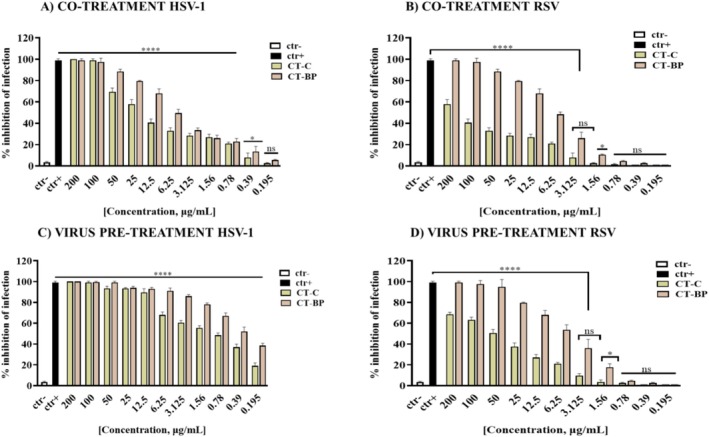 Figure 1
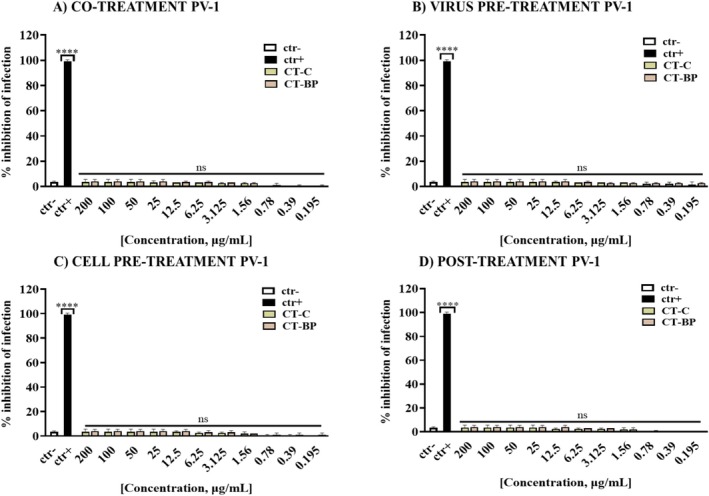 Figure 2
 Figure 3
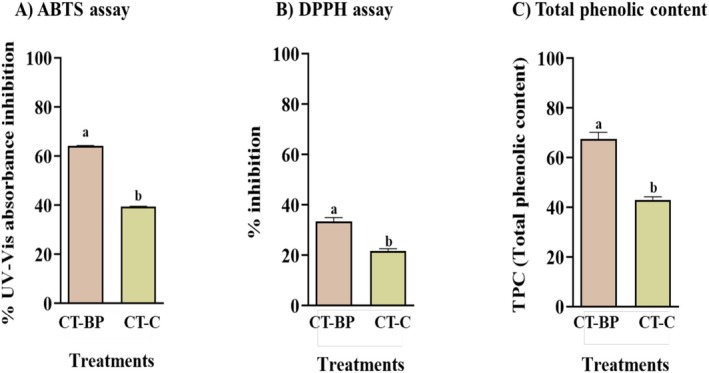 Figure 4
Peer Reviews
No public reviews on file for this paper yet. If you reviewed it on a platform where reviews are public (OpenReview, ICLR, NeurIPS, ICML), you can paste yours below so the community can read it here.
Videos
No videos yet. Explain this paper in a talk, walkthrough, or lecture? Add one.
Taxonomy
TopicsPhytochemicals and Antioxidant Activities · Tea Polyphenols and Effects · Lignin and Wood Chemistry