Changes in Blood Cells and Complements During Relapse Prevention Therapies for Aquaporin-4 Antibody-Positive Neuromyelitis Optica Spectrum Disorder
Hiroshi Kuroda, Kazuo Fujihara, Kimihiko Kaneko, Yoshiki Takai, Yuki Matsumoto, Mizuki Otomo, Naoya Yamazaki, Shu Umezawa, Naoki Yamamoto, Naohiro Sakamoto, Chihiro Namatame, Hirohiko Ono, Shuhei Nishiyama, Toshiyuki Takahashi, Tatsuro Misu, Masashi Aoki

TL;DR
This study examines how different therapies affect blood cells and complement levels in a rare autoimmune disorder, finding distinct impacts based on treatment type.
Contribution
The study identifies specific effects of anti-IL-6R and anti-C5 therapies on complement suppression and blood cell counts in AQP4+ NMOSD patients.
Findings
Anti-IL-6R therapy reduces neutrophil and platelet counts and suppresses C3 and C4 complement levels.
Anti-C5 therapy strongly suppresses total complement activity (CH50) without affecting C3, C4, or blood counts.
Different therapies show distinct impacts on complement and blood cell parameters, which may influence drug mechanisms and side effects.
Abstract
In this study, blood cell counts and serum C3, C4, and CH50 values at baseline and after more than 6-month drug use were measured to elucidate changes in blood cells and complements during relapse prevention therapies for aquaporin-4 antibody-positive neuromyelitis optica spectrum disorder (AQP4+ NMOSD). A total of 70 patients with AQP4+ NMOSD (87% female, median age 56 years) were enrolled. They were divided into the following treatment groups: glucocorticoids and/or immunosuppressants (GC/IS, n = 22), inebilizumab/rituximab (anti-CD19/20, n = 13), satralizumab (anti-IL-6R, n = 22), and eculizumab/ravulizumab (anti-C5, n = 13). At baseline, the blood counts and complement levels did not differ among the groups. At follow-up, the neutrophil and platelet counts in the anti-IL-6R group decreased from those at baseline (p < 0.0001 and p < 0.001, respectively). Compared with the GC/IS,…
Genes, proteins, chemicals, diseases, species, mutations and cell lines named across the full text — each resolved to its canonical identifier and authoritative record.
Click any figure to enlarge with its caption.
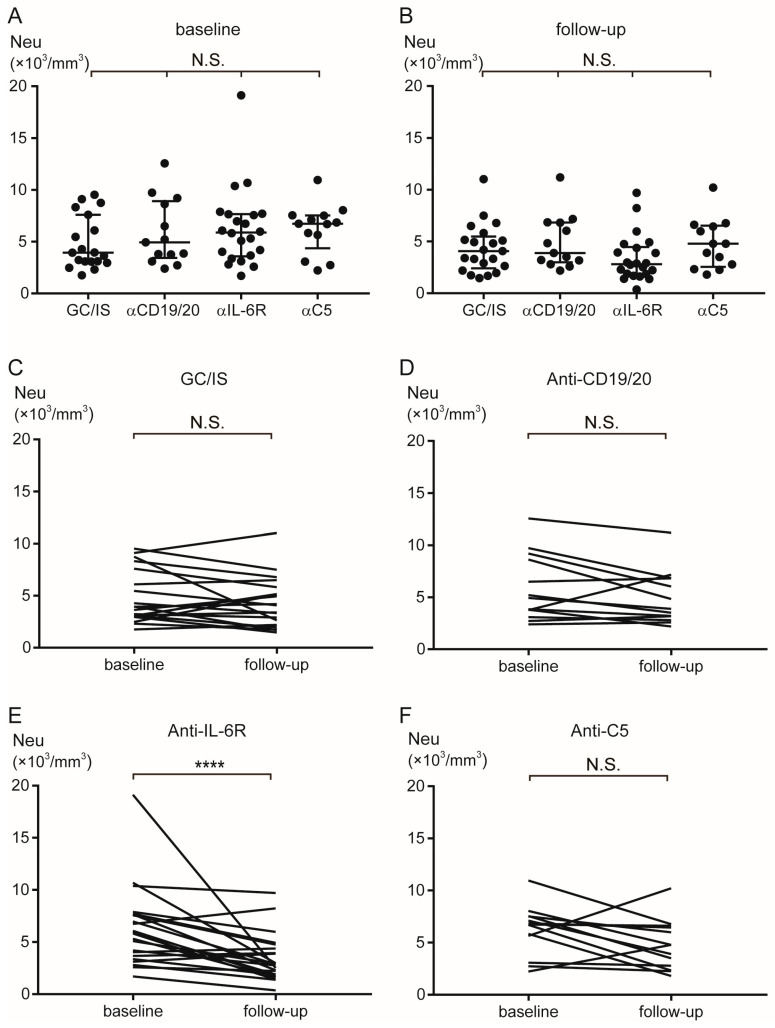 Figure 1
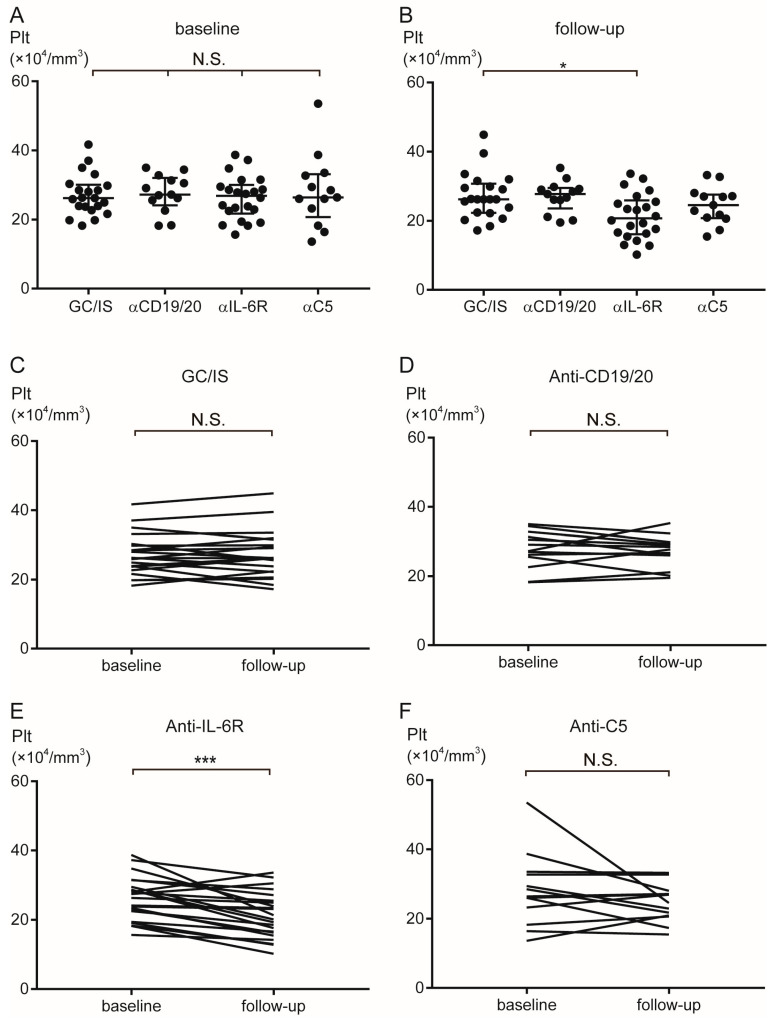 Figure 2
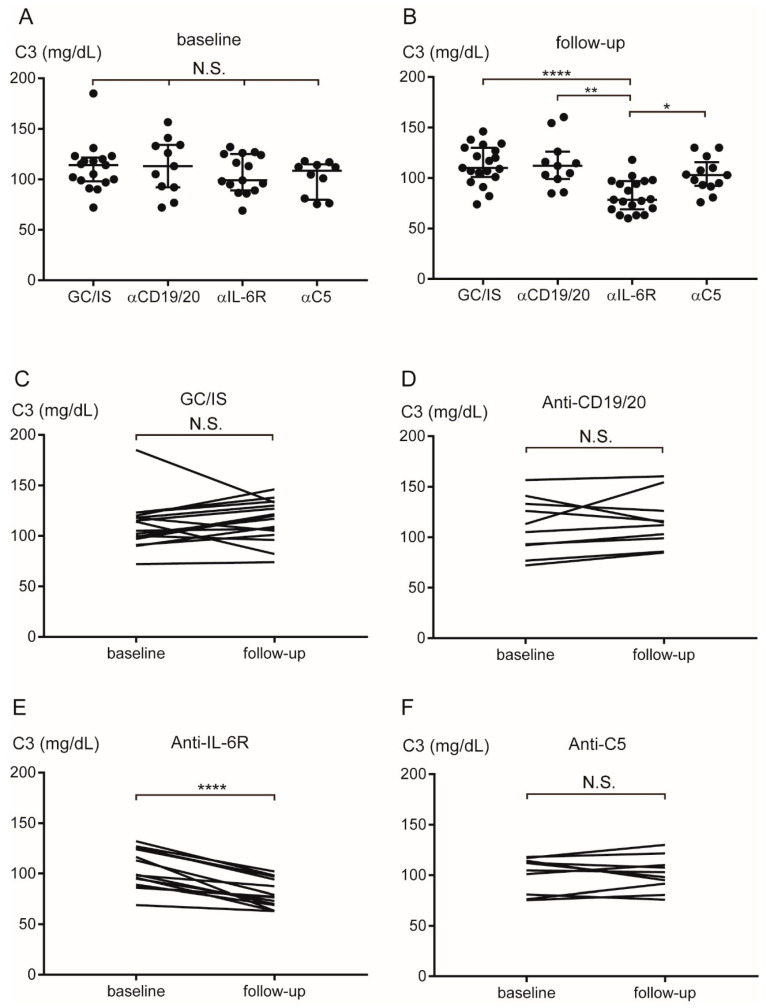 Figure 3
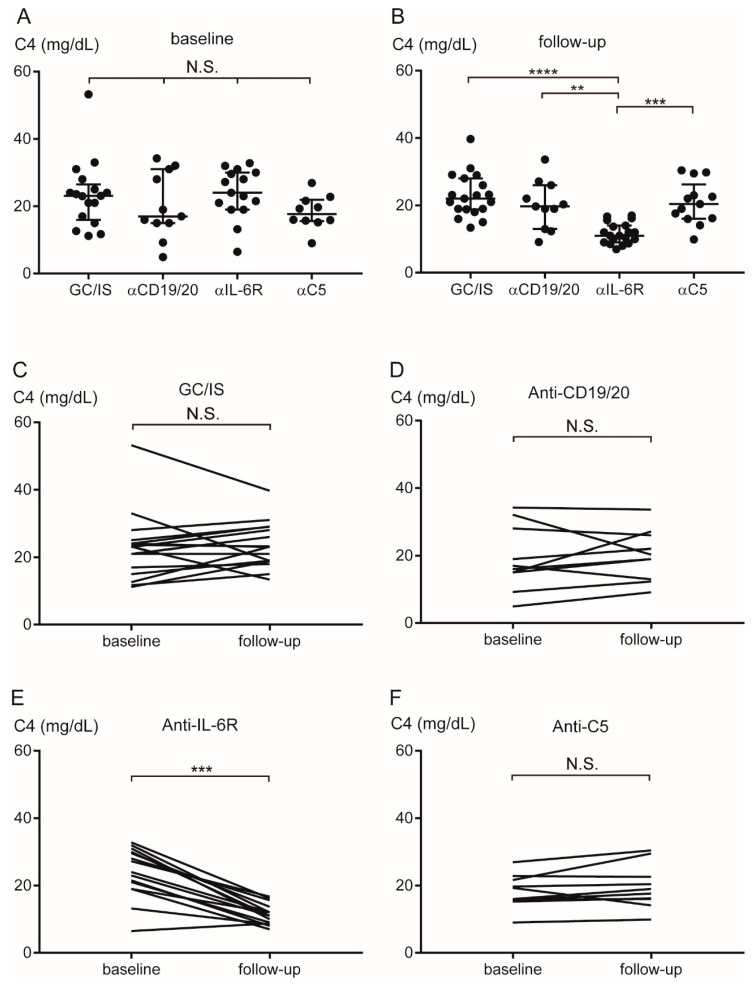 Figure 4
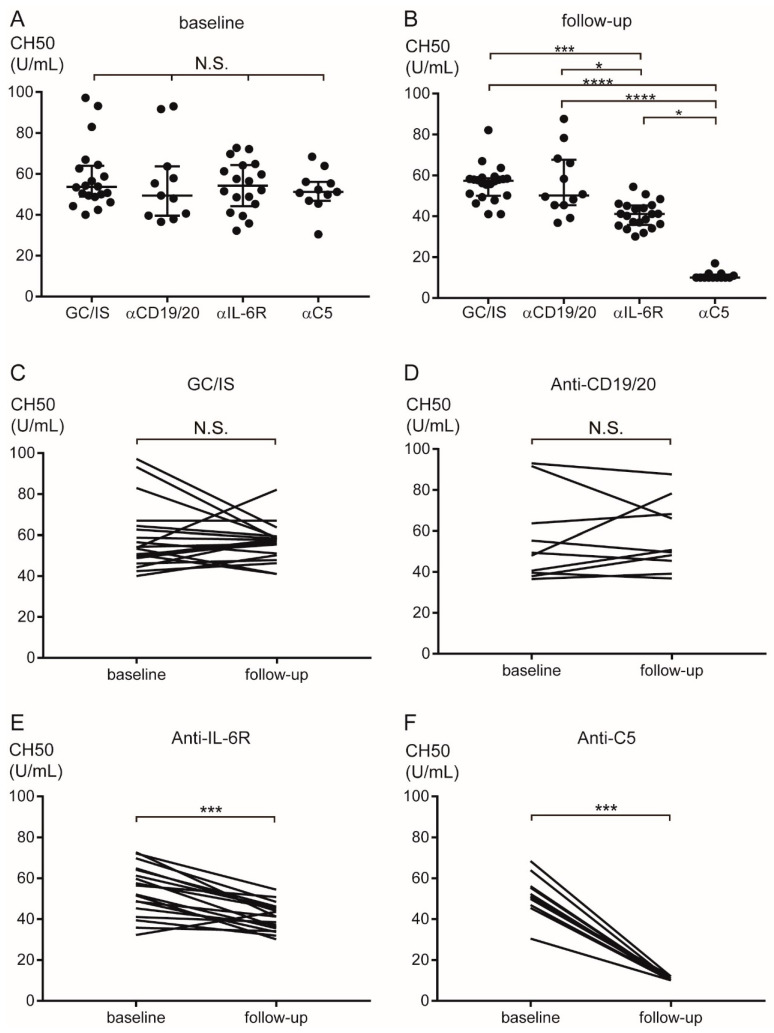 Figure 5
Peer Reviews
No public reviews on file for this paper yet. If you reviewed it on a platform where reviews are public (OpenReview, ICLR, NeurIPS, ICML), you can paste yours below so the community can read it here.
Videos
No videos yet. Explain this paper in a talk, walkthrough, or lecture? Add one.
Taxonomy
TopicsMultiple Sclerosis Research Studies · Vestibular and auditory disorders · Peripheral Neuropathies and Disorders