Modeling Post-Implantation Mammalian Embryogenesis Using Advanced In Vitro Systems: From Mice to Humans
Dongsong Liu, Yiwei Zhang, Tianyao He

TL;DR
Scientists are using advanced lab-grown embryo models to study early mammalian development, including in humans, opening new possibilities for understanding pregnancy and birth defects.
Contribution
This review highlights the development and application of 3D in vitro systems for modeling post-implantation embryogenesis in mice and humans.
Findings
Extended in vitro culture systems now support mouse, non-human primate, and human embryos through implantation and gastrulation.
These models can help investigate causes of early pregnancy failure and screen for developmental toxicity of drugs.
They also enable the study of molecular mechanisms behind birth defects and support regenerative medicine.
Abstract
The post-implantation phase of mammalian development is crucial yet challenging to study due to ethical and technical constraints, particularly in humans. Recent revolutionary advances in extended in vitro culture systems for mammalian embryos now offer unprecedented windows into this developmental “black box”. This review synthesizes how these platforms, alongside stem cell-derived embryo models, are transforming our ability to model early human development in a dish. We detail the technological evolution from two-dimensional (2D) to three-dimensional (3D) cultures that support mouse, non-human primate, and human embryos through key stages of implantation and gastrulation, recapitulating events like lineage specification and axial patterning. Furthermore, we explore how these models serve as powerful tools for investigating the etiology of early pregnancy failure, screening for…
Genes, proteins, chemicals, diseases, species, mutations and cell lines named across the full text — each resolved to its canonical identifier and authoritative record.
Click any figure to enlarge with its caption.
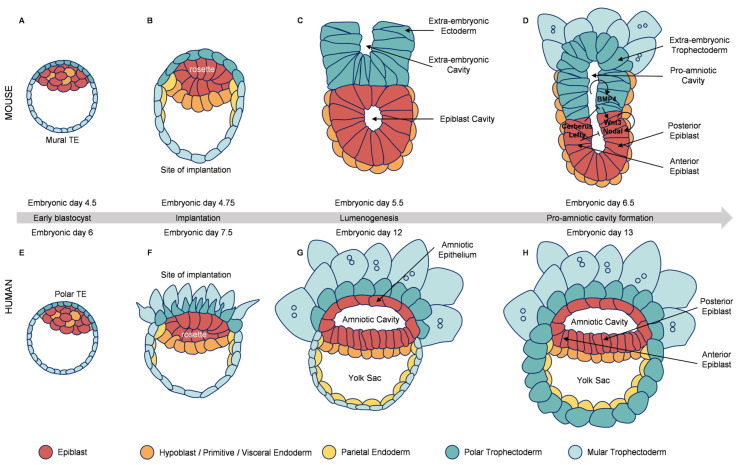 Figure 1
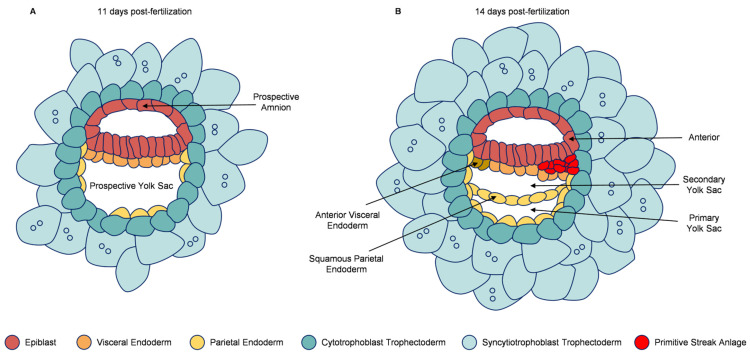 Figure 2
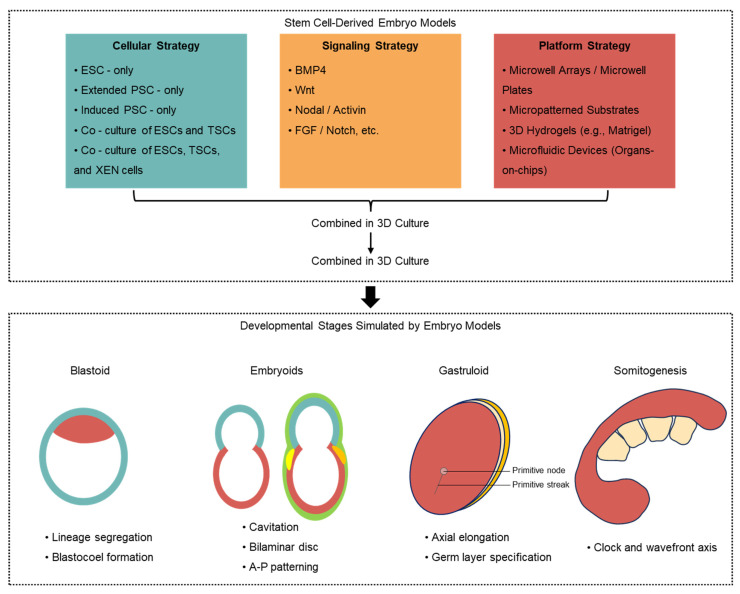 Figure 3
Peer Reviews
No public reviews on file for this paper yet. If you reviewed it on a platform where reviews are public (OpenReview, ICLR, NeurIPS, ICML), you can paste yours below so the community can read it here.
Videos
No videos yet. Explain this paper in a talk, walkthrough, or lecture? Add one.
Taxonomy
TopicsReproductive Biology and Fertility · Reproductive System and Pregnancy · Pluripotent Stem Cells Research