Hyaluronic Acid-Palmitate Nanoparticle Delivery of Carbonic Anhydrase Inhibitors Impairs Growth and Early Metabolism in Escherichia coli Through β- and γ-Carbonic Anhydrase-Associated Processes
Viviana De Luca, Valentina Verdoliva, Claudiu T. Supuran, Stefania De Luca, Clemente Capasso

TL;DR
This paper shows that using hyaluronic acid-palmitate nanoparticles to deliver carbonic anhydrase inhibitors can impair Escherichia coli growth and metabolism.
Contribution
The study demonstrates the effectiveness of HA-PA nanocarriers in delivering CA inhibitors and reveals their impact on bacterial energy homeostasis.
Findings
AZA delivered via HA-PA nanoparticles showed the strongest inhibition of E. coli growth.
All inhibitors caused an increase in intracellular ATP, suggesting reduced ATP consumption in bicarbonate-dependent pathways.
HA-PA nanocarriers effectively deliver CA inhibitors intracellularly and enhance their antimicrobial activity.
Abstract
Bacterial carbonic anhydrases (CAs) are essential for intracellular pH regulation, bicarbonate homeostasis, and energy metabolism, making them attractive antimicrobial targets. Here, building on evidence that acetazolamide (AZA) delivered via hyaluronic acid–palmitate (HA-PA) nanocarriers impairs Escherichia coli growth and its glucose uptake, we investigated the physiological roles of β- and γ-class CAs using sulphonamide inhibitors with distinct selectivity encapsulated in HA-PA nanomicelles to ensure intracellular delivery. AZA, a potent dual β/γ-CA inhibitor, ethoxzolamide (EZA), a selective β-CA inhibitor, and hydrochlorothiazide (HCT), a weaker inhibitor of both classes, were tested for effects on bacterial physiology. The nanoparticles reduced growth in a dose- and class-dependent manner, with AZA exerting the strongest activity, EZA intermediate inhibition, and HCT only modest…
Genes, proteins, chemicals, diseases, species, mutations and cell lines named across the full text — each resolved to its canonical identifier and authoritative record.
Click any figure to enlarge with its caption.
 Figure 1
 Figure 2
 Figure 3
 Figure 4
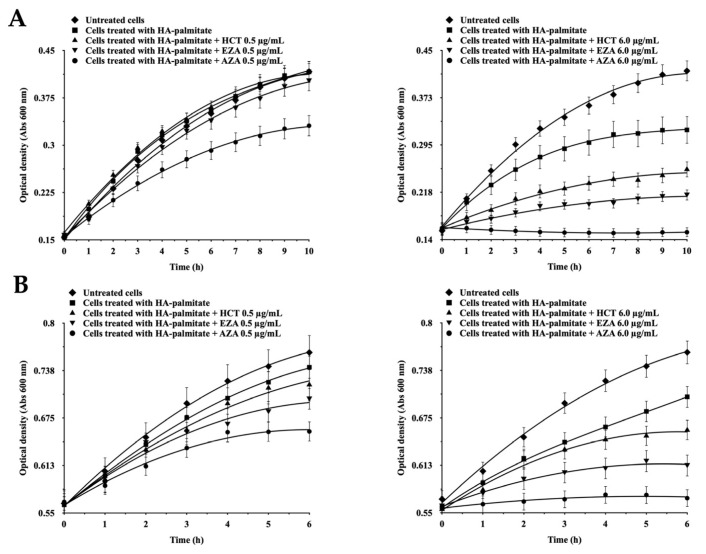 Figure 5
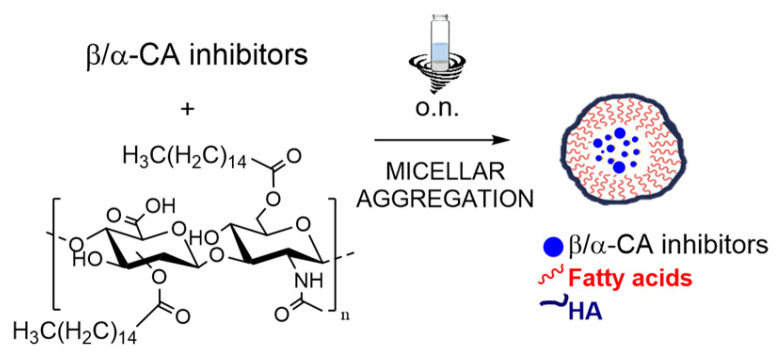 Figure 6
Peer Reviews
No public reviews on file for this paper yet. If you reviewed it on a platform where reviews are public (OpenReview, ICLR, NeurIPS, ICML), you can paste yours below so the community can read it here.
Videos
No videos yet. Explain this paper in a talk, walkthrough, or lecture? Add one.
Taxonomy
TopicsEnzyme function and inhibition · Polyamine Metabolism and Applications · Aldose Reductase and Taurine