Antioxidant and Antibacterial Activity, and the Amino Acid Profile of Pistachio (Pistacia vera L.) Waste Peptides Produced by Enzymatic Hydrolysis and Solid-State Fermentation
Sultan Can, Hüseyin Bozkurt, Çiğdem Aykaç

TL;DR
This study explores how pistachio waste can be used to produce peptides with antioxidant and antibacterial properties, along with a rich amino acid profile.
Contribution
The novelty lies in using enzymatic hydrolysis and solid-state fermentation to extract bioactive peptides from pistachio waste.
Findings
Trypsin hydrolysate showed the highest ABTS radical scavenging activity at 232 µmol TE/g.
Chymotrypsin hydrolysate exhibited the highest antibacterial activity with MIC = 0.378 mg/mL against Staphylococcus aureus.
Pistachio waste peptides had a rich amino acid profile, particularly high in Asp and Tyr.
Abstract
The pistachio nut (Pistacia vera L.) is a rich and high-quality source of protein, as is its waste. This study investigated the potentials of pistachio nut waste proteins to obtain bioactive peptides exhibiting antioxidative and antibacterial activities, and their amino acid profile. Enzymatic hydrolysis with pepsin, trypsin, chymotrypsin, and savinase was applied to the pistachio protein isolate (PPI) obtained from pistachio waste. In addition, solid-state fermentation (SSF) was applied to defatted pistachio with Bacillus subtilis, and peptides were produced. The highest degree of hydrolysis was obtained at 28.2% by using pepsin (p < 0.05). The highest ABTS radical scavenging activity was found as 232 µmol TE/g defatted pistachio (d.b.) for trypsin hydrolysate (p < 0.05). The maximum DPPH radical scavenging activity was found as 70.2 µmol TE/g defatted pistachio (d.b.) by hydrolysis…
Genes, proteins, chemicals, diseases, species, mutations and cell lines named across the full text — each resolved to its canonical identifier and authoritative record.
Click any figure to enlarge with its caption.
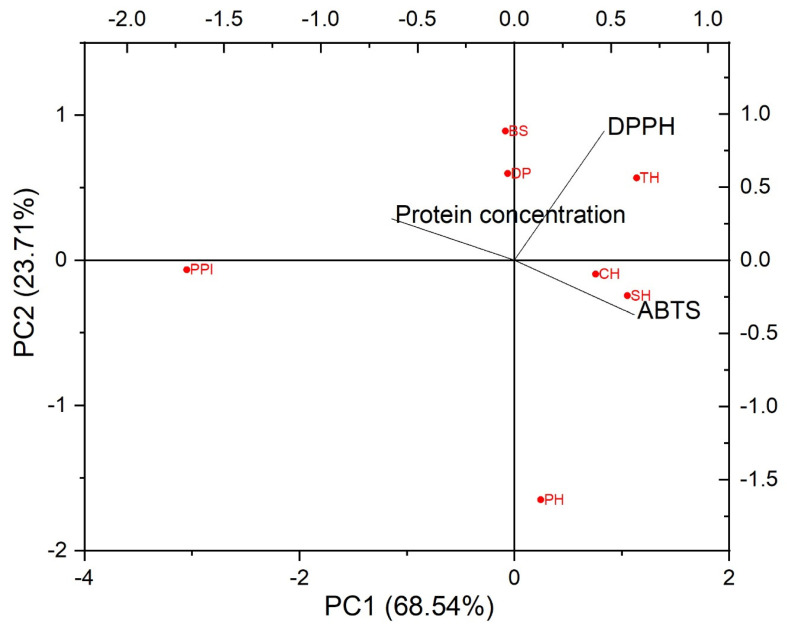 Figure 1
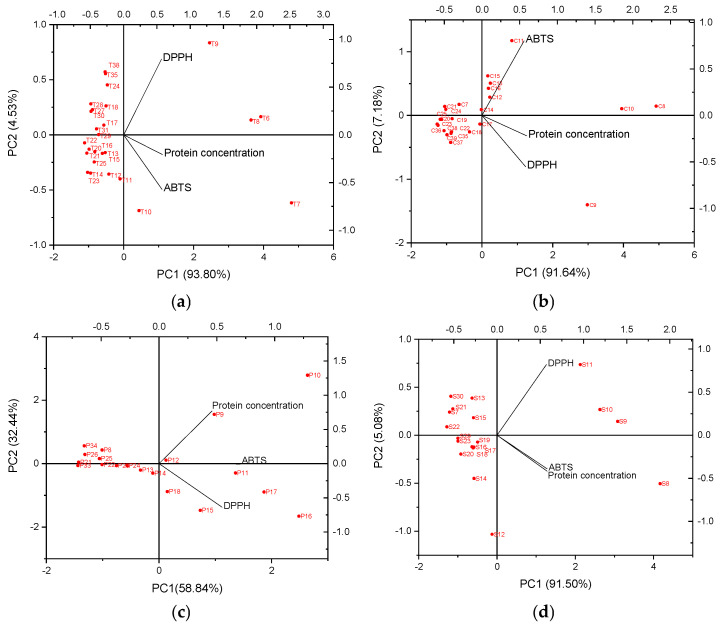 Figure 2
Peer Reviews
No public reviews on file for this paper yet. If you reviewed it on a platform where reviews are public (OpenReview, ICLR, NeurIPS, ICML), you can paste yours below so the community can read it here.
Videos
No videos yet. Explain this paper in a talk, walkthrough, or lecture? Add one.
Taxonomy
TopicsProtein Hydrolysis and Bioactive Peptides · Probiotics and Fermented Foods · Proteins in Food Systems