Very-Low-Density Lipoproteins Quantity but Not Composition Is Altered in Normotriglyceridemic Subjects with Elevated Lipoprotein (a) Level
Ewa Wieczorek-Breitzke, Martyna Feliksiak, Agnieszka Kuchta, Maciej Jankowski, Agnieszka Ćwiklińska

TL;DR
In people with normal triglyceride levels but high Lp(a), VLDL particles are more numerous but not chemically different, which may still pose cardiovascular risks.
Contribution
This study reveals that elevated Lp(a) in normotriglyceridemic individuals increases VLDL particle number without altering composition.
Findings
Individuals with Lp(a) ≥ 30 mg/dL had significantly higher VLDL concentrations of triglycerides, cholesterol, and apolipoproteins.
VLDL particle composition remained unchanged, suggesting increased particle number rather than altered composition.
Redistribution of lipids and apolipoproteins toward VLDL may contribute to residual cardiovascular risk.
Abstract
Cardiovascular disease (CVD) is influenced by disturbances in lipoprotein composition and metabolism, including triglyceride-rich lipoproteins (TRLs) and elevated lipoprotein (a) (Lp(a)). While interactions between Lp(a) and very-low-density lipoproteins (VLDL) have been studied in hypertriglyceridemic and CVD populations, data in normotriglyceridemic individuals without CV events are limited. Seventy normotriglyceridemic adults with triglycerides < 150 mg/dL and no CV events were enrolled and divided into two groups based on Lp(a) concentration: <30 mg/dL and ≥30 mg/dL. VLDL was isolated by ultracentrifugation, and concentrations of Lp(a), lipids (triglycerides, cholesterol), and apolipoproteins (apo B, apo C-II, apo C-III, apo E) were measured in serum and VLDL. Serum lipid and apolipoprotein concentrations did not differ between the groups. Individuals with Lp(a) ≥ 30 mg/dL had…
Genes, proteins, chemicals, diseases, species, mutations and cell lines named across the full text — each resolved to its canonical identifier and authoritative record.
Click any figure to enlarge with its caption.
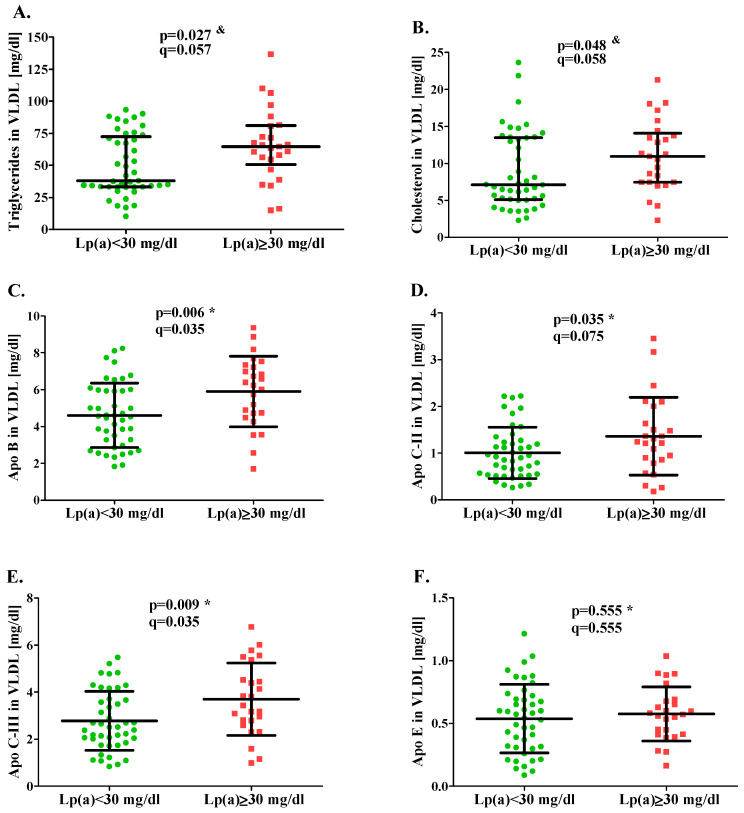 Figure 1
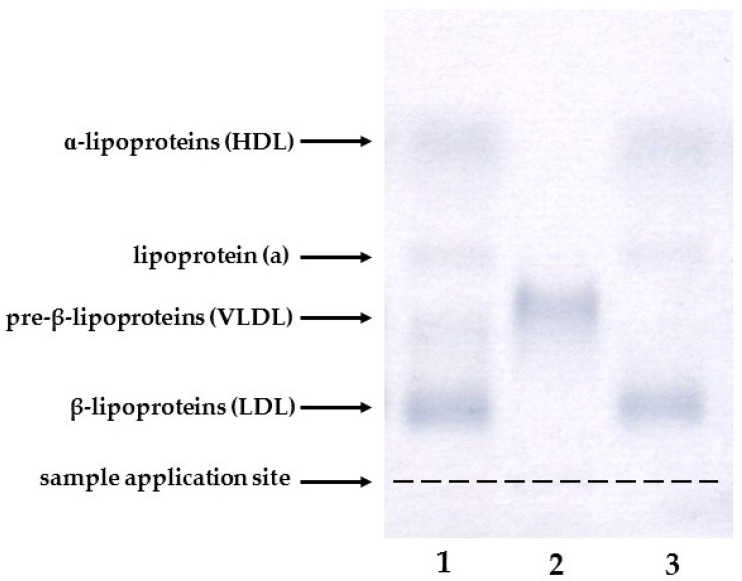 Figure 2
Peer Reviews
No public reviews on file for this paper yet. If you reviewed it on a platform where reviews are public (OpenReview, ICLR, NeurIPS, ICML), you can paste yours below so the community can read it here.
Videos
No videos yet. Explain this paper in a talk, walkthrough, or lecture? Add one.
Taxonomy
TopicsLipoproteins and Cardiovascular Health · Diabetes, Cardiovascular Risks, and Lipoproteins · Cancer, Lipids, and Metabolism