Part II: The Influence of Crosslinking Agents on the Properties and Colon-Targeted Drug Delivery Efficacy of Dextran-Based Hydrogels
Tamara Erceg, Miloš Radosavljević, Milorad Miljić, Aleksandra Cvetanović Kljakić, Sebastian Baloš, Katarina Mišković Špoljarić, Ivan Ćorić, Ljubica Glavaš-Obrovac, Aleksandra Torbica

TL;DR
This study explores how different crosslinking agents affect dextran-based hydrogels for colon-targeted drug delivery, finding that DMAAazoB-based gels are effective for controlled release in the intestinal environment.
Contribution
The study introduces azo-crosslinked dextran hydrogels as a novel platform for colon-targeted drug delivery with optimized swelling and release properties.
Findings
DMAAazoB-crosslinked hydrogels showed the highest swelling at pH 3 and pH 6 with low mechanical strength.
Uracil release was significant in the intestinal environment, especially in Dex-DMAAazoB hydrogels.
Dex-DMAAazoB hydrogels exhibited antibacterial activity against E. coli and S. epidermidis.
Abstract
In this study, dextran-based hydrogels were synthesized in dimethyl sulfoxide via free-radical polymerization with three structurally different crosslinking agents: divinyl benzene (DVB), diethylene glycol diacrylate (DEGDA), and 4,4′-di(methacryloylamino)azobenzene (DMAAazoB). Their morphology, swelling ability, mechanical properties, and potential for controlled release of the model substance (uracil) were examined, with the results showing that the chemical structure and chain length of the crosslinking agents significantly influence the structural and functional properties of hydrogels. Hydrogels crosslinked with DMAAazoB showed the highest swelling ability at pH 3 and pH 6 (2552 and 1696%, respectively), associated with protonation effects and sponge-like morphology, while simultaneously showing the lowest mechanical strength (20 and 47 MPa). In vitro simulations of…
Genes, proteins, chemicals, diseases, species, mutations and cell lines named across the full text — each resolved to its canonical identifier and authoritative record.
Click any figure to enlarge with its caption.
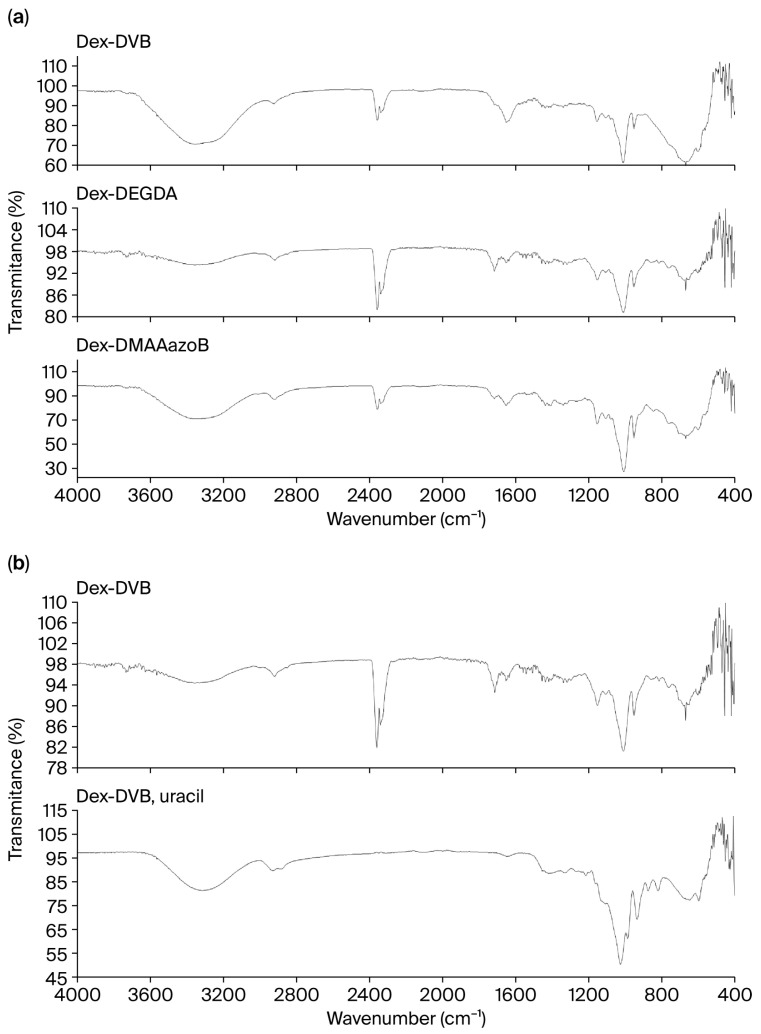 Figure 1
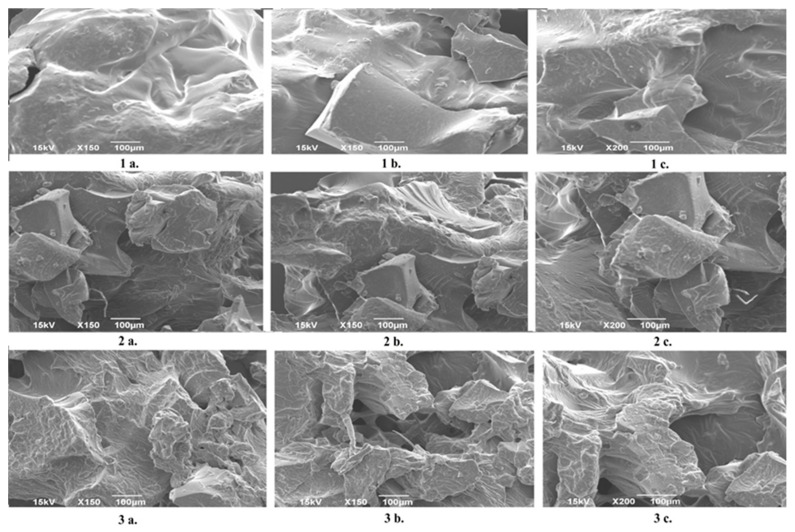 Figure 2
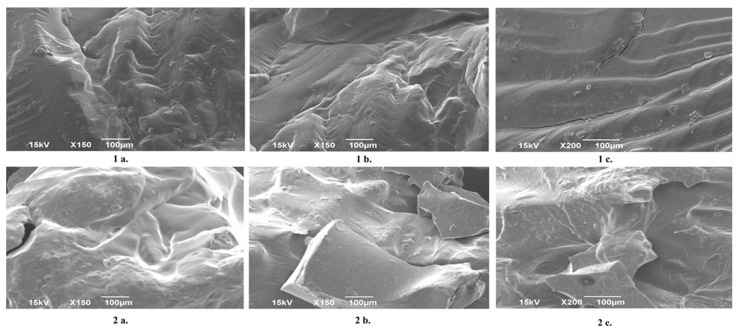 Figure 3
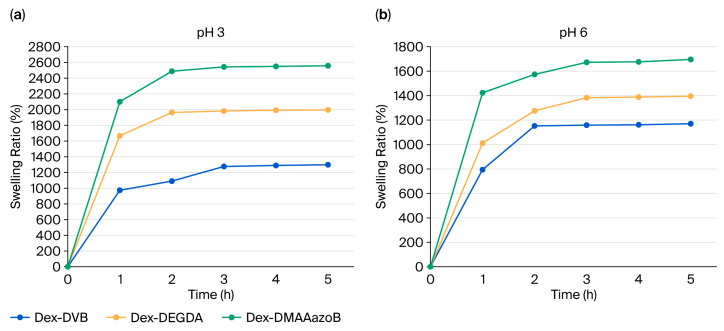 Figure 4
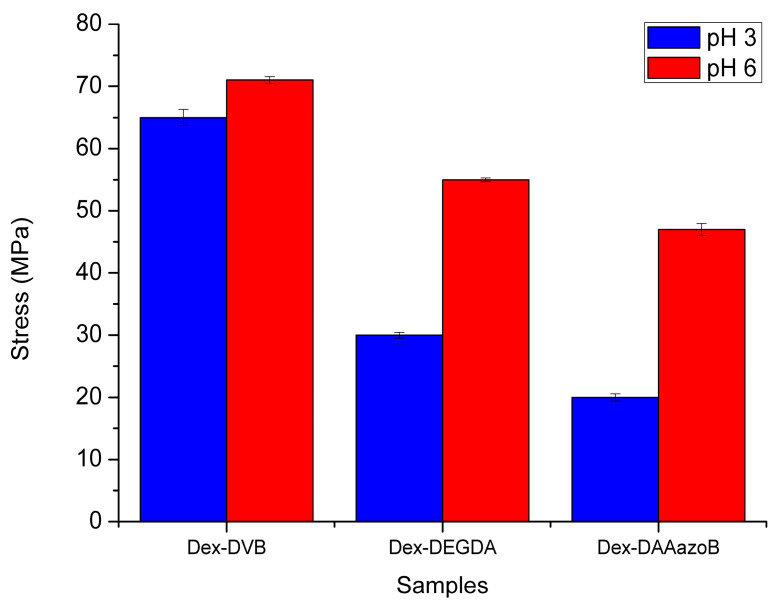 Figure 5
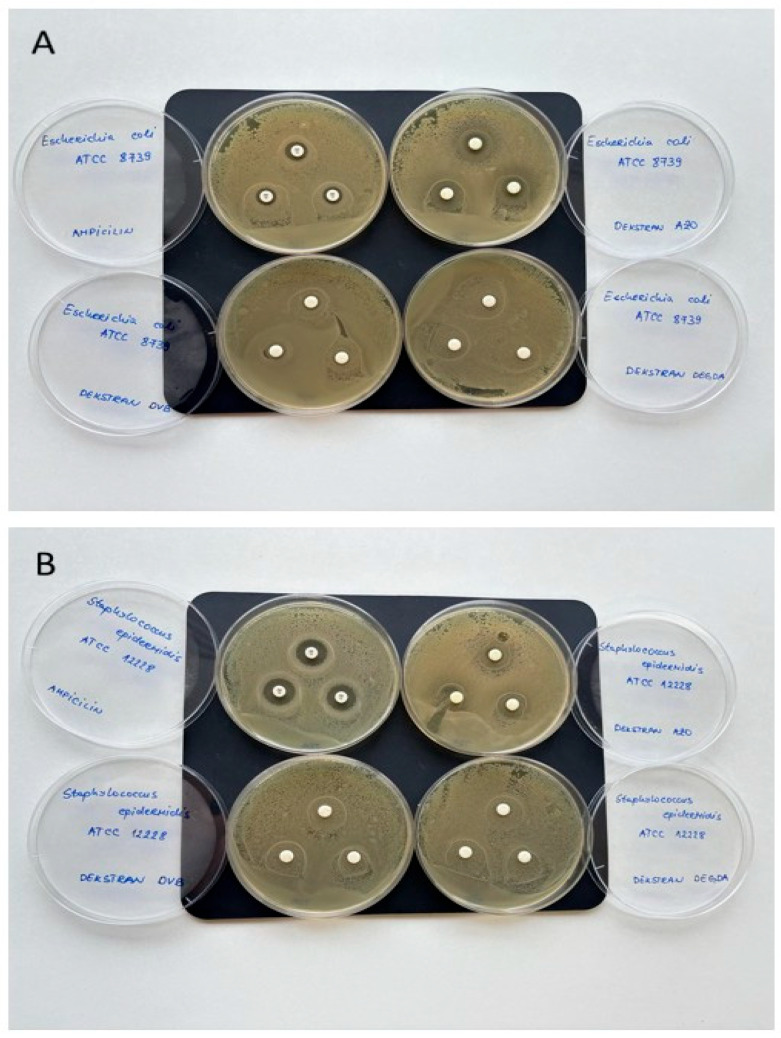 Figure 6
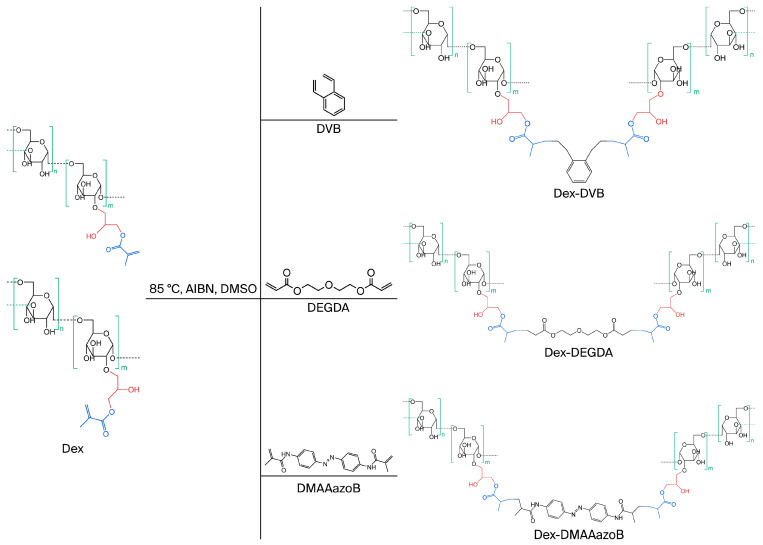 Figure 7
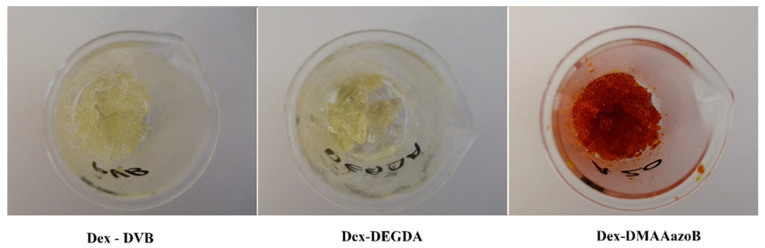 Figure 8
Peer Reviews
No public reviews on file for this paper yet. If you reviewed it on a platform where reviews are public (OpenReview, ICLR, NeurIPS, ICML), you can paste yours below so the community can read it here.
Videos
No videos yet. Explain this paper in a talk, walkthrough, or lecture? Add one.
Taxonomy
TopicsHydrogels: synthesis, properties, applications · Tissue Engineering and Regenerative Medicine · Wound Healing and Treatments