Molecular and Cellular Mechanisms Underlying Domoic Acid-Induced Neurotoxicity and Therapeutic Drugs: A Comprehensive Review
Ruoyu Jiang, Zeyu Fan, Xinhao Li, Jiaping Yang, Mingjuan Sun, Binghua Jiao, Lianghua Wang

TL;DR
This paper reviews how domoic acid harms brain cells and explores new treatment approaches.
Contribution
The paper provides new insights into the complex mechanisms of domoic acid toxicity and suggests novel therapeutic strategies.
Findings
Domoic acid causes neurotoxicity by overactivating glutamate receptors and causing calcium influx.
Oxidative stress plays a key role in domoic acid-induced neuronal damage.
Understanding these mechanisms opens new avenues for developing treatments.
Abstract
Domoic acid (DA) is a neurotoxic terpenoid compound produced by certain marine algae. It accumulates through the food web and poses a significant threat to humans and animals by selectively targeting hippocampal neurons, leading to neuronal degeneration, necrosis, and subsequent memory impairment. The primary mechanism involves its potent agonism at glutamate receptors, which induces excessive calcium influx, resulting in excitotoxic cell swelling and death. Recent studies have further elucidated the critical role of downstream oxidative stress and other pathogenic factors in DA-induced neurotoxicity. These insights into its multifaceted mechanism have paved the way for novel therapeutic strategies, highlighting promising directions for future treatment development.
Genes, proteins, chemicals, diseases, species, mutations and cell lines named across the full text — each resolved to its canonical identifier and authoritative record.
Click any figure to enlarge with its caption.
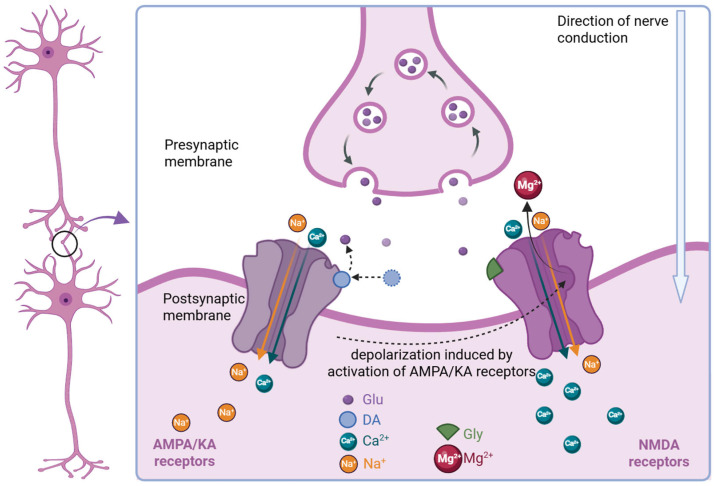 Figure 1
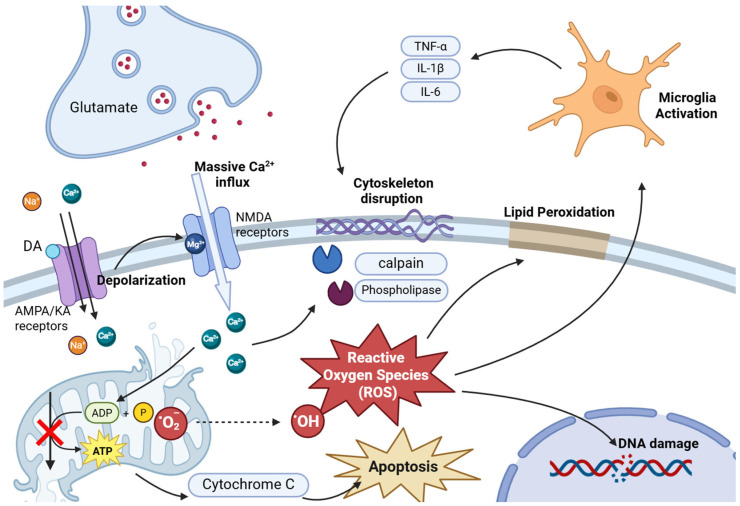 Figure 2
Peer Reviews
No public reviews on file for this paper yet. If you reviewed it on a platform where reviews are public (OpenReview, ICLR, NeurIPS, ICML), you can paste yours below so the community can read it here.
Videos
No videos yet. Explain this paper in a talk, walkthrough, or lecture? Add one.
Taxonomy
TopicsMarine Toxins and Detection Methods · Seaweed-derived Bioactive Compounds · Marine Sponges and Natural Products